
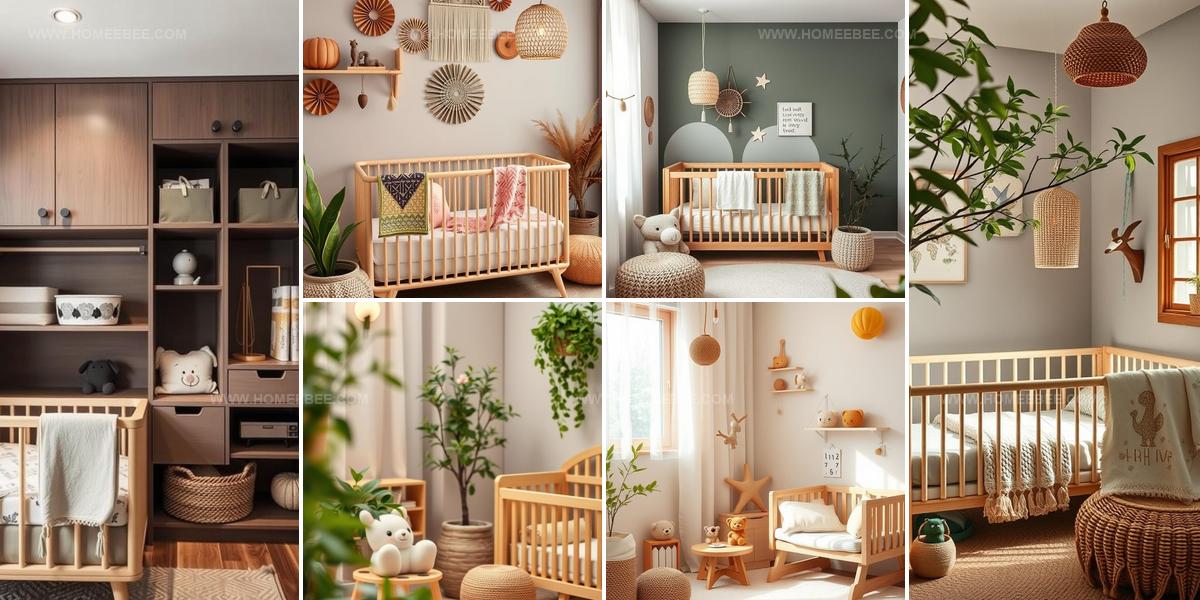
13 Japandi Nursery Room Ideas for Calm Baby Comfort

A japandi nursery room blends the calm minimalism of Japanese design with the cozy warmth of Scandinavian style to form a peaceful sanctuary for little ones.
The fusion works beautifully because both aesthetic traditions value simplicity, natural materials, and functional beauty without excess clutter or distraction.
When you consider how much time babies and parents spend in nurseries, it makes sense to design a space that feels serene yet inviting for everyone who enters.
Neutral palettes anchored by soft beiges, warm grays, and gentle wood tones become the foundation, while thoughtful touches add personality without overwhelming the senses.
Textures play an essential role too, as woven baskets, linen curtains, and tactile rugs contribute layers of comfort that balance the clean lines and open spaces.
The philosophy behind japandi centers on intentionality, meaning every item has purpose and contributes to an atmosphere of tranquility rather than visual noise.
Handmade Pieces Meet Japandi Nursery
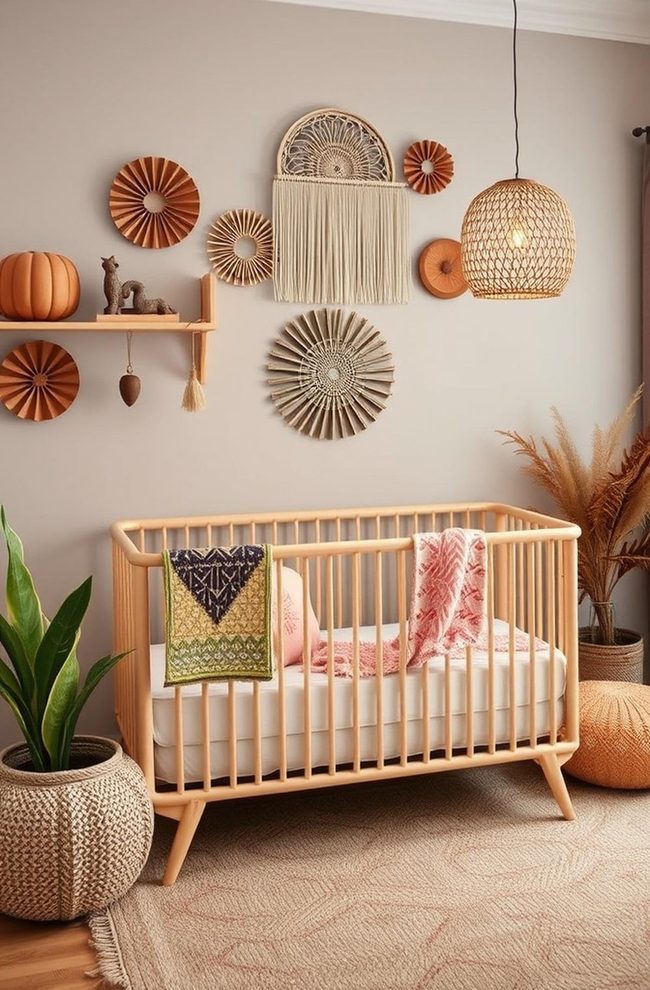
Handcrafted pieces with visible irregularities and human touch transform a Japandi nursery into a space filled with genuine character and meaning that factory-made items simply cannot provide.
Look for artisan-created furniture where you can see the maker's hand, a hand-carved wooden stool, a ceramic lamp base with subtle asymmetry, or a nursing chair upholstered by a craftsperson.
Wall art should feature handcrafted techniques like block printing, shibori dyeing, calligraphy, or simple line drawings instead of mass-produced prints.
One statement textile piece such as a hand-loomed blanket, a quilted wall hanging, or a macramé mobile showcases traditional techniques with modern design sensibility.
Handcrafted wooden toys, fabric dolls, or natural material blocks serve double duty as display objects when not in active play.
Consider commissioning a special piece from a local artisan for the nursery, perhaps a wooden name sign, ceramic nightlight, or custom mobile that becomes a future heirloom.
Ceramics with wabi-sabi qualities like visible texture and earthy glazes work well as plant pots, storage vessels, or decorative objects throughout the room.
Handwoven baskets for storing blankets or toys add rich texture and honor traditional crafting techniques central to both Japanese and Scandinavian design.
Japanese-Scandinavian Heritage Nursery Design
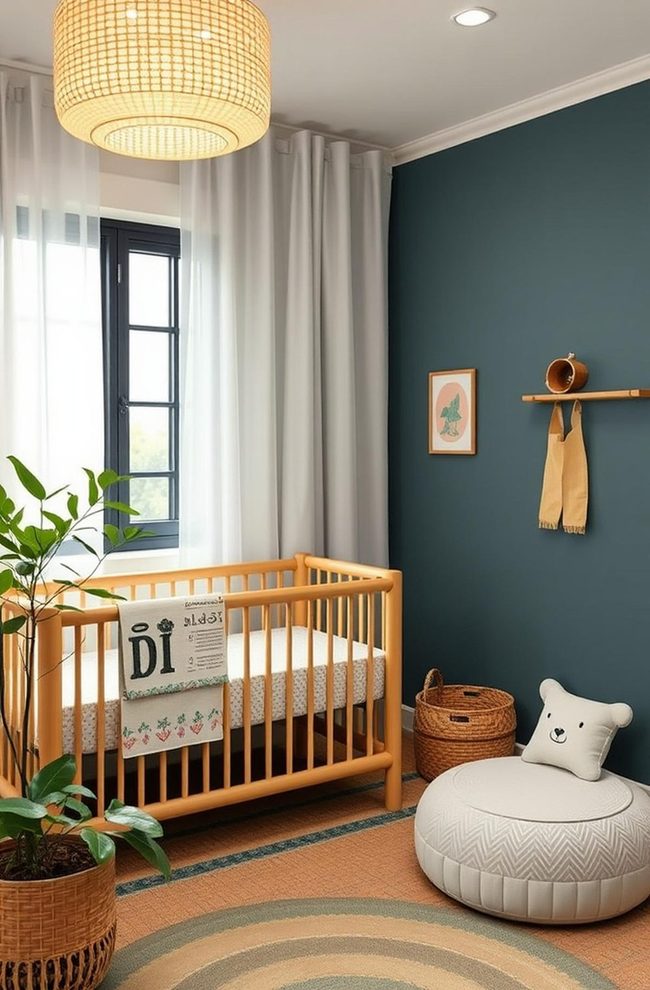
Incorporate authentic cultural elements from Japanese and Scandinavian traditions into your Japandi nursery by interpreting them through a modern lens that respects their origins.
A quilted cotton floor pad inspired by traditional futons offers comfortable space for tummy time and honors Japanese floor-based living without copying the original.
Shoji-inspired room dividers or sliding panels can separate shared spaces while referencing traditional Japanese architecture in a contemporary way.
Scandinavian folklore appears naturally through forest animals or abstract nature symbols in textiles and wall art, connecting to Nordic storytelling traditions.
LED flameless candles adapted from the Scandinavian "hygge" tradition give rise to warmth during evening routines while keeping your nursery safe.
Window seats positioned to observe nature outside bring the Scandinavian concept of "friluftsliv" (open-air living) closer to your baby's daily experience.
Furniture with visible wood-joining techniques like dowels or butterfly joints showcase craftsmanship and reference traditional Japanese methods without relying on fasteners.
A simple pillow or wall hanging featuring sashiko embroidery patterns adds cultural reference and -toned texture without feeling like an imitation.
Hand-turned wooden rattles or hand-woven baskets with clean, modern lines combine traditional craftsmanship with updated designs that fit your space.
Children's books that authentically share Japanese and Scandinavian stories build cultural appreciation from your child's earliest years.
Warm Teak Tones Form Depth
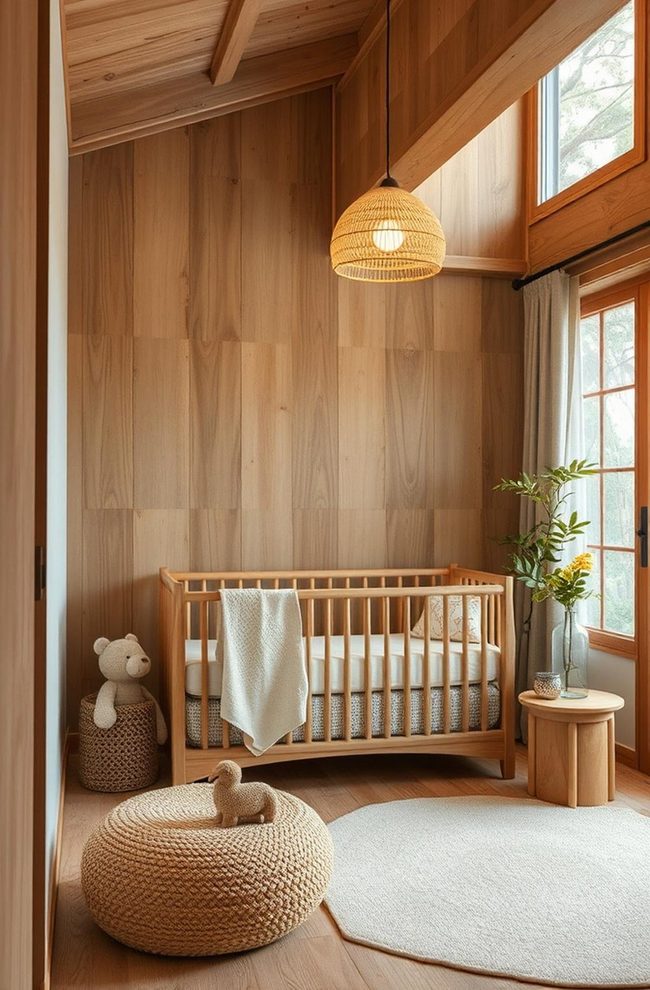
Wood serves as the true heart of a Japandi nursery, bringing warmth and natural beauty that feels honest and grounded, so seek out furniture with visible grain patterns and genuine construction instead of painted or processed finishes, and a solid wood crib with clean, architectural lines works as both a functional piece and a stunning room centerpiece that will age gorgeously over time.
Warm-toned woods like white oak, walnut, or cherry feel substantial without overwhelming the space, and mixing different wood tones throughout rather than matching everything creates depth while keeping that organic quality Japandi design needs.
Statement wood wall panels or slats add wonderful texture and warmth as a backdrop for your crib or changing station, and wooden toys on open shelves double as both playthings and decor that fits the aesthetic perfectly.
Handcrafted wooden boxes or bins work better than plastic for storage since they last longer and bring that tactile natural element into daily use, while a wooden mobile with simple geometric shapes adds visual interest above the crib without disrupting the calm atmosphere.
Small wood touches matter too, picture frames, wall hooks, and even a wooden sound machine blend function with beauty throughout the room.
Clean-Lined Teak Furniture For Nursery
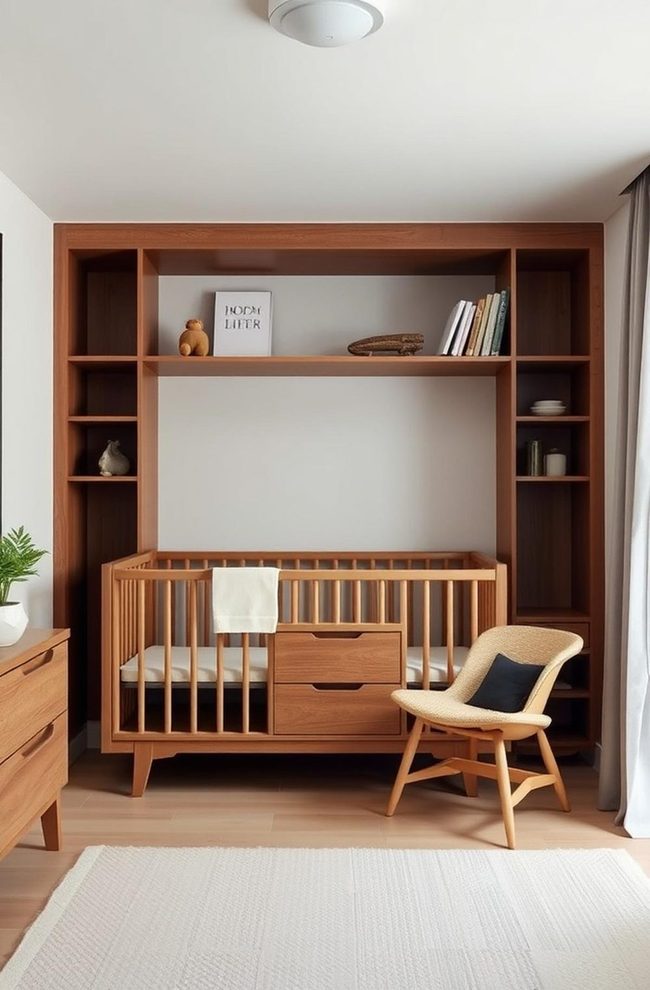
Minimalist furniture with clean lines and understated elegance forms the foundation of a Japandi nursery, where the crib becomes a statement piece through its simplicity, think tapered legs and rounded corners that honor both Japanese and Scandinavian heritage without unnecessary decoration.
You can want to select eachpiece with purpose, so a minimal dresser that doubles as a changing table, a low-profile chair with proper back support, and perhaps a single accent like a bench or bookshelf work better than filling the room with too many items.
Furniture that sits slightly elevated off the ground creates breathing room in the space and makes cleaning underneath simple and straightforward.
Hardware should disappear into the design, with drawers and doors that operate smoothly through smart construction rather than visible handles or knobs that draw attention.
Consider a rocking chair or glider with a smaller footprint than standard nursery seating, something compact but comfortable for those middle-of-the-night feeding sessions when you need real support.
Built-in storage solutions that blend directly into walls keep the room feeling open while holding all the user-friendly items you need for daily care.
Quality materials and precise craftsmanship become your decorative elements here, so handcrafted pieces from skilled woodworkers serve double duty as both functional furniture and treasured heirlooms that outlast the nursery phase.
Spacious Calm Through Intentional Empty Space
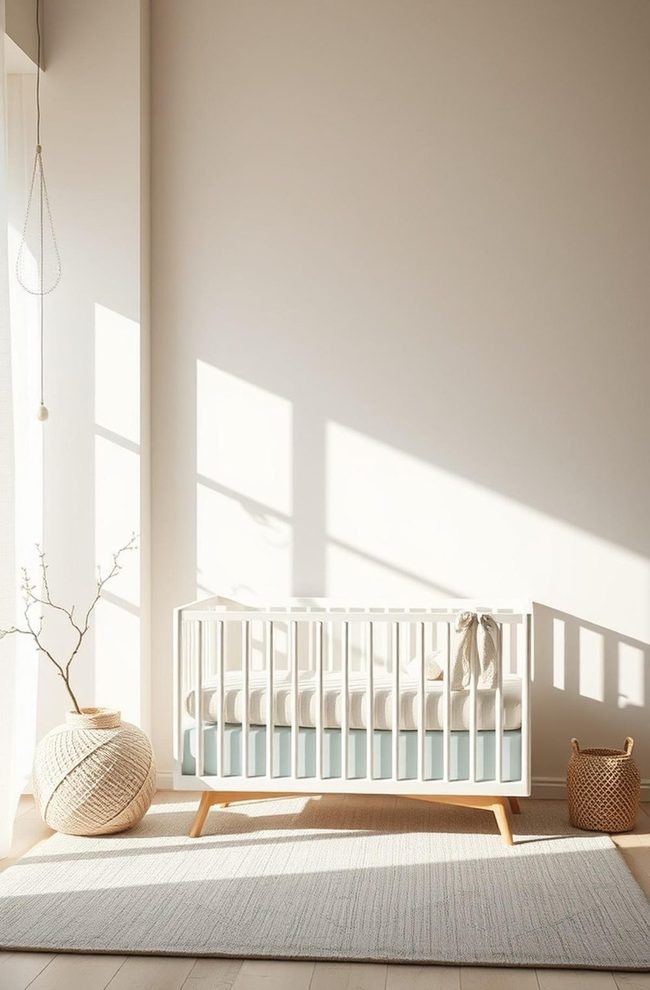
Mostly empty walls and floor space stand out as the most striking feature of Japandi nursery design, and these purposeful gaps let both your eyes and mind find peace in a space where your baby needs calm the most.
Japanese design philosophy emphasizes "ma", meaningful pauses between objects, so you should space furniture thoughtfully so every piece can be noticed on its own rather than overwhelmed by clutter.
Large stretches of bare wall let the room breathe and let any architectural bones shine through without distraction.
When you feed your baby, stand at the doorway, or look over from the crib, every angle should offer visual rest and open sightlines.
Rather than stuffing shelves, place fewer things on them with room around every object so they become something worth looking at instead of adding to visual noise.
Aim to keep furniture to about sixty percent of your floor space and leave the rest open for movement and play as your baby grows.
That blank space in your design isn't wasted at all, it serves just as much purpose as the furniture and decorations you do include.
Before adding anything new, stop and ask yourself whether it has a real use or brings you joy, because sometimes the empty space matters more than filling it.
Establish at least one bare moment in the room, maybe a simple undecorated wall or a corner with only one plant, to give your eyes a break from stimulation.
Warm Neutrals With Earthy Accents
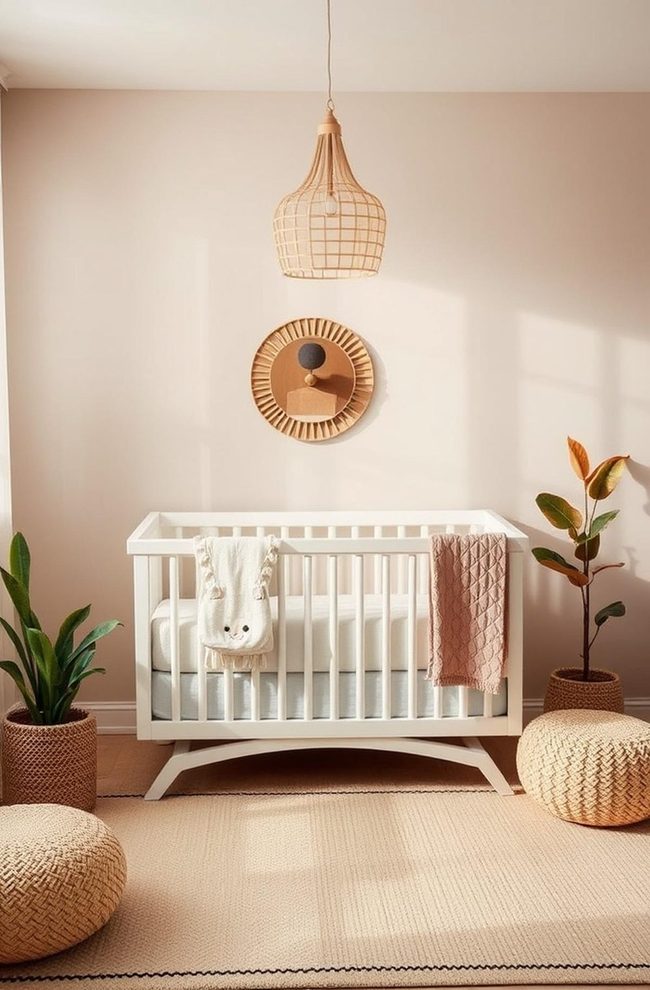
Neutral tones like cream, beige, taupe, and gray form the foundation of a Japandi nursery, but what sets this style apart is how you warm them up with earthy accent colors rather than relying on sunlit whites like purely Scandinavian spaces do.
Rust, terracotta, moss green, and muted navy blue appear in small amounts throughout the room, on crib sheets, wall hangings, or wooden toy collections, so the space feels grounded and lived-in rather than flat or boring.
Natural clay paints on your walls add refined texture and keep everything feeling organic, while natural fabrics like oatmeal linen curtains, subtle gray wool rugs, and gentle ecru cotton bedding tie the palette together without looking too perfectly matched.
One statement piece in a bolder accent color, such as a rust-colored rocking chair or deep navy storage bench, anchors the space and gives the room structure while keeping the overall mood calm.
Shadows and light become design elements in this style, so your neutral walls and furnishings shift beautifully throughout the day and a peaceful environment that won't overwhelm your baby's developing senses.
The color scheme doesn't need to feel perfectly balanced, in fact, letting it echo the natural variation you'd find outdoors makes it feel more authentic.
Certified Oak And Organic Textiles
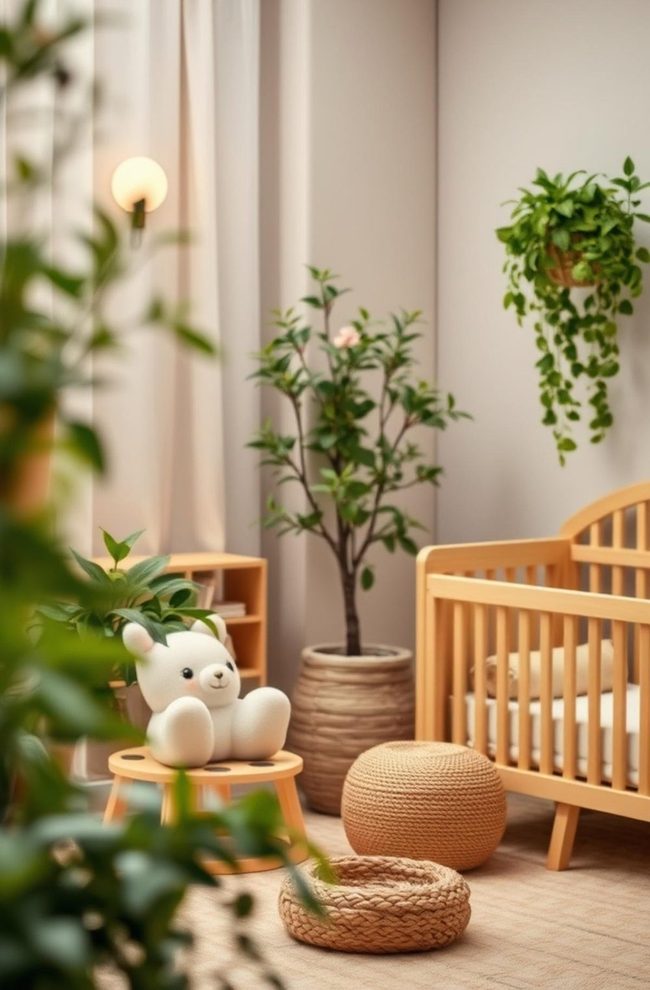
Building a nursery with Japandi style means thinking beyond how it looks and considering the environment, which matters deeply in both Japanese and Scandinavian traditions.
Wood furniture certified by the Forest Stewardship Council or made from reclaimed timber stands out as a smart choice that adds character without depleting forests.
Zero-VOC paints and finishes keep your baby safe from harmful chemicals that off-gas into the air, and many brands now offer clay and milk paints in perfect Japandi colors.
When selecting fabrics that touch your baby's skin, look for GOTS-certified cotton and linen so you know they were made ethically without chemical processing.
Before bringing anything into the nursery, think about its full life cycle, can it biodegrade, pass to another child, or get repurposed later?
Investing in fewer, higher-quality pieces means you buy less over time and waste less, which aligns with the "less but better" approach both styles embrace.
Convertible cribs, dressers that work beyond toddlerhood, and adaptable storage systems grow with your child and serve multiple purposes for years.
Vintage wooden rockers, handed-down books, and antique toys add warmth while keeping items out of landfills and giving them a second life.
LED bulbs and smart lighting features help you use less electricity while setting the right mood for different times of day.
Natural Fiber Layers And Weaves
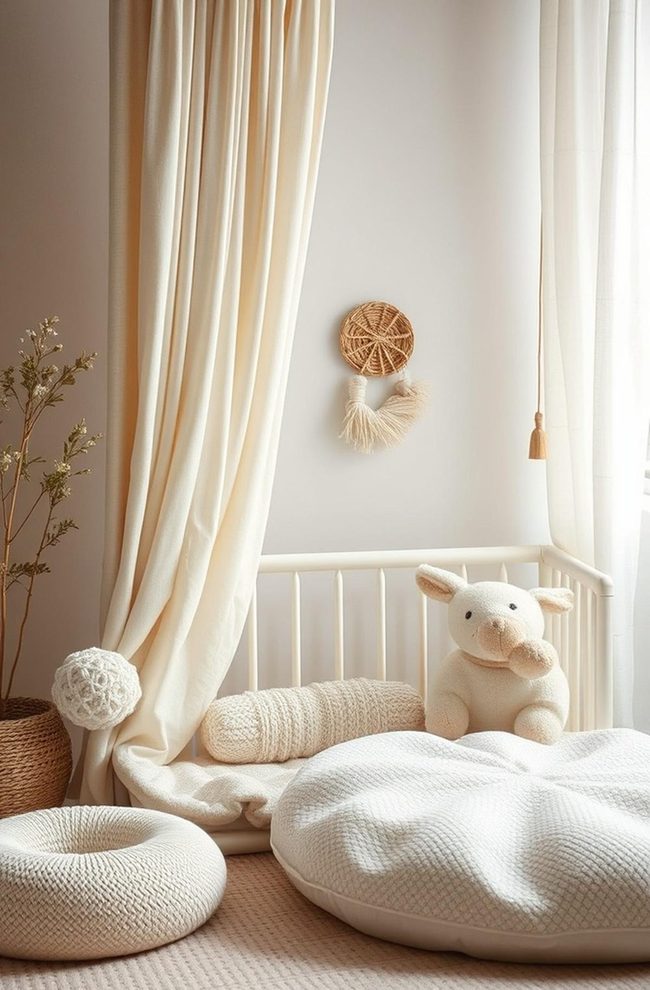
Understated natural textiles bring a Japandi nursery to life by layering textures that feel good to touch and diffuseden the room's clean lines.
Start with exclusively natural fibers like organic cotton, linen, wool, and hemp because they feel substantial in your hands and actually improve as you wash and use them over time.
Mix different weights and weaves together, think a chunky knit throw across the rocker, a lightweight linen canopy floating above the crib, and a medium-weight cotton rug on the floor.
Simple linen panels at the windows work beautifully because they filter light instead of blocking it and form that diffused, peaceful glow Japandi spaces are known for.
A handwoven wall hanging made from natural fibers and pattern adds dimension to bare walls without the fuss of wallpaper or painted designs.
Keep your crib bedding simple and thoughtfully chosen, diffused organic cotton fitted sheets and lightweight muslin swaddles work better than elaborate bedding sets with extra pieces you don't really need.
Look for textiles with gentle texture variations rather than bold patterns, like linen with visible slubs, cotton with a waffle weave, or wool with natural color shifts.
Any patterns you add should stay small and geometric or nature-inspired with low contrast, maybe just one pillow or a storage basket.
Natural Baskets Hide Baby Essentials
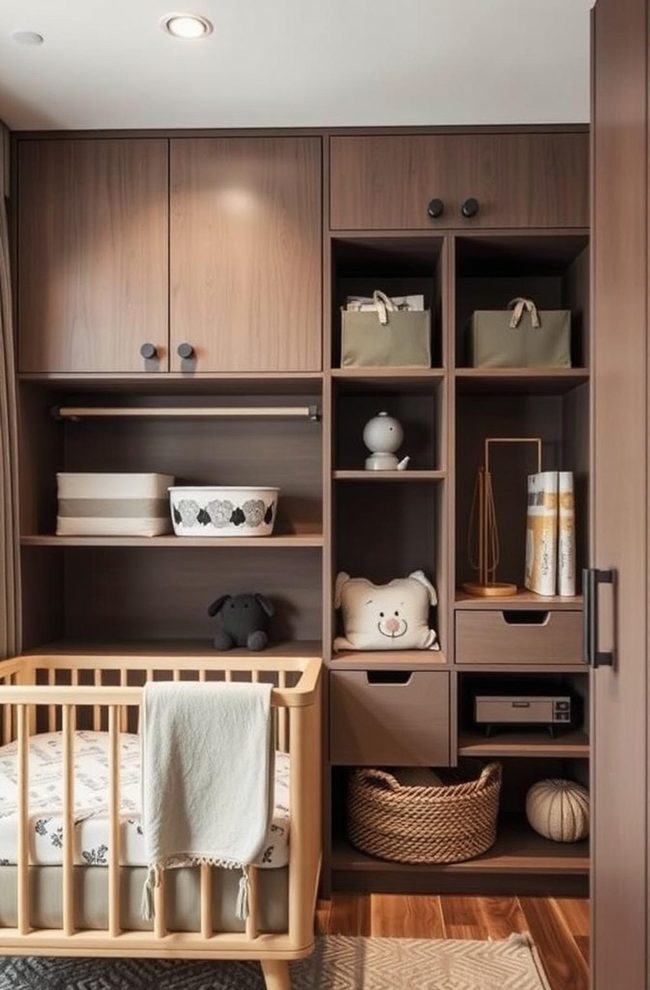
Keep storage hidden away behind closed drawers and floating cabinets with minimal hardware so your nursery stays clean and uncluttered while everything you need stays within reach.
Woven baskets made from seagrass, water hyacinth, or bamboo can hold smaller items like stuffed animals and blocks while adding natural texture to the room.
Wall-mounted shelving systems let you rearrange as your child grows, and furniture with secret compartments, like ottomans that open for blankets or benches with built-in storage, make smart use of every piece you bring in.
Display only a few special books, handcrafted toys, or meaningful items on shelves, leaving plenty of empty space around them so the room doesn't feel crowded.
Simple wall hooks at different heights give you places to hang things, with lower ones your child can eventually use and higher ones for items that need to stay out of reach.
Look under the crib for unused space where canvas drawers or rolling wooden trays can tuck away supplies without breaking up the room's clean lines.
Different zones work well too, keep sleeping essentials by the crib, feeding supplies near your nursing chair, and daily care items at the changing station so everything is organized logically.
Convertible Furniture Grows With Child
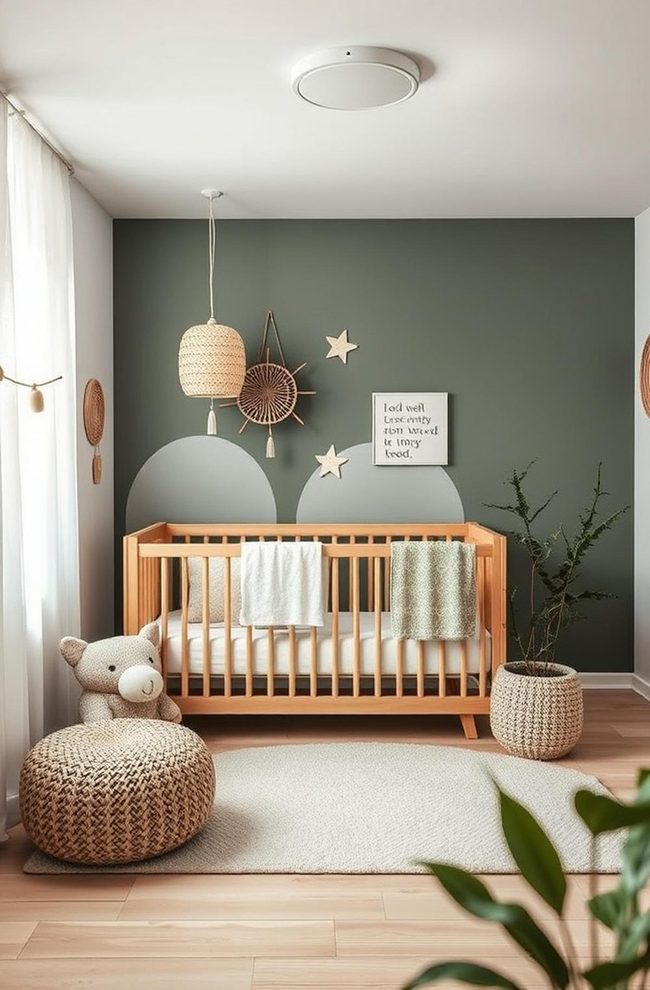
One of the smartest moves you can make with a Japandi nursery is choosing pieces that grow alongside your child, starting with a convertible crib that shifts from bassinet to full-sized bed across multiple years and eliminating the need for costly replacements.
Changing tables do double duty as dressers once you remove the topping, and adjustable shelving systems transition from displaying grown-up décor down to kid-level storage as your little one becomes more independent.
Pick botanical prints, nature photography, or abstract textiles for your walls instead of baby-specific designs, and these pieces will feel right at home in your child's room for years to come.
A growth chart can serve as artwork too, perhaps a wooden board with minimal markings or a linen hanging with understated measurement lines that blend seamlessly into the space.
Flexible furniture arrangements let you reshape the room as needs shift, starting with open floor space for crawling and later adjusting to establish spots for play, reading, or homework without total redesigns.
Lighting on dimmer switches and with adjustable reading options works beautifully for midnight feedings now and bedtime stories later, giving you comfort across different stages.
Bedding in timeless patterns rather than age-themed designs means you swap out layers instead of entire sets as your child grows taller and their preferences change.
Green Plants And Natural Teak Elements
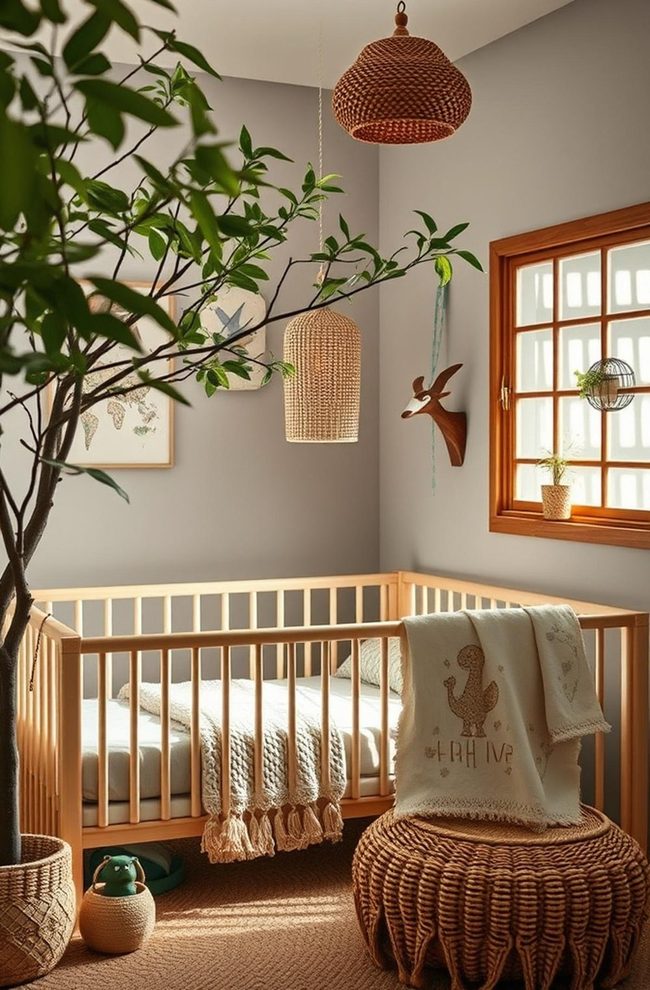
Live plants like spider plants, bird's nest ferns, and ZZ plants bring nature directly into your nursery while purifying the air, and you can feel confident choosing these options since they're non-toxic and need minimal care.
If keeping plants alive seems daunting with a newborn around, high-quality silk varieties or preserved botanicals give you that same natural connection without the watering schedule.
A small water feature with gentle bubbling sounds doubles as both white noise for your baby and a nod to the Japanese love of water in design.
Natural materials should be everywhere in the room, think stone coasters, clay pots, wooden frames, and woven baskets that all remind us of our connection to earth.
Hang a nature-inspired mobile above the crib using dried botanicals, wooden beads, or fabric leaves attached to a simple wooden hoop, and it sways softly in the air.
Wall art featuring abstracted landscapes, botanical drawings, or quiet nature photos keeps the biophilic feel alive while respecting the minimal design approach.
Positioning the crib near a window (with cords safely out of reach) lets your baby watch leaves move in the breeze and see how light shifts throughout the day.
Paper Lantern Pendant Lamp Fixture
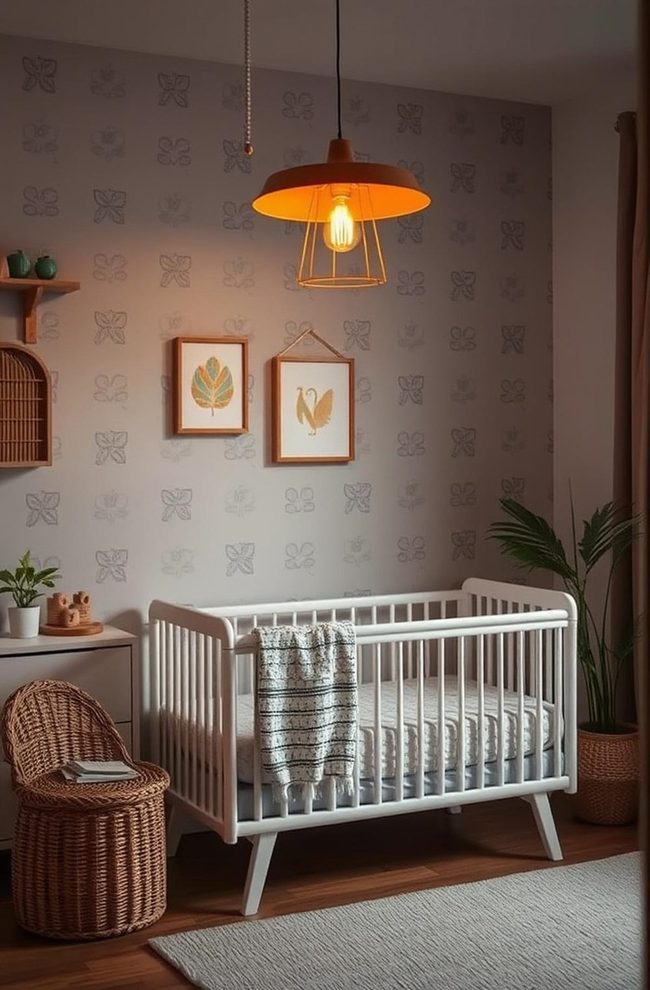
Pendant lights with clean lines and natural materials like paper, bamboo, or woven rattan deserve top billing in your nursery design, and a show-stopping paper lantern that nods to Japanese tradition can become your room's standout feature while casting gentle light throughout the space.
Layering your lighting with at least three sources makes all the difference, ambient light from an architectural fixture, task lighting near the changing area and reading nook, and accent lighting to highlight special features and set the mood.
Wall sconces with articulating arms adjust as your needs shift, moving from well-lit light for diaper changes to dimmed settings for bedtime routines, while a floor lamp with a minimal profile and warm-toned shade handles nighttime feedings without harsh overhead light that might disturb your baby's sleep.
Natural materials in your fixtures should echo the wood tones in your furniture, so consider a pendant with a wooden canopy or a table lamp with a ceramic base in earthy tones.
Smart lighting with dimmers proves essential in a nursery, letting you gradually decrease well-litness during bedtime and maintain minimal illumination for middle-of-the-night check-ins.
Pay attention to bulb quality, warm-toned LED bulbs at 2700-3000K bring about a much more soothing space than cool-toned lighting, and a simple projection night light casting delicate star patterns on the ceiling works better than character-themed versions.
Natural Materials Engage Baby Senses
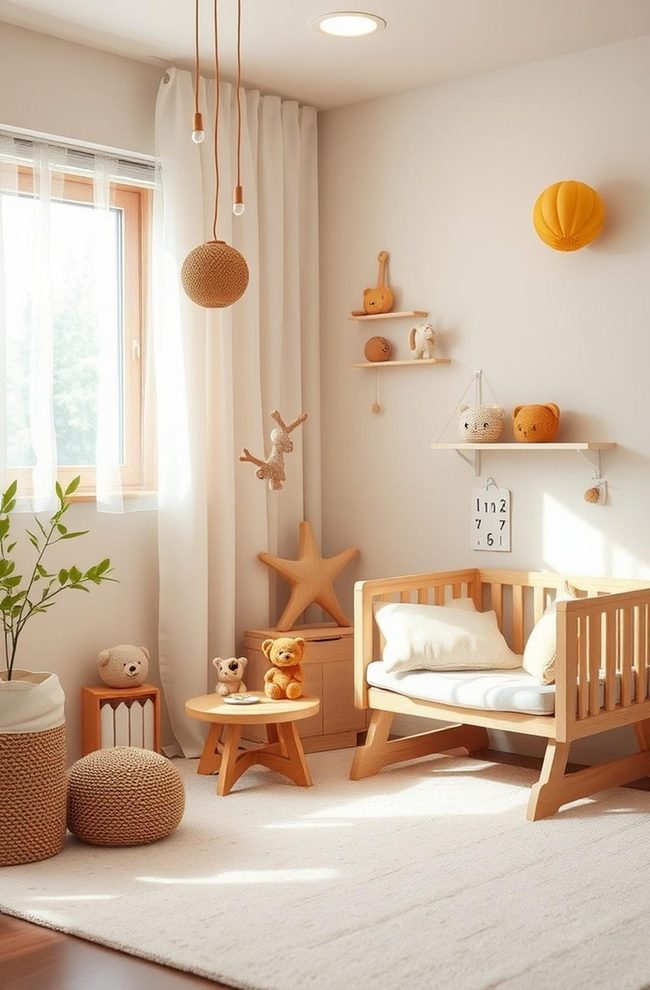
Japandi nurseries thrive on minimalism, yet your baby's growing brain actually benefits from thoughtful sensory input that keeps the calm aesthetic intact.
Light patterns dancing across the ceiling through a muted projector bring visual interest without overstimulation, whether you choose stars, gentle waves, or muted abstract shapes during evening hours.
Natural materials offer diverse textures for exploration, a nubby wool rug, smooth wooden toys, muted linen curtains, and rough ceramic planters in all provide different tactile experiences as your little one develops.
Scent comes gently through materials like hinoki wood, cedar accents, or beeswax candles (positioned safely away from the crib) rather than artificial fragrances flooding the room.
Sound elements matter too, and a small fountain with gentle water sounds, wind chimes by the window, or a quality sound machine with natural white noise options all support peaceful sleep.
Position the crib so your baby watches natural light move throughout the day, and dappled sunlight through curtains offers changing visual interest on its own.
A simple sensory mobile made from natural materials in muted tones, wooden rings, ceramic beads, fabric scraps with different textures, keeps your baby engaged during diaper changes.
Alex Johnson
Home Decor Specialist & Content Creator
Expertise
Room Makeovers, DIY Home Projects, Budget-Friendly Decorating, Seasonal Decor Trends
Education
The Interior Design Institute, USA
New York Institute of Art and Design
Alex Johnson is a home decor specialist and content creator who believes that every space should reflect its owner’s unique personality. With a Diploma in Interior Design from The Interior Design Institute and a Certificate in Home Staging from the New York Institute of Art and Design, Alex focuses on making home styling fun, affordable, and accessible.
At Homee Bee, Alex provides room makeover ideas, DIY decor solutions, and budget-friendly styling tips to help readers transform their homes with confidence. Whether it’s seasonal decor trends, thrift store finds, or smart space-saving tricks, Alex’s approach is all about creating beautiful, functional spaces that feel truly personal.