
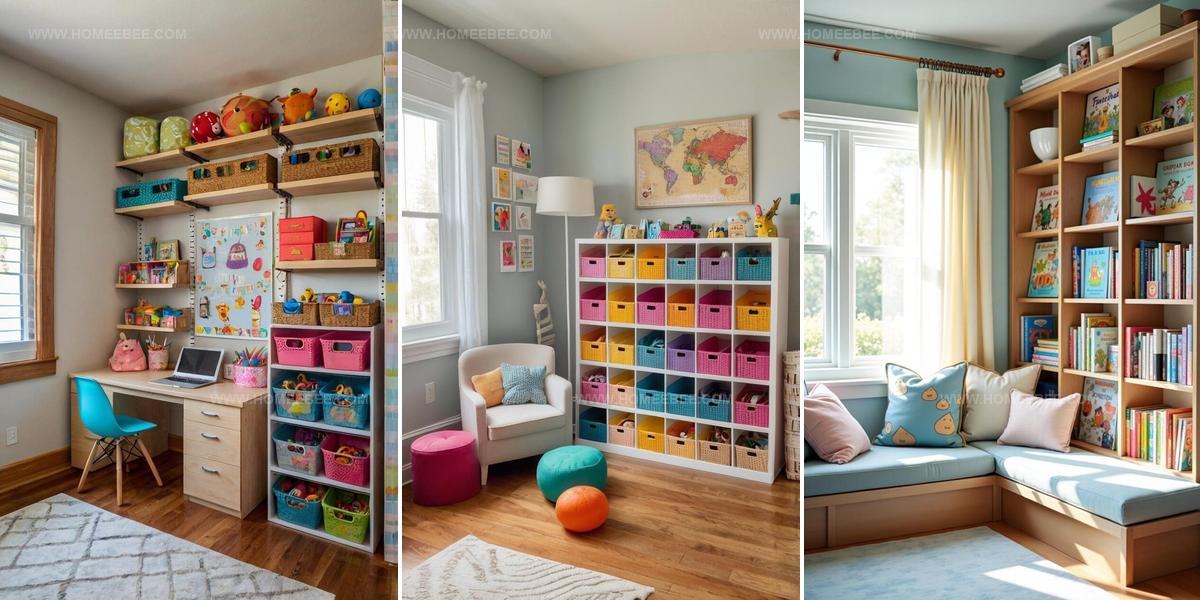
10 Smart Ways to Sort Out Kids Playroom Organization

A well-organized kids playroom can completely change how a family experiences daily life at home, turning chaos into calm and frustration into flow.
When you set up systems that actually work for the way children play and learn, the space becomes more inviting and functional for everyone.
The challenge isn't just about finding clever storage solutions or buying the right bins-it's about understanding how young minds interact with their environment and what makes them more likely to participate in cleanup.
Many parents feel overwhelmed by the constant clutter, but the good news is that thoughtful organization doesn't require a complete overhaul or expensive renovations.
Small, intentional changes can make a dramatic difference in how smoothly the room functions and how much everyone enjoys spending time there.
The key lies in creating systems that are simple enough for children to maintain while still keeping everything accessible and easy to find.
Making progress with playroom organization is absolutely within reach, and the benefits extend far beyond just having a tidier space.
Magnetic Walls Turn Toys Interactive
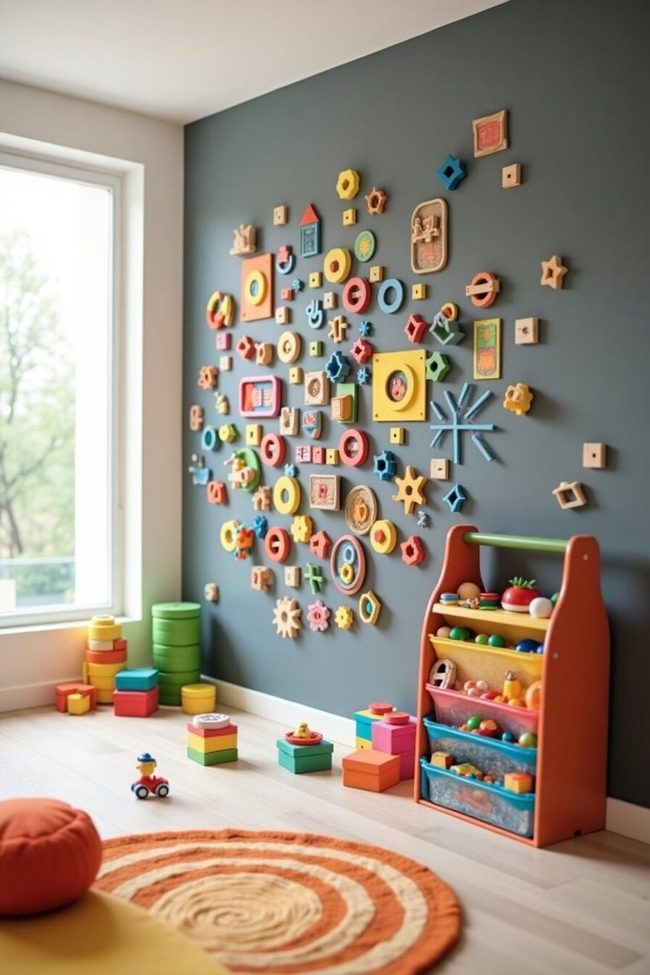
Wall displays transform organization from a boring chore into something interactive and engaging that you and your kids will actually enjoy using.
Magnetic walls set upd with magnetic paint or adhesive magnetic sheets turn toy storage into an ever-changing art display where building pieces, letters, and car collections stay organized while staying playable right on the wall.
A wall-sized chalkboard or whiteboard gives both creative space and a spot to hang organizers, making it functional and fun at the same time.
Wall-mounted rail systems with interchangeable hooks, baskets, and shelves grow right along with your child's changing needs over the years.
Tension rods and curtains can hold puppet displays that keep everything visible and tidy, or you could use clear pocket organizers (like those made for photographs) to showcase card games, flash cards, and small collectibles beautifully.
An over-the-door basketball hoop attached to a laundry hamper makes cleaning up muted toys feel like a game rather than a chore, and wall-mounted paper roll dispensers set up an art station that controls clutter while sparking creativity.
Track lighting can spotlight different play zones and help define spaces in your room psychologically.
By using vertical space this way, you're maximizing your square footage and keeping kids engaged with their environment while they learn how to organize things on their own.
Limited Toys, Maximum Play Focus
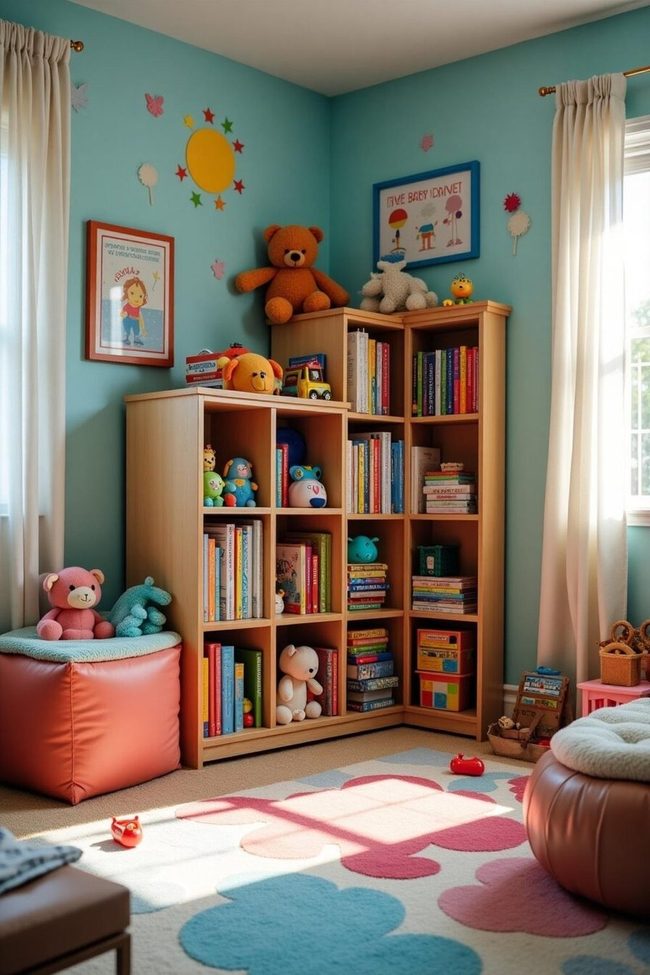
Kids discover renewed interest in toys they haven't seen for weeks when you use a rotating toy library system that keeps only about 25-30% of toys available at any given time, with the rest stored in labeled bins in a basement, garage, or closet.
Concept works on a brilliant psychological principle: limited choice actually increases focused play and instantly reduces clutter while making old toys feel new again during rotation day.
Sorting toys into three or four large containers and rotating the collections every few weeks helps you quickly discover which toys are genuinely loved versus merely accumulated by observing which ones children actually miss.
Seasonal items like summer water toys, holiday-themed pieces, and weather-specific exterior equipment work especially well with this system.
Making rotation day special by involving kids in choosing which collection comes next teaches valuable lessons about appreciation and prevents the overwhelming sensation many children feel when faced with too many options.
Deep cleaning becomes much more manageable since there's significantly less to work around, and you reduce consumption while maximizing enjoyment of what you already own.
Colorful Wall Shelves Organize Toys
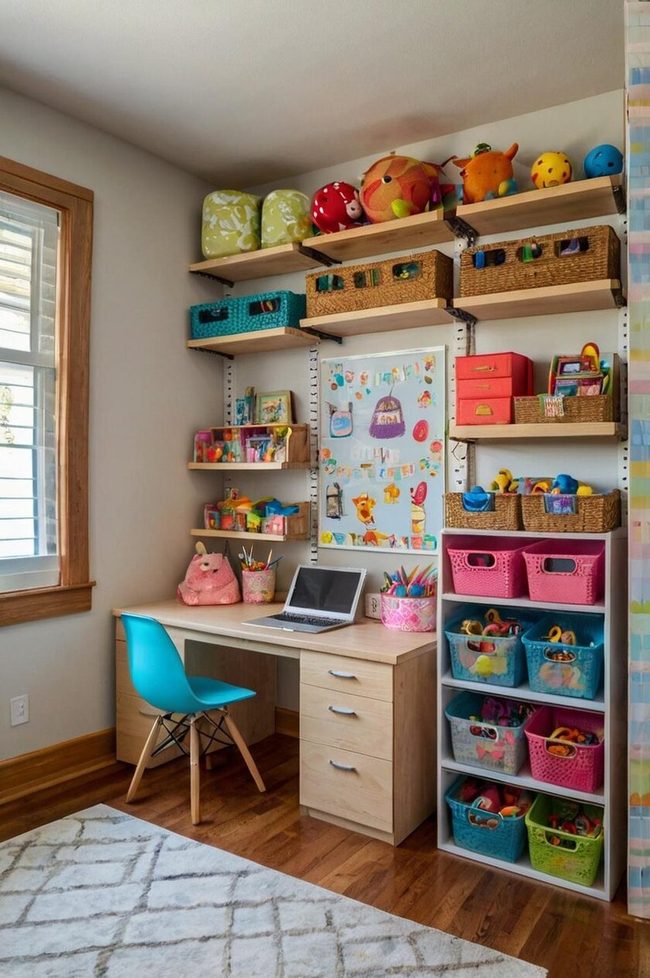
Wall space offers a powerful solution for battling toy clutter and reclaiming your floor, so consider staggering colorful cube shelves along a wall to a playful display that doubles as organization.
Floating shelves installed at different heights keep toys visible but off the ground, and wall-mounted nets or hammocks can hold stuffed animals while serving double duty as decor.
Hanging shoe organizers work wonderfully for small toys, art supplies, and action figures, while door-mounted storage systems tap into often-forgotten space perfect for board games and craft supplies.
A pegboard system gives you flexibility to adjust and expand as your child's interests shift and their storage needs evolve.
When toys have a visible, designated home on the wall, children naturally return items to their proper place more consistently and develop better organizational habits.
For younger kids, position their most-used items on lower shelves and keep less frequently accessed toys higher up where you can easily grab them.
Make sure any vertical storage is properly anchored to walls to prevent tipping hazards and keep your playroom safe.
With the right vertical storage approach, you can shift your space from cluttered mess to an organized room that looks pulled together in surprisingly little time.
Clear Plastic Game Solutions Stations
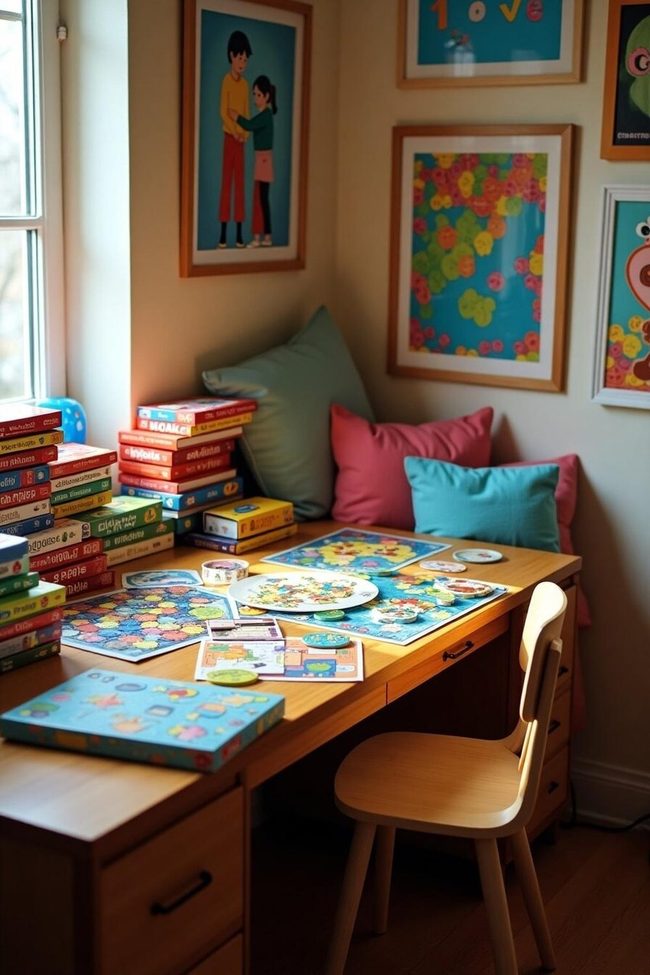
Swapping out those falling-apart cardboard boxes for stackable plastic containers with snap-tight lids stops the chaos before it starts and keeps your puzzle collection safe from damage.
Tape photos of completed puzzles inside across container lid so kids can see exactly what they're building and feel motivated to finish.
Write the total piece count right on across container, and have your children verify everything is there after playtime ends, this simple habit prevents the frustration of discovering missing pieces mid-game.
Ziplock bags tucked inside the containers hold small game pieces separately and speed up both setup and cleanup when kids are ready to switch activities.
Store board games vertically in magazine holders once you've transferred them into those space-saving containers, which frees up shelf space and makes selections easier.
Set up a dedicated work surface with raised edges where puzzles stay in place while being assembled, and stray pieces won't roll away and disappear under furniture.
Keep a "puzzle hospital" container on hand where broken games and incomplete sets go for repair instead of staying in active rotation with missing parts.
Use a color-coded system based on difficulty levels so children can pick age-appropriate games on their own and avoid the mess that comes from games that are too advanced.
When everything has its place and kids understand where things belong, you spend less time hunting for lost pieces and more time enjoying those fleeting childhood moments together.
Creative Supply Organization On Wheels
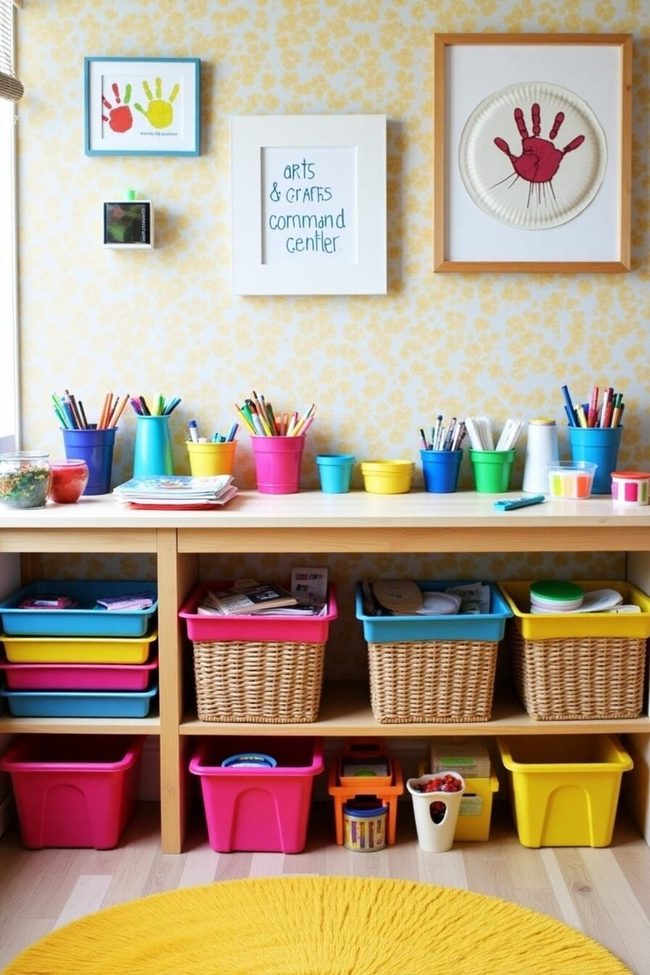
Pegboards customized with hooks and small containers keep frequently used tools visible and neatly arranged, while rolling carts with multiple tiers let you categorize supplies by type and move them around when you need to clean or switch activities.
Vertical paper organizers prevent specialty papers from getting crumpled and wasted, and transparent jars mounted under shelves store small items like beads and buttons so your surfaces stay clear.
Label makers help you build detailed organization systems that even young children can follow and maintain on their own.
You can add a clothesline with clips above the craft area to hang artwork and dry without taking up valuable table space, and a dedicated "works in progress" bin lets multi-day projects sit safely without the pressure to put everything away immediately.
Setting up different zones for wet projects, dry projects, and digital creativity keeps your command center running smoothly and makes it simple to know where things belong.
An easy-clean surface like whiteboard material works as both your workspace and message center, while a cleanup checklist with photos shows exactly how supplies should look when stored properly.
When you balance organization with easy access, cleanup becomes just as simple as starting your next creative project.
Dual-Purpose Furniture Saves Playroom Space
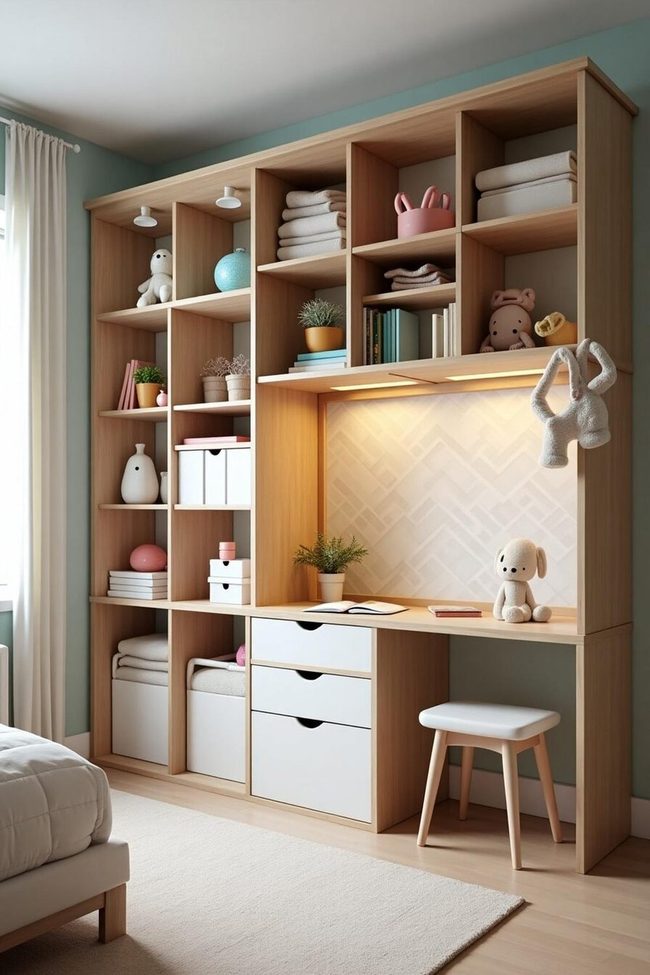
Multi-functional furniture works hard in playrooms by serving two or more purposes while occupying the footprint of a single piece, making it perfect for homes where space matters.
Window seats with storage drawers below them give your kids a snug spot to read while hiding away toys they don't use often, and ottomans with removable tops offer both comfortable seating and concealed storage for things you'd prefer to keep out of sight.
As your children grow, convertible tables that change height smoothly shift from toddler activities to older kids' homework areas without needing replacement.
Nesting tables remain tucked away until you need extra surfaces for bigger projects or playdates, and beds with under-bed storage drawers use otherwise empty space for seasonal clothing or larger toys.
Hollow building blocks sized for sitting do double duty as both play objects and functional seating with hidden storage built right in, while bookshelves paired with attached desk surfaces establish homework stations that keep books and reference materials within easy reach.
Play kitchens designed to match your actual kitchen blend seamlessly into your home while providing endless imaginative play, and coffee tables with lift-tops reveal storage compartments ideal for board games and puzzles.
You will save money over time since these pieces adapt to your family's changing needs rather than requiring replacement, and the best-designed ones look so polished that visitors won't even realize they're looking at clever storage solutions in disguise.
Colored Bins Teach Kids Organization
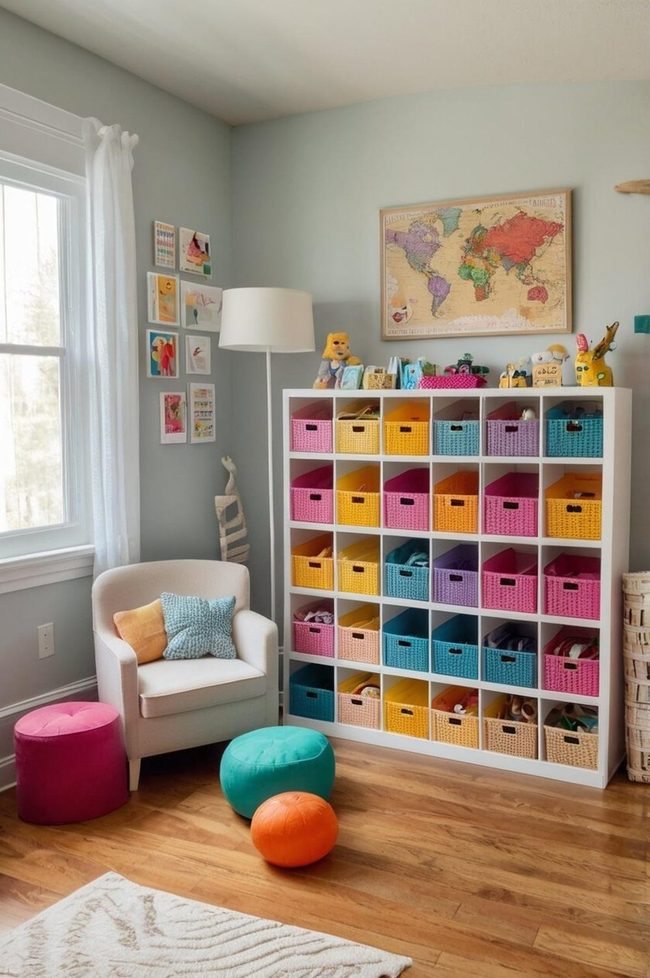
Color-coding might be the single most effective way to help young children stay organized when they can't read yet, and the system works so well that even toddlers can follow it without much help from you.
Start by assigning across toy category its own color bin, red for building blocks, blue for vehicles, green for animals, and watch as sorting becomes something kids naturally understand.
Two-year-olds can learn to match toys to the right colored container, and you can reinforce this by adding colored labels with pictures for children who don't recognize words.
Transparent colored bins work best because kids see what's inside while still following the color system, and the visual cues make cleanup time feel like a matching game rather than a chore you have to nag about.
When multiple siblings share a playroom, you can color-code by child to reduce arguments about who owns what during cleanup.
Consider adding color-coordinated shelf edges or floor tape to mark specific play zones that match the bin colors, and occasionally turn sorting into a timed game to keep kids engaged.
Composition teaches early sorting skills and builds foundations for more complex organizational thinking as they grow, and the room practically organizes itself once you set it up, so parents need minimal input after that initial work.
Colorful Brick Space Solutions Floor
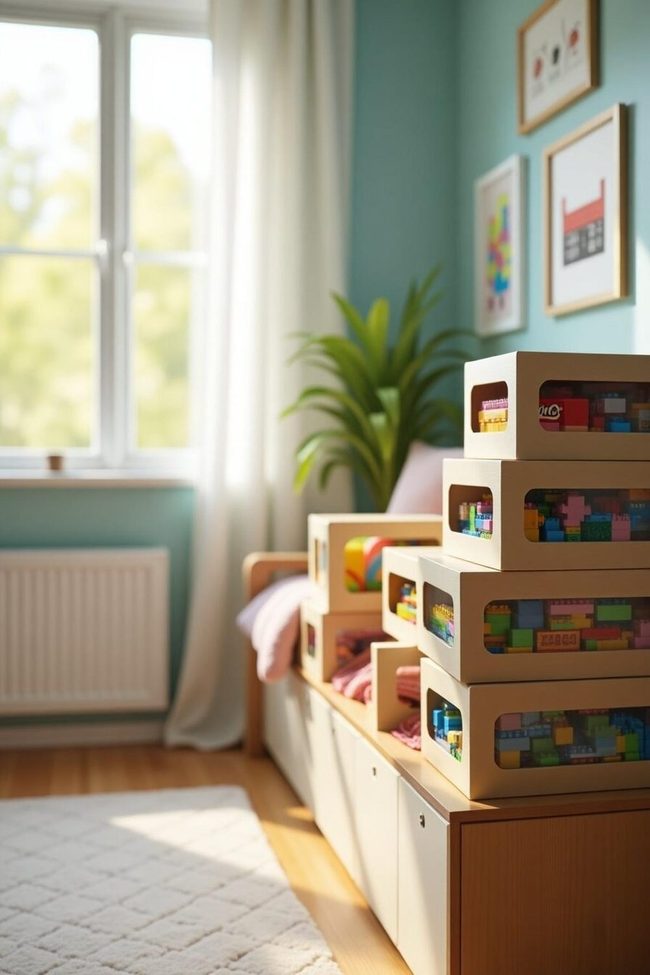
Nothing hurts more than stepping on a stray Lego brick in the middle of the night, and the right storage system can actually prevent this painful problem while making playtime more fun.
Play mats that convert to drawstring storage bags stand out as a game-changer because they contain small pieces during building sessions and make cleanup happen in seconds.
Shallow under-bed storage containers with dividers work wonderfully as Lego trays and slide out of sight when playtime ends.
Sorting by piece type rather than by individual sets matches how kids actually play and speeds up the whole cleanup process.
Magnetic sheets attached to metal trays keep those tiny metal pieces from rolling away when someone is working on a detailed building project.
Hanging shoe organizers hung on walls and cut into smaller sections let you see all your pieces at a glance when sorted by color or type.
Label drawers with actual-size silhouettes of unique pieces and finding what you need becomes simple for even the youngest builders.
Setting up a dedicated building table with a raised edge stops pieces from landing on the floor in the first place.
Repurposed hardware organizers from home improvement stores and tackle boxes designed for fishing both work as excellent portable options for kids who build in different rooms.
You can also reward complete cleanup with special building privileges or access to new pieces and make organization feel like part of the game.
Children’S Books Forward-Facing Display Shelves
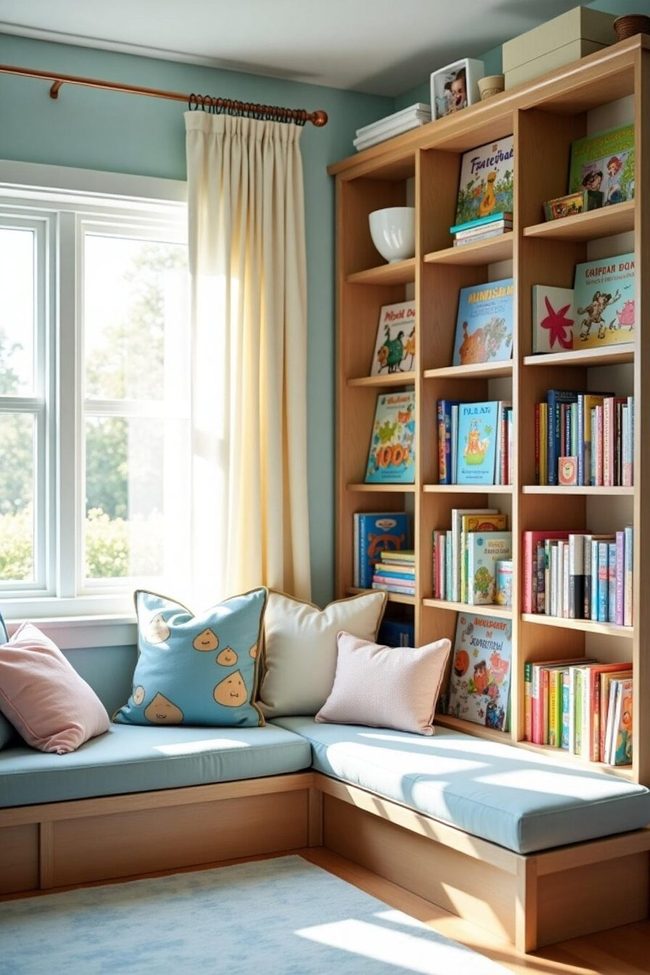
Books displayed with their covers showing instead of just spines make it so much easier for young readers to spot stories they love, and rotating your collection seasonally keeps things fresh without overwhelming the space.
Lower shelves and rain gutters along the walls put books right at children's eye level, so they can grab what they want without needing help.
Comfortable floor pillows with hidden storage tucked underneath give you both a comfortable spot to curl up and room to tuck away reading accessories and supplies.
Genre zones with simple picture labels help kids learn how libraries work while keeping everything organized and easy to find.
Book bins marked by reading level let children pick books on their own and build confidence as they discover what fits their abilities.
A display area for completed books and a special "read again" section celebrate progress and make kids feel proud of what they've finished.
Setting up a small repair station with tape and glue teaches young readers that books are worth caring for and fixing instead of tossing out.
Matching physical books to audio versions with a simple visual guide opens up new ways for children to experience stories.
A basic checkout system with date cards helps kids understand responsibility and keeps track of where books go.
When you balance organization with easy access, your nook becomes a place where grabbing a book and putting one back feel just as natural.
Kids Turn Cleaning Into Adventure Stations
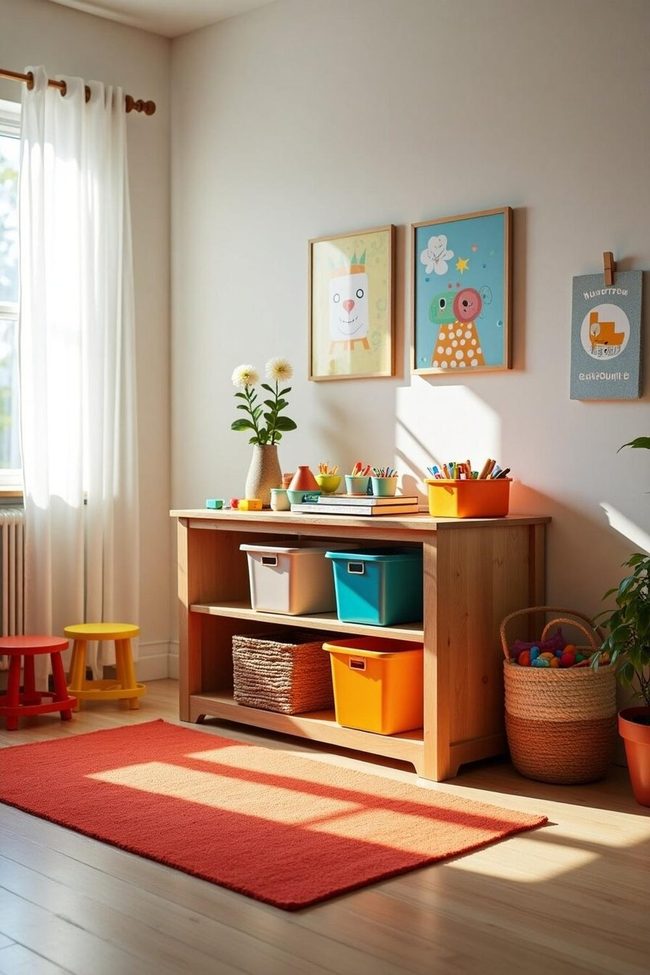
Colorful toy car washes made from decorated boxes and toy hospitals with fix-it schedules can turn cleanup into something kids actually want to do instead of dreading it.
Sorting factories with fabric conveyor belts and cleanup mission control boards covered in sticker-checkmarks add excitement and movement to tidying routines.
You can build custom caddies from shower caddies or set up a toy return chute from a painted cardboard tube so carrying things becomes part of the fun.
Special cleanup costumes like capes and hats turn ordinary kids into superheroes ready to organize.
Countdown timers make the whole process feel like a race against the clock rather than a boring chore.
Physical movement and clear visual directions help children understand what needs to happen and where everything belongs.
These stations work because they tap into how kids naturally love pretend play and turn that energy toward putting things away.
Alex Johnson
Home Decor Specialist & Content Creator
Expertise
Room Makeovers, DIY Home Projects, Budget-Friendly Decorating, Seasonal Decor Trends
Education
The Interior Design Institute, USA
New York Institute of Art and Design
Alex Johnson is a home decor specialist and content creator who believes that every space should reflect its owner’s unique personality. With a Diploma in Interior Design from The Interior Design Institute and a Certificate in Home Staging from the New York Institute of Art and Design, Alex focuses on making home styling fun, affordable, and accessible.
At Homee Bee, Alex provides room makeover ideas, DIY decor solutions, and budget-friendly styling tips to help readers transform their homes with confidence. Whether it’s seasonal decor trends, thrift store finds, or smart space-saving tricks, Alex’s approach is all about creating beautiful, functional spaces that feel truly personal.