
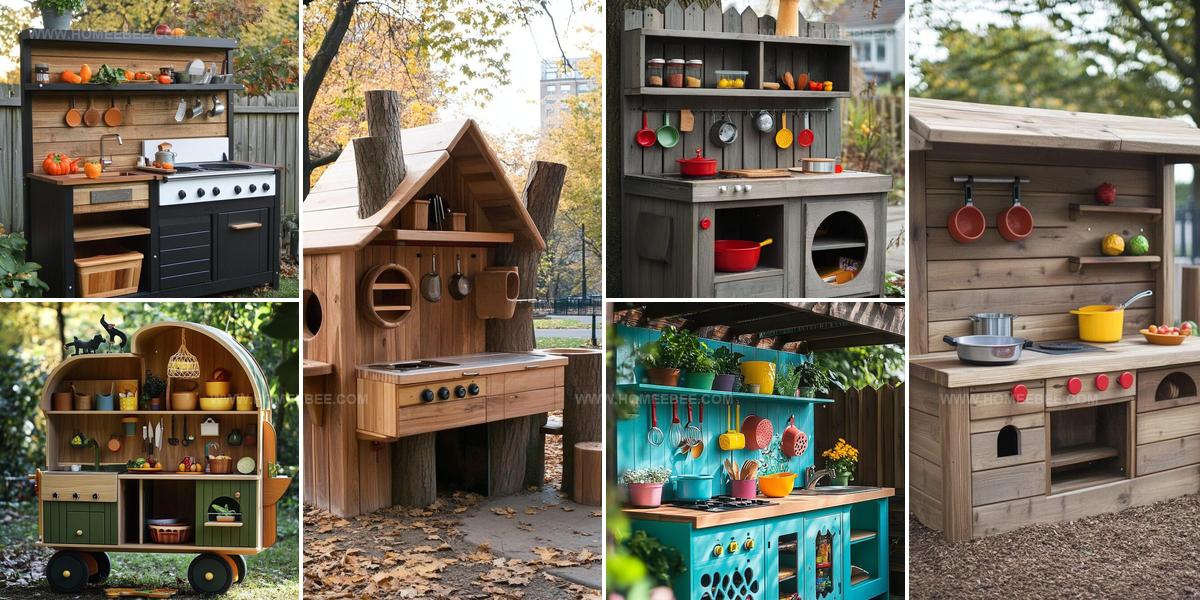
10 Creative Mud Kitchen Ideas Kids Will Adore

Mud kitchen ideas have become wonderfully popular among families who love encouraging outdoor play and creativity in their children.
These charming play spaces give kids the chance to mix, pour, and pretend in ways that connect them with nature while developing important skills.
Parents often find that a simple setup with recycled materials can provide hours of entertainment and learning opportunities.
The beauty of these outdoor cooking stations lies in their flexibility, as they work well in gardens of any size and can be customized to fit different ages and interests.
Children naturally gravitate toward sensory experiences, and nothing quite matches the joy of watching them experiment with mud, water, leaves, and whatever natural treasures they find around them.
Building one of these spaces doesn't require perfection or expensive supplies, just a willingness to embrace a little mess and see the value in unstructured play.
Stay with me as we look at creative ways to design an outdoor play area that will keep children engaged and learning through every season.
Three-Level Mud Kitchen Area System
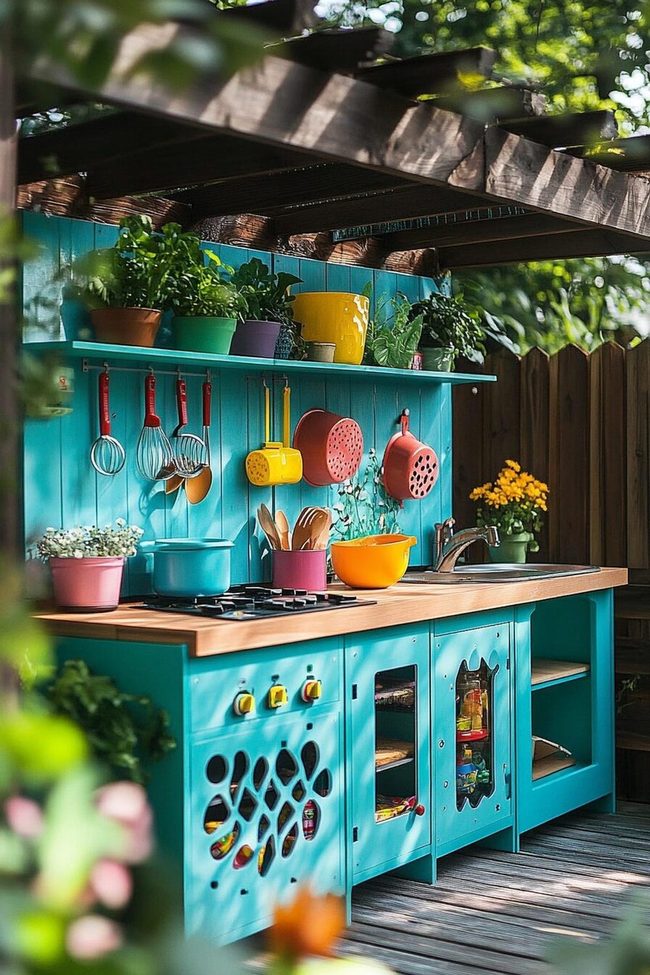
Building a mud kitchen that works for everyone from tiny toddlers to grandparents opens up wonderful opportunities for outside family fun and sensory exploration.
Start with a structure that offers three different work heights, 18 inches for toddlers, 24 inches for children, and 36 inches for standing adults, so eachperson has their own comfortable space to play and learn.
Every level should have its own sink area and storage that matches what different ages actually need and can reach.
Add comfortable seating with weather-resistant cushions nearby so adults or anyone who needs a rest can sit down and still be part of all the action happening around them.
Wide, stable pathways made from crushed stone or wood chips let wheelchairs and walkers move smoothly to and around the kitchen without any trouble.
A simple hand-washing station with steps for little ones and taller access points for grown-ups makes cleanup something everyone can handle on their own.
Include tools in different sizes with various grip styles, chunky handles for small hands and ergonomic options for people with limited dexterity, so everyone can participate actively.
Picture-based signage throughout the space helps pre-readers and people with different communication needs understand what's happening and how things work.
Raise some garden beds right next to the kitchen where all ages can grow herbs, edible flowers, and sensory plants to use in their play.
Rolling Cart Mud Kitchen Area Station
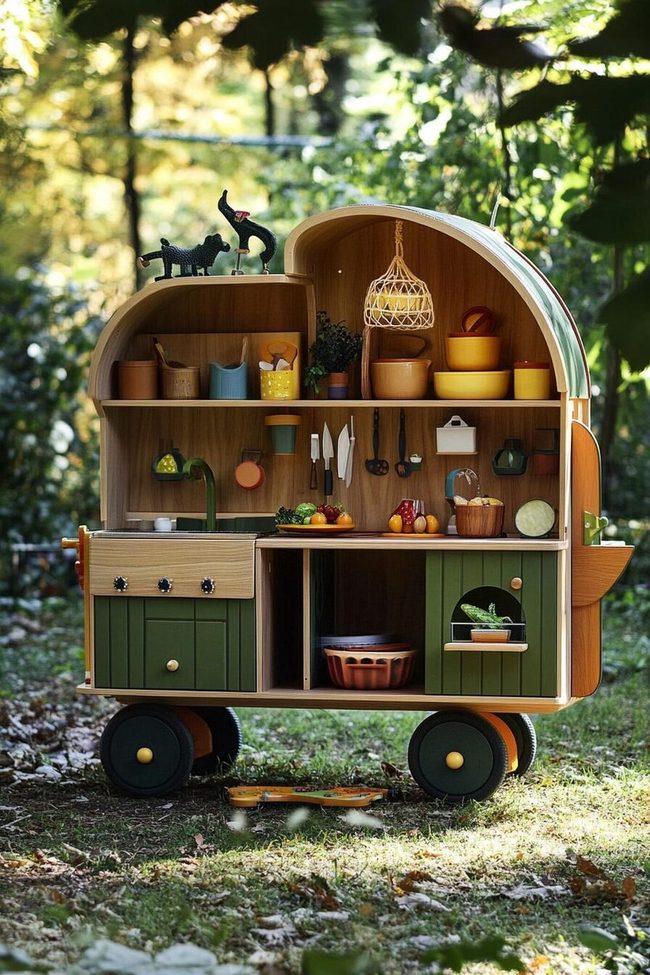
Every sturdy utility cart on lockable wheels becomes the foundation for a mud kitchen that moves wherever you need it, whether that's chasing shade on a hot day or rolling back to shelter before rain arrives.
Start by selecting a rolling base with at least two shelves and wheels that lock securely to keep everything stable during active play.
Top it with water-resistant marine-grade plywood to handle the constant splash and mess of mud creation.
Run a PVC board splash guard along the back edge and you've got both containment and extra structural support for the whole setup.
A removable plastic basin works as your sink, and because you can lift it out, cleanup after play sessions becomes so much easier.
Pegboard attached to one side gives you spots to hang all your mud kitchen tools within reach.
You can add fold-down side tables that expand your workspace when in use and collapse flat when it's time to store or move the kitchen to another location.
Lower shelves hold covered storage bins that keep play materials organized and protected between uses.
Rope handles on both ends let you pull the kitchen around your yard based on weather or wherever the kids want to play.
Weather-resistant tags on different sections help teach organization and make the whole setup feel more like a real kitchen.
Small containers holding colored sand, dried flowers, and interesting seeds in a dedicated "spice rack" section add an extra layer of fun to mud play.
Seasonal Mud Bistro Zone Year-Round
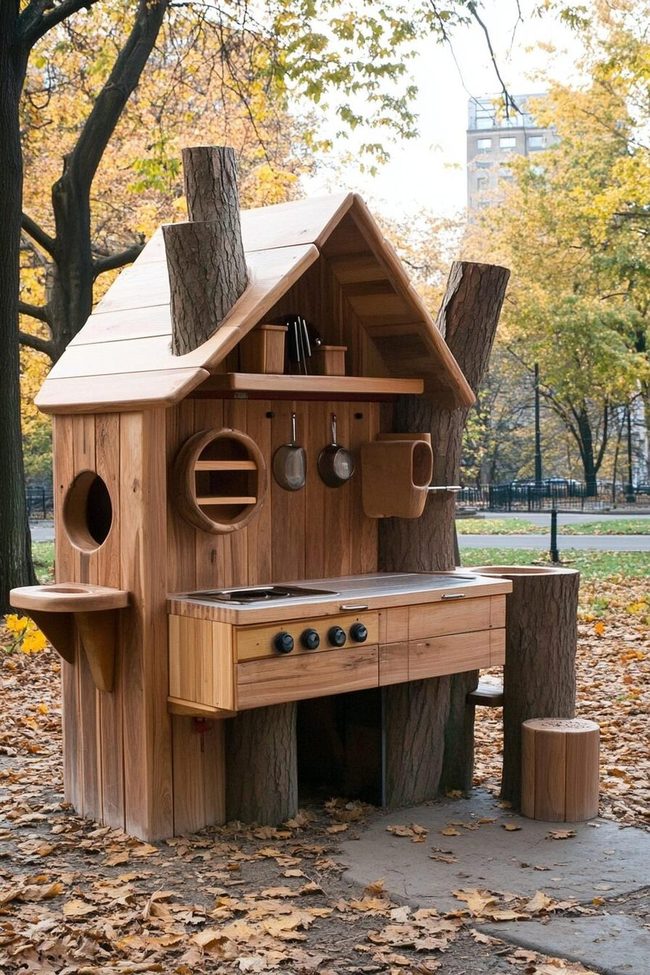
Weather doesn't have to stop outdoor play, and you can build a mud kitchen that works beautifully through all four seasons for year-round fun and exploration.
Start by placing a sturdy, weather-resistant structure in a spot that gets shade when it's hot but catches sun during colder months, then add a retractable awning or pergola overhead so you can open it up for winter warmth or close it down when you need protection from summer rain.
During winter, set up a special mud section near a small fire pit (always supervised) where you and the kids can melt snow for making winter mud, and include seasonal storage boxes that hold spring flower petals and seeds, summer water toys, fall leaves and pinecones, and winter snow tools.
Your water system needs freeze-proof design with good drainage for cold months and removable parts you can store away when temperatures drop too low.
Hang seasonal decoration hooks around the structure where you can display themed elements like flower garlands in spring, water misters in summer, leaf collections in fall, and icicle catchers in winter, and add a weather station with a thermometer, rain gauge, and wind sock so children track how seasons change the mud itself.
Vintage Furniture Into Mud Dining Area
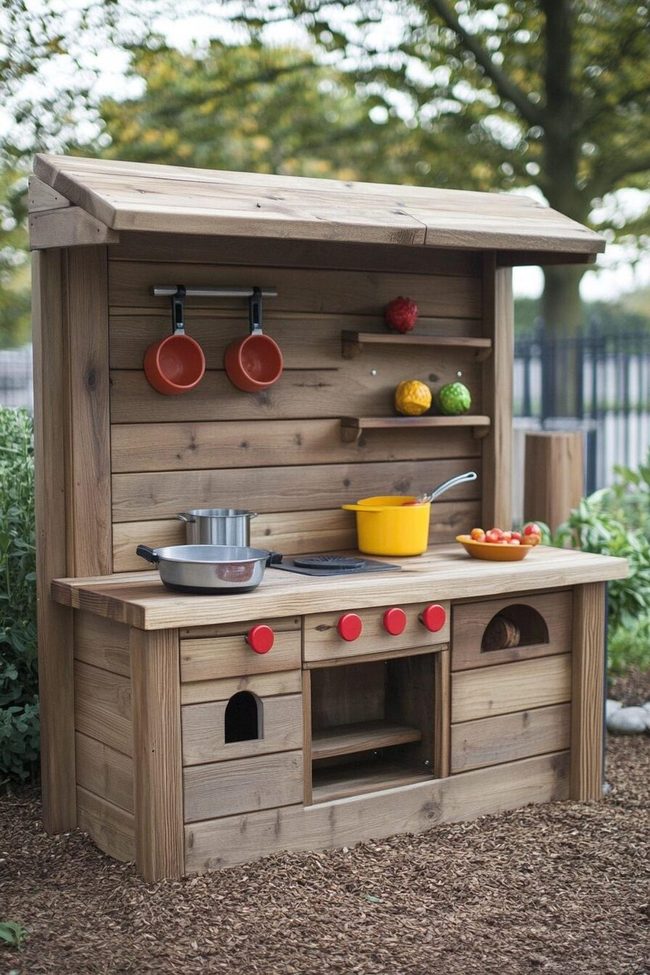
An old piece of furniture reshapes into a one-of-a-kind mud kitchen when you hunt for vintage nightstands, dressers, or console tables at thrift stores, garage sales, or Facebook Marketplace.
Pieces with drawers work best since they hold natural treasures like pinecones and rocks that kids collect.
Once you find something with good bones, strip away the old finish using child-safe paint remover and sand it down to bare wood.
Next comes protection – several coats of exterior-grade polyurethane keep your creation safe from mud, water, and weather for years of heavy use.
Installing an old kitchen sink into the top reshapes the whole setup and stainless steel options show up free from renovation projects if you ask around.
Colorful silicone or wooden knobs replace the standard drawer pulls so small hands can open and close them easily.
Weather-resistant tiles add a backsplash that looks great while stopping splashes, and you can add seasonal decorations on a shelf above like spring flowers, fall pumpkins, or winter pinecones.
Little touches matter too – vintage cooking timers, measuring spoons, antique scales, and a wind chime made from old utensils turn playtime into something special that teaches kids about reusing things instead of throwing them away.
Solar-Powered Mud Bistro Zone With Cascading Water
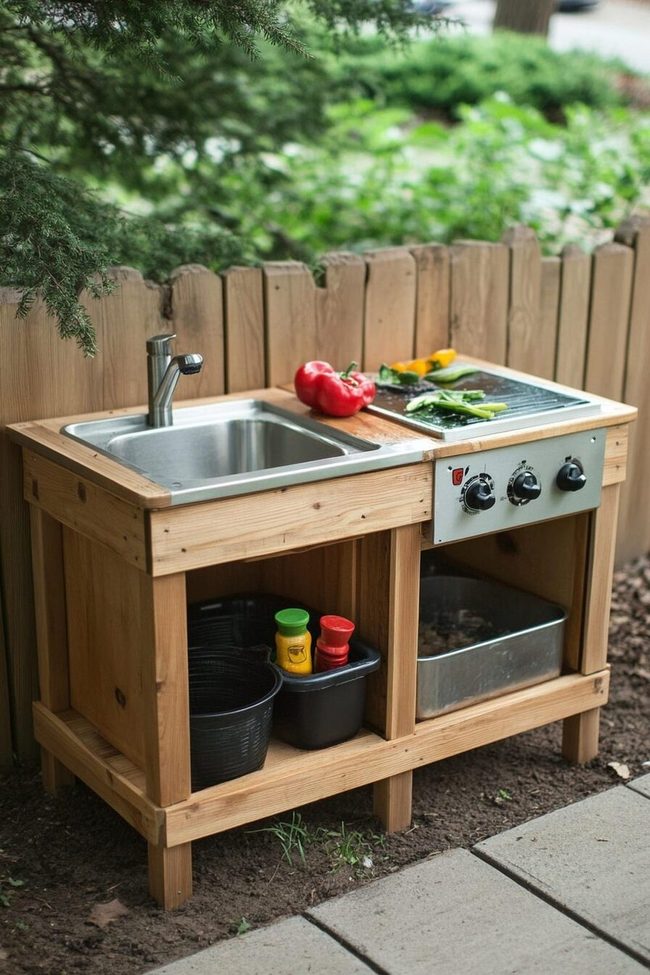
Cascading water flowing through bamboo channels and trickling over smooth river rocks reworks a mud kitchen into a mesmerizing patio play space that engages all the senses.
Begin with a sturdy raised structure at a comfortable height so children can stand and play without strain, then install a solar-powered pump system that sends water gently from one level to a catch basin below and shapes that soothing sound of movement.
Position hand pump mechanisms that kids can operate themselves to build their strength and coordination while controlling the water flow.
Bamboo gutters and channels can be rearranged to let children experiment with how water moves and behaves, teaching them engineering basics through hands-on discovery.
Add river rocks and natural pathways where water trickles through before reaching the main mud area, and include a pulley system with buckets so children can lift water or mud between different levels and explore simple machines.
Hollowed logs serve double duty as storage for larger utensils or as planters for sensory plants right beside the kitchen.
Round wood pieces of different sizes arranged nearby shape organic seating for mud tea parties and patio gatherings.
A rain gauge and weather station positioned alongside the kitchen connect patio play to science and observation, turning the whole space into a mini ecosystem where children watch how water and earth interact and learn through rich sensory experiences.
Reclaimed Lumber Mud Cooking Zone Station
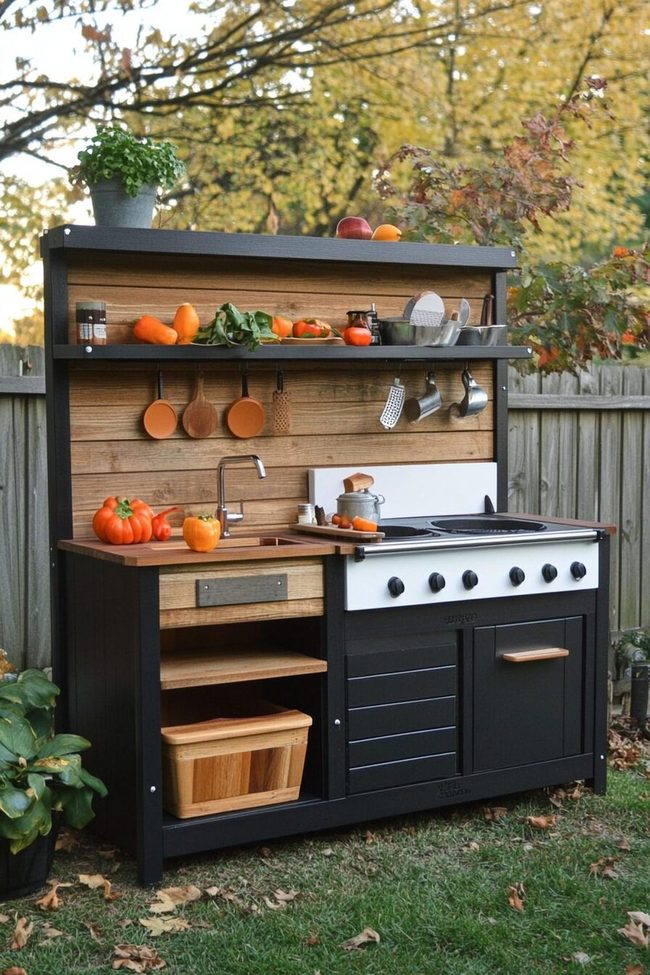
Building an eco-hero mud kitchen from salvaged materials lets you transform waste into a striking garden learning space that teaches kids about environmental creativity.
Start by hunting down discarded treasures headed to the landfill, old dressers, kitchen cabinets, unused plant pots, and building scraps all work beautifully as your foundation.
An abandoned dresser becomes the main structure when you remove drawers to open up shelving and keep one drawer for storing tools.
Salvaged sinks from kitchen renovations pair perfectly with simple gravity-fed water systems made from rescued rain barrels to complete your water station.
Reclaimed wood, old cutting boards, and salvaged countertop pieces sand smooth and seal up nicely to become safe work surfaces for mixing and creating.
Broken tiles transform into a gorgeous mosaic backsplash that shows children how waste becomes art through thoughtful reuse.
Bent spoons, measuring cups with missing numbers, and broken colanders work as mud kitchen tools while old mason jars and decorated tin cans hold sorted natural materials.
Nearby, a small compost system lets organic materials break down naturally, closing the loop of sustainable play in one connected space.
You can add a creation station where kids build their own tools from clean discarded materials, building engineering skills while reinforcing environmental values.
Portable Table Mud Dining Hub Setup
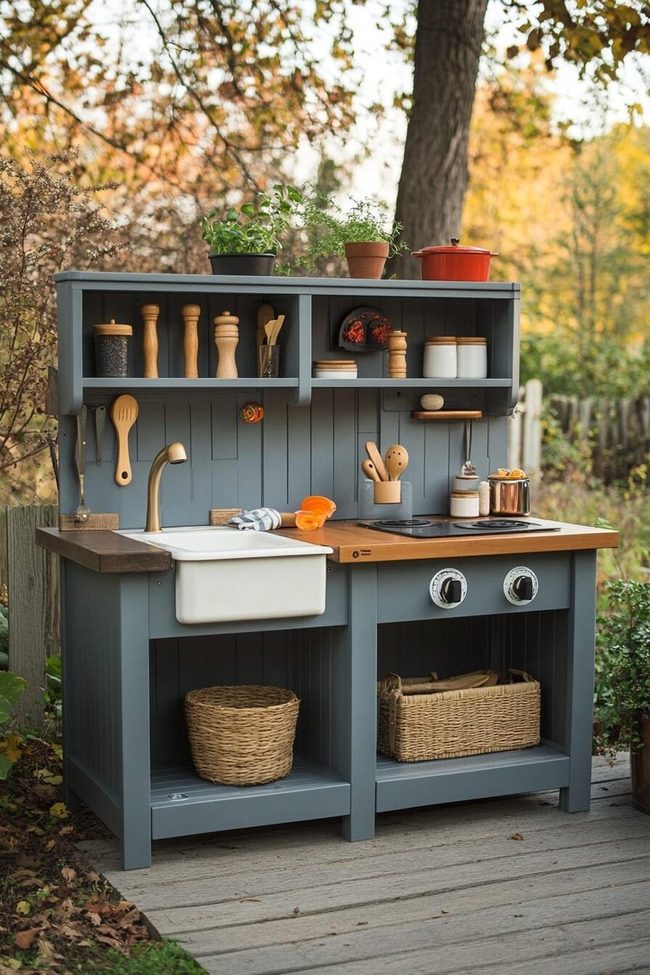
Set up an instant mud kitchen without building anything by starting with a folding table as your base, a camping table, plastic folding table, or card table works perfectly and sits at just the right height for young cooks.
Place a large plastic washing-up basin or dish tub on one side of the table surface to serve as your sink, and level the ground beneath the table while using rocks to weigh down the legs if wind is a concern.
Use a shower caddy or plastic tray with compartments to organize and separate utensils and natural materials, and hang a folding clothes-drying rack behind your table with S-hooks so tools stay within reach.
Fill a clean watering can or plastic pitcher that children can pour themselves when they need moisture for their mud recipes, and gather mismatched kitchen tools from inside your home, measuring cups, potato mashers, or colanders with broken handles all find new purpose in mud play.
Define your kitchen's space by laying a large outdoor blanket or tarp beneath the table to mark the play zone and contain some mess, then add folding camp chairs, garden stools, or upturned buckets around the table for seating.
Mud Cook Nook Tactile Exploration Station
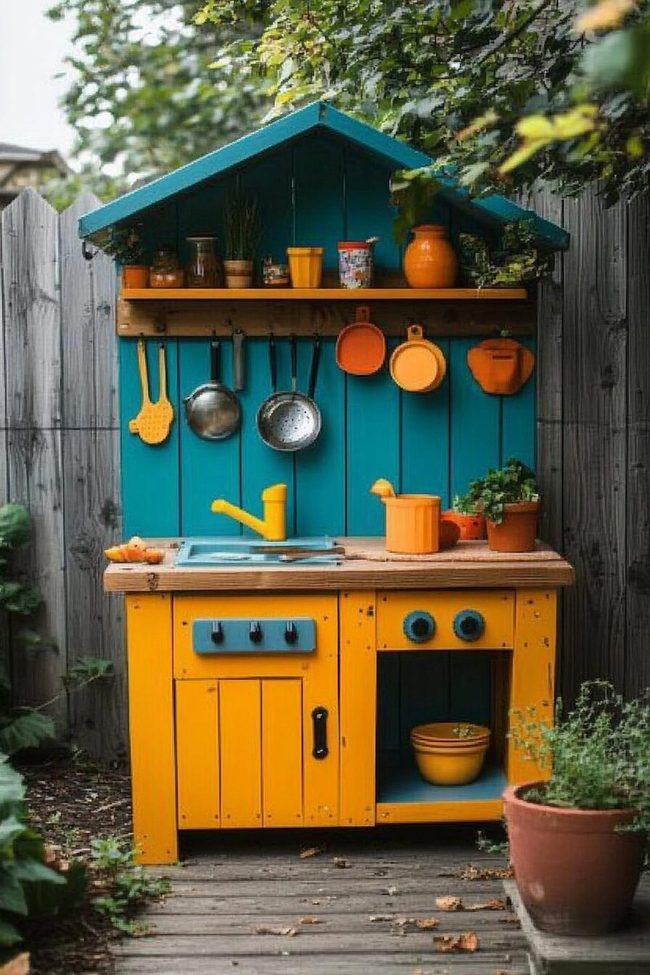
Building a mud kitchen that focuses on textures and sensory experiences opens up a whole world of learning and discovery for kids.
Start with a wooden mud kitchen base and then layer in different work surfaces like smooth tile, natural wood, and slate or chalkboard sections so hands experience variety as they play.
One standout feature is a backsplash made from cork, smooth stones, rough bark pieces, and bubble wrap sealed under clear varnish that kids can touch and explore while they work.
A discovery wall mounted securely nearby holds items with contrasting feels, carpet pieces, sandpaper, shells, understated fabric, and bumpy seed pods, appealing tactile investigation.
Fill containers throughout the space with different materials such as fine sand, pebbles, dried beans, and water beads that can mix into mud creations.
You can attach various brushes ranging from understated paintbrushes to stiff scrubbing brushes so children learn how across one works differently with mud and water.
Add texture to play by setting up imprint stations with textured rolling pins, shaped molds, and stamps that press patterns into creations.
Consider including a vertical xylophone made from metal pipes, wooden blocks, and plastic tubes that adds sound and texture to sensory exploration.
Scented plants like lavender, lemon balm, and mint in small pots around the kitchen bring in smell alongside touch and sight.
Backyard Mud Cooking Zone Weekend Build
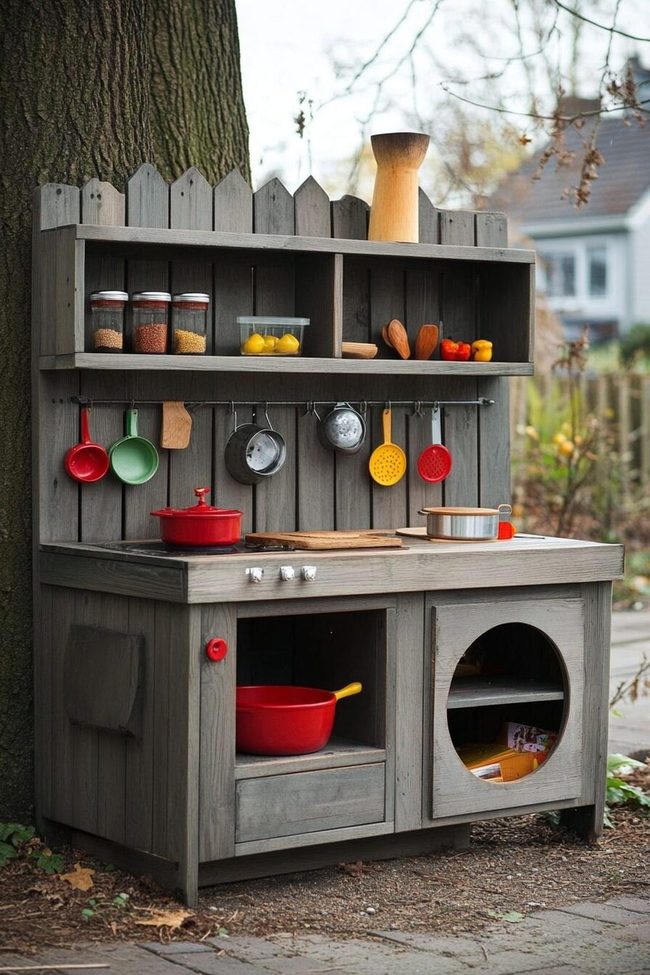
You can build an amazing mud kitchen in just one afternoon using supplies you probably have around the house, and kids will play with it for months afterward.
Start with something basic like an overturned wooden crate or plastic storage tub as your foundation, then secure it to the ground with garden stakes or heavy rocks inside to keep it stable during active play.
Lay a weather-resistant cutting board or piece of pressure-treated wood across the top to shape a work surface where children can mix and shape.
Fill the inside of your crate with small plastic buckets or recycled food containers to hold tools and mud treasures, and surround the whole setup with large rocks or logs that double as seats and extra building surfaces.
Gather old kitchen items from your donation pile, measuring cups, wooden spoons, metal colanders, and plastic containers work perfectly as mud kitchen tools without spending any money.
Set up water access by placing a plastic drink dispenser with a spigot on stacked bricks nearby, and bury the rim of a large plastic basin in the ground next to your kitchen as a simple sink for rinsing and cleanup.
Keep a patch of earth close by where you turn the soil regularly and add water so you always have good mud consistency for playing.
Wooden Pallet Mud Bistro Zone Station
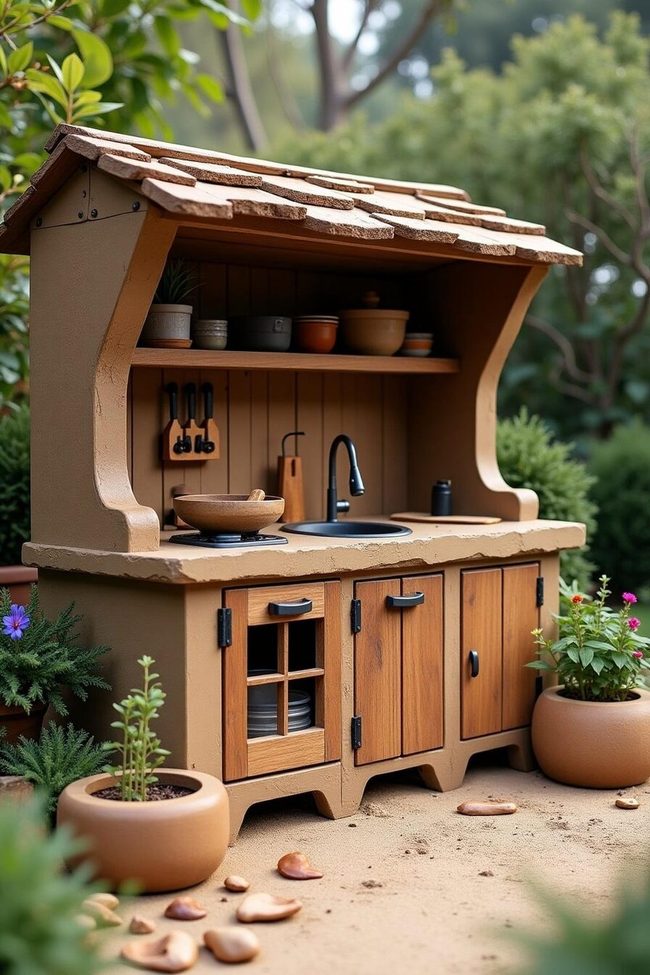
Rustic wooden pallets transform into a backyard mud kitchen that feels pulled straight from a countryside home, and you can build this play space with just a few basic materials and some creativity.
Start by finding two or three sturdy pallets that haven't been treated with chemicals, then sand down rough edges to keep little hands safe from splinters.
Those built-in pallet slats work wonderfully as shelves for storing mud pies and nature treasures your kids collect.
Layer in a weather-treated plywood countertop that's properly sealed to handle constant water and mud without breaking down.
Scavenged metal bowls, colanders, and old kitchen tools scattered around give the space that authentic cooking-station feel kids love.
An old faucet connected to a rainwater barrel becomes the water source, turning mud-making into a sustainable adventure that teaches conservation.
Weatherproof paint in earthy tones blends naturally with your yard while keeping the space safe for children.
Plant some kid-friendly herbs like mint and lemon balm in containers nearby, and suddenly those "ingredients" make the imaginative cooking feel even more real.
Alex Johnson
Home Decor Specialist & Content Creator
Expertise
Room Makeovers, DIY Home Projects, Budget-Friendly Decorating, Seasonal Decor Trends
Education
The Interior Design Institute, USA
New York Institute of Art and Design
Alex Johnson is a home decor specialist and content creator who believes that every space should reflect its owner’s unique personality. With a Diploma in Interior Design from The Interior Design Institute and a Certificate in Home Staging from the New York Institute of Art and Design, Alex focuses on making home styling fun, affordable, and accessible.
At Homee Bee, Alex provides room makeover ideas, DIY decor solutions, and budget-friendly styling tips to help readers transform their homes with confidence. Whether it’s seasonal decor trends, thrift store finds, or smart space-saving tricks, Alex’s approach is all about creating beautiful, functional spaces that feel truly personal.