
10 Space-Smart Ways to Design Your Small Apartment Nursery Ideas

A small apartment nursery can become a beautiful and functional space for welcoming a new baby without requiring a massive footprint or overwhelming square footage.
When you live in a compact home, designing a cozy area for an infant means getting creative with every inch while maintaining a sense of calm and comfort.
Limited space actually encourages thoughtful decisions about what truly matters, helping parents focus on essentials rather than accumulating unnecessary items.
Many families have successfully carved out charming nurseries in studios, one-bedrooms, and other tight quarters by using smart furniture choices and clever storage solutions.
The key lies in understanding how to maximize vertical areas, choose multipurpose pieces, and keep the room feeling open rather than cramped.
With a bit of planning and some inspired thinking, even the tiniest corner can become a peaceful sanctuary for both baby and parent.
The journey to designing a practical yet lovely nursery in minimal square feet is entirely possible and deeply rewarding.
Wall Hooks Maximize Nursery Space
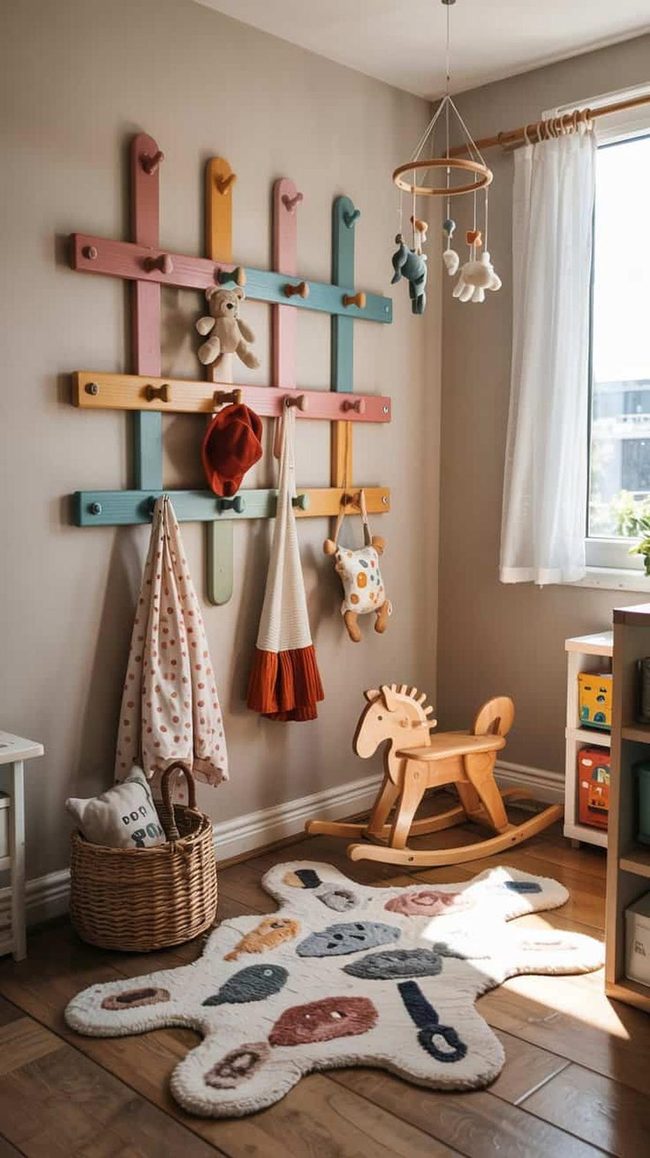
Wall-mounted hooks transform a nursery from cluttered to organized in ways that few other solutions can match, and they work exceptionally well when space is tight.
Installing hooks on bare wall areas, behind doors, or along furniture sides puts everything you need within arm's reach while keeping the floor completely clear, which matters so much in a small room.
Diaper bags, swaddles, hats, jackets, and tomorrow's outfit all hang neatly where you can grab them in seconds, and nursing covers or toy storage bags find perfect homes on these simple fixtures.
You can shop for decorative hooks shaped like animals, clouds, or stars to match your nursery's style and add visual interest without taking up valuable square footage.
When your baby sleeps in your bedroom, positioning a row of hooks above the changing station or dresser keeps essentials close and organized rather than scattered around.
One great thing about this approach is its flexibility-as your child grows, those same hooks work just as well for hanging backpacks or dress-up clothes years down the road.
Patterned Rug Defines Baby Zone
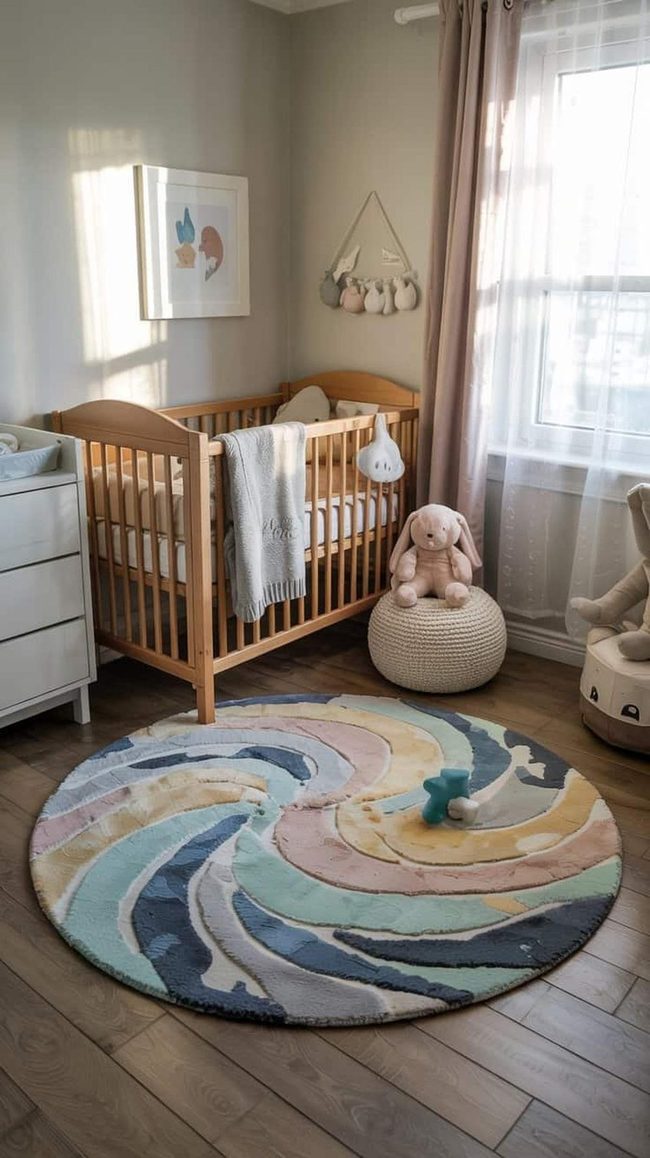
Bold rug anchors your small apartment nursery and becomes the first thing that draws attention when you walk into the room.
Beyond its striking appearance, it defines your baby's space and brings in personality and warmth without needing extra walls or dividers.
You can pick a rug with playful patterns, soft textures, or interesting colors that feel good underfoot during tummy time and story reading sessions.
Washable options work best since accidents happen, and cleanup becomes much easier when you choose the right material.
Layering rugs adds another dimension to the design-placing a smaller plush rug over a larger neutral base gives you comfort and style at once.
This two-rug approach makes the area feel purposefully arranged rather than squeezed in, and once your baby starts crawling, that soft surface becomes a practical safety feature.
If your nursery shares space with your living room or bedroom, the rug quietly carves out a baby zone without overwhelming the apartment's flow.
Small Room Whites and Soft Grays
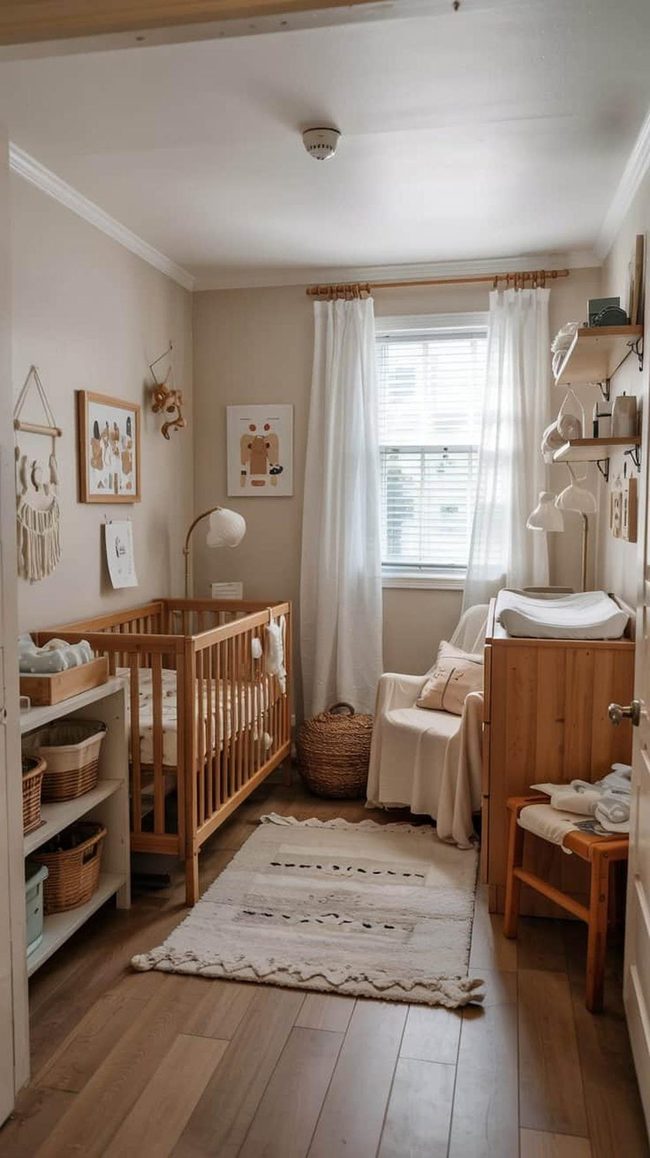
Light and neutral colors are your best friend when you're working with a small nursery because they bounce sunlight around and open up the entire room instantly.
Soft whites, gentle grays, pale blues, and creamy beiges on walls and large furniture pieces set a calm mood for both you and your baby without demanding dramatic paint choices.
Smaller accessories like pillows, toys, art prints, and a mobile above the crib are perfect spots to introduce color if you want more visual interest.
One of the best parts about choosing neutrals is how they adapt as your child grows and their preferences shift, so you can simply swap out smaller items rather than repainting down the road.
If you're combining your own bedroom with a nursery corner, these soft tones blend the two spaces together smoothly and keep everything feeling unified rather than fragmented.
Neutrals are also timeless, meaning your design won't feel dated as time goes on.
This approach gives you flexibility now and saves you money and effort later when it's time to update the space.
Dual-Purpose Nursery Furniture Solutions
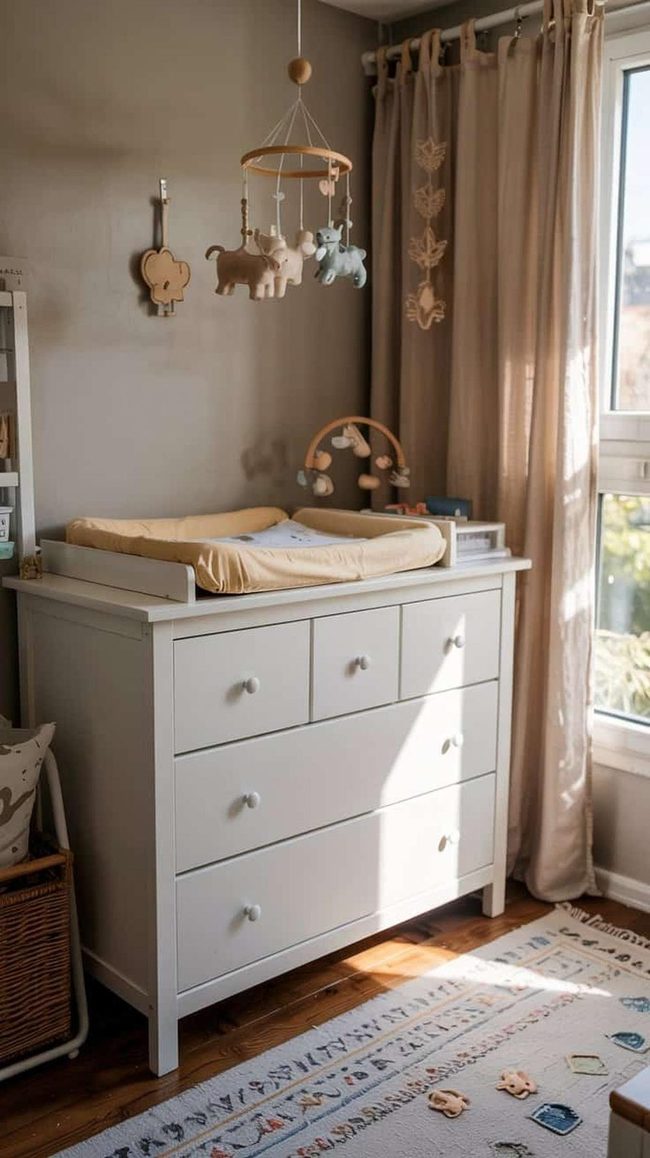
Multi-functional furniture makes all the difference in a small apartment nursery because every piece needs to serve more than one purpose.
A dresser topped with a changing pad gives you storage for clothes and diapers without taking up extra floor space, and convertible cribs that transform into toddler beds or daybeds stretch both their usefulness and your budget over several years.
Ottomans with hidden storage compartments and rocking chairs featuring built-in pockets for bottles and books keep necessities within arm's reach while eliminating clutter.
Before you buy anything, think hard about what jobs each piece should handle in your room.
Bookshelves paired with baskets work as both toy storage and display areas for baby keepsakes, and this combination of functions means your space stays open and breathable.
When furniture pulls double or triple duty, you naturally end up with a more organized nursery and more room for your little one to play and grow.
Layered Soft Lighting for Nurseries
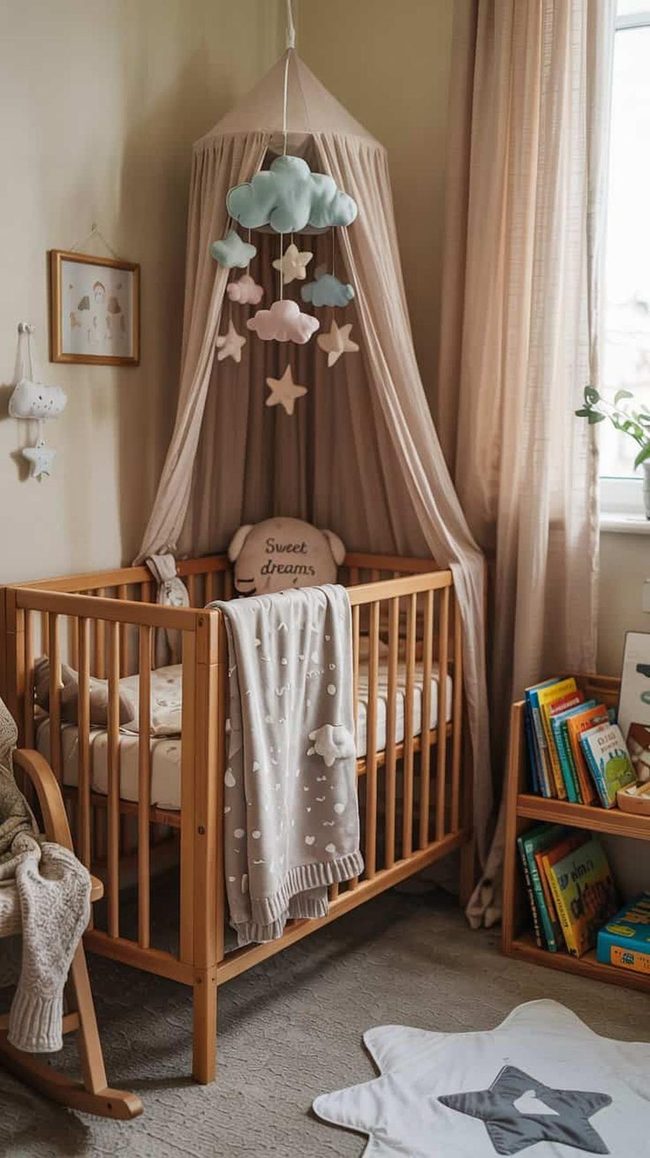
Soft lighting transforms a nursery more than you might expect, especially when you're handling late-night feedings and diaper changes in a small apartment where overhead lights feel too harsh and bright.
Layering your light sources works better for both drowsy babies and exhausted parents, so consider adding a dimmable table lamp or plug-in wall sconce near your feeding chair to make midnight tasks manageable without jolting everyone awake.
String lights or LED fairy lights draped above shelves or along the wall provide a gentle glow that softens the whole room.
During daytime hours, sheer curtains diffuse natural light beautifully throughout your nursery space, while blackout shades help you darken the room for naps and add an extra sense of calm.
Warm-toned bulbs make a noticeable difference compared to cool ones, and swapping them out instantly makes your entire space feel more welcoming and peaceful.
We've seen how this simple change affects the mood without requiring any major renovations or expensive upgrades.
Compact Crib Maximizes Small Spaces
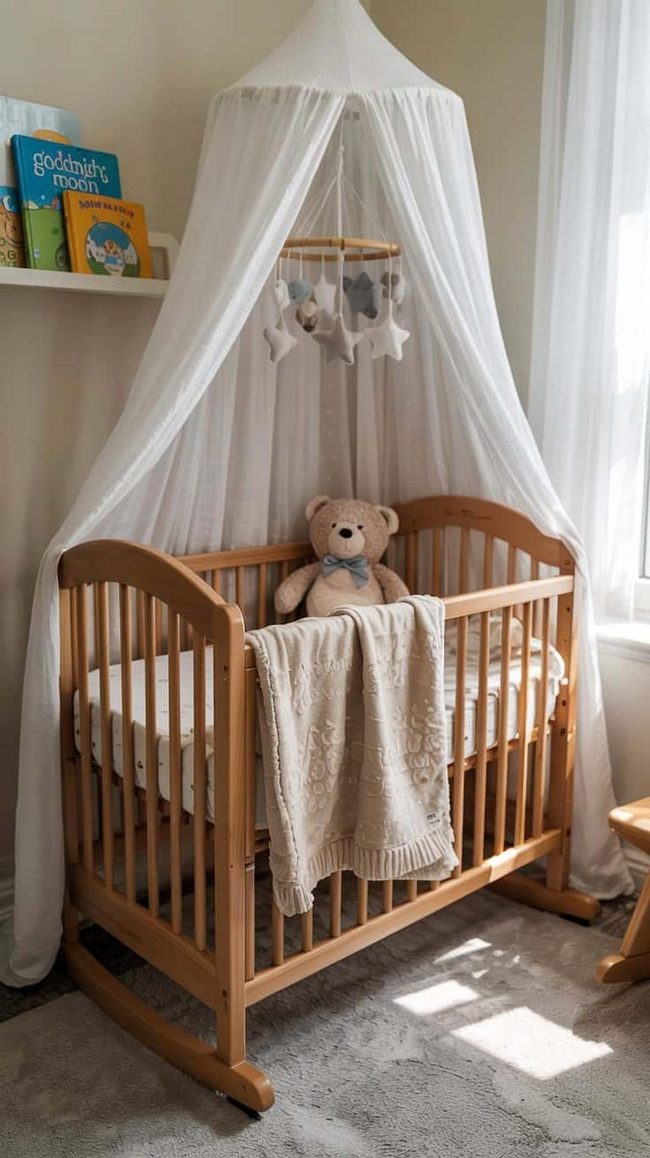
Starting with the most obvious need, your baby requires a safe sleeping space, and in a small apartment, a standard crib can monopolize your entire floor and leave you stumbling around at 3 AM trying to navigate the clutter.
Mini cribs solve this problem beautifully by offering a smaller footprint while maintaining all the safety and comfort your baby needs.
Many models roll on wheels, letting you move the crib between rooms whenever your needs shift, and some even fold completely flat so you can reclaim that precious floor space during daytime hours.
Fitting snugly into corners, alongside your bed, or even inside a repurposed closet-turned-nursery, these compact options work well with almost any room layout.
Gone are the days when mini cribs meant sacrificing style since modern versions come in numerous cute colors and contemporary finishes that actually look good in your space.
Draping a soft fitted sheet in a fun pattern across the mattress boosts the look instantly without demanding any additional square footage.
You get a functional sleeping solution that doesn't force you to choose between your baby's comfort and your own ability to move around freely.
Vertical Storage Maximizes Nursery Space
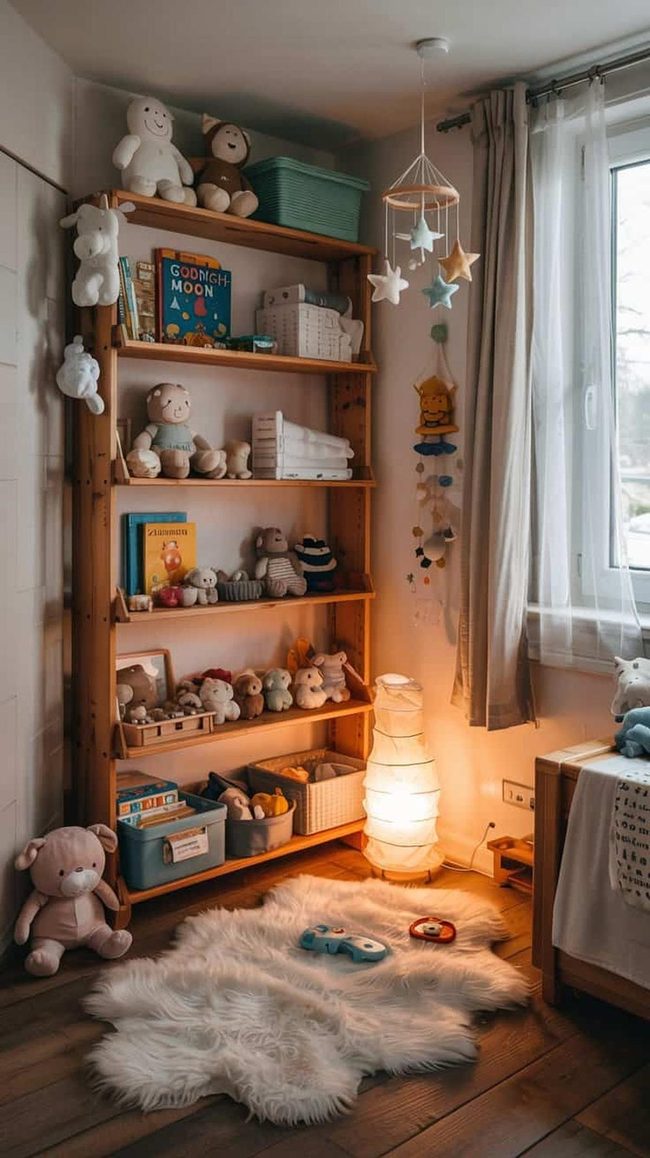
Wall-mounted storage solutions transform a nursery into an organized space that feels bigger than it actually is, so tall bookcases and narrow shelving units deserve your attention as they claim all that wasted wall space above eye level.
Door-mounted organizers hold diapers, wipes, and burp cloths right where you need them, while pegboards offer endless ways to customize your storage with hanging baskets for pacifiers and socks Positioning items you reach for daily at a convenient height makes your daily routine smoother, so reserve those higher shelves and out-of-the-way spots for things you rarely grab.
Vertical Storage Above Crib
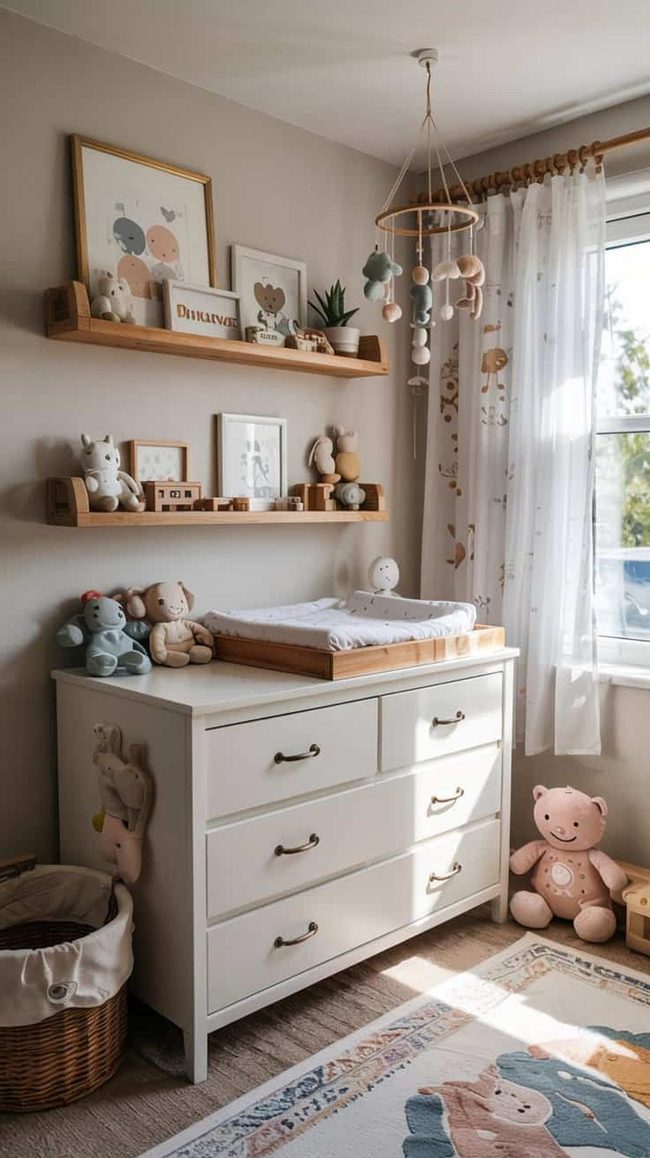
Floating shelves mounted above your changing table, crib, or dresser transform tight nursery spaces by offering storage without consuming any floor area, and you can display books, soft toys, and keepsakes while keeping wipes, lotions, and tiny socks within arm's reach.
Natural light streaming through nearby windows highlights your little one's treasures beautifully on these shelves.
Organizing everything with matching baskets or bins prevents clutter and makes midnight diaper changes so much easier since you'll know exactly where each item lives.
Grouping supplies by category-books on one shelf and diaper essentials on another-helps you find what you need fast when you're bleary-eyed at 2 AM.
Just remember to position shelves above your crib high enough that your growing baby can't reach them down the line The beauty of floating shelves is that they look clean and simple, and they actually help you stay organized instead of adding visual noise to your room.
Soft Cushion Play Corner
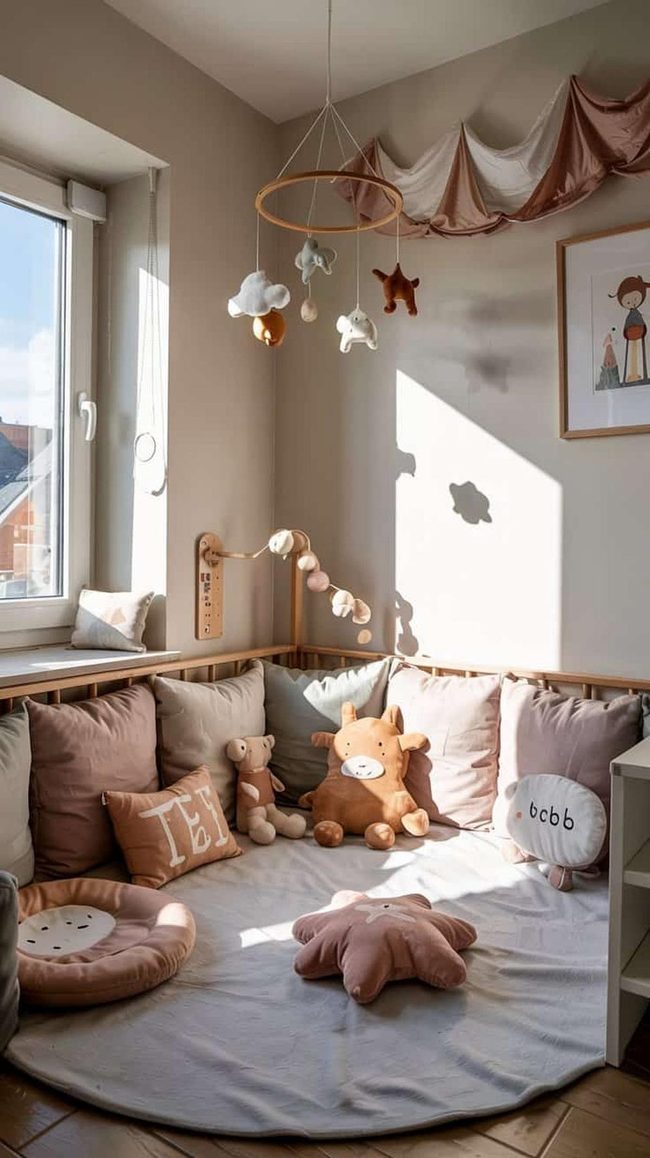
Even in a tight apartment, you can set up a play area by stacking soft floor cushions or oversized pillows in one corner where your baby can do tummy time and explore freely.
Add a foldable play mat if space allows, since these roll up easily when not in use and give your little one enough padding for rolling around and reaching those early milestones.
Keep a few plush toys and board books within arm's reach so everything your baby needs is right there.
Baskets or fabric bins tucked nearby make cleanup simple at the end of the day, and you won't have toys scattered all over your space.
If storage is tight, think about poufs that work double duty as seats for you when guests come over.
Closet Converted Into Nursery
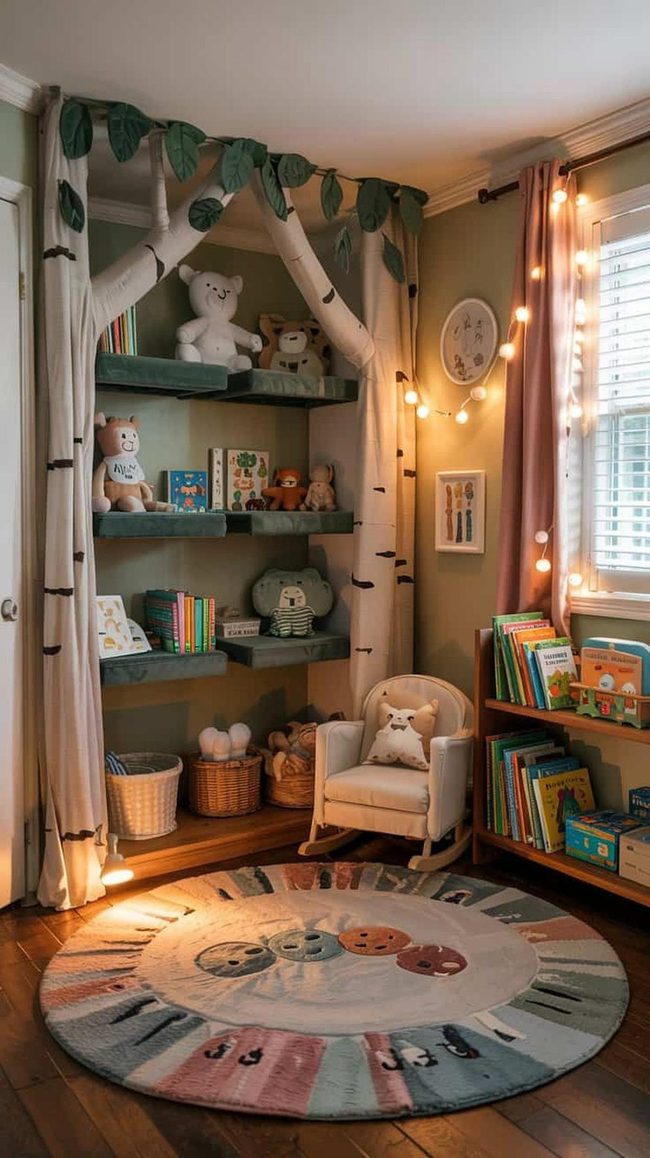
If you have a walk-in or even a deep reach-in closet sitting empty, you can turn it into a surprisingly functional nursery that keeps your living space feeling grown-up while giving your baby their own special corner.
Start by clearing everything out and taking exact measurements of the space you have to work with.
Most mini cribs will fit comfortably with room left over for storage baskets and soft touches that make the area feel intentional.
Hanging a tension rod lets you organize baby clothes neatly, and you can add shelves above for diapers and supplies while peel-and-stick wallpaper gives the walls personality without permanent changes.
Lighting matters quite a bit, so battery-operated puck lights or adhesive LED strips work well if the closet doesn't have an outlet already inside.
Don't overlook ventilation either-keep the doors open while your baby sleeps or consider swapping them out for lightweight curtains instead.
Once your little one outgrows their crib or you need that closet space back, the area shifts easily into a reading corner or play zone for kids of any age.
Emma Davis
Founder & Chief Home Enthusiast
Expertise
Interior Design and Space Planning, Home Organization and Storage Solutions, DIY Home Improvement Projects, Sustainable and Eco-Friendly Design, Seasonal and Holiday Decor
Education
Texas State University
Texas A&M International University
Emma Davis is the founder and chief home enthusiast at Homee Bee, a platform dedicated to helping homeowners and renters create stylish, functional, and inviting spaces. With a Bachelor of Science in Interior Design from Texas State University and certification as a Residential Interior Designer from Texas A&M International University, Emma blends design expertise with practical solutions to make home decor accessible to everyone.
Through Homee Bee, Emma shares her passion for space planning, home organization, and DIY projects, offering readers expert advice, creative inspiration, and easy-to-follow guides. Her work emphasizes eco-friendly design, budget-friendly decorating, and seasonal styling, ensuring every home feels warm, personal, and well-balanced.