
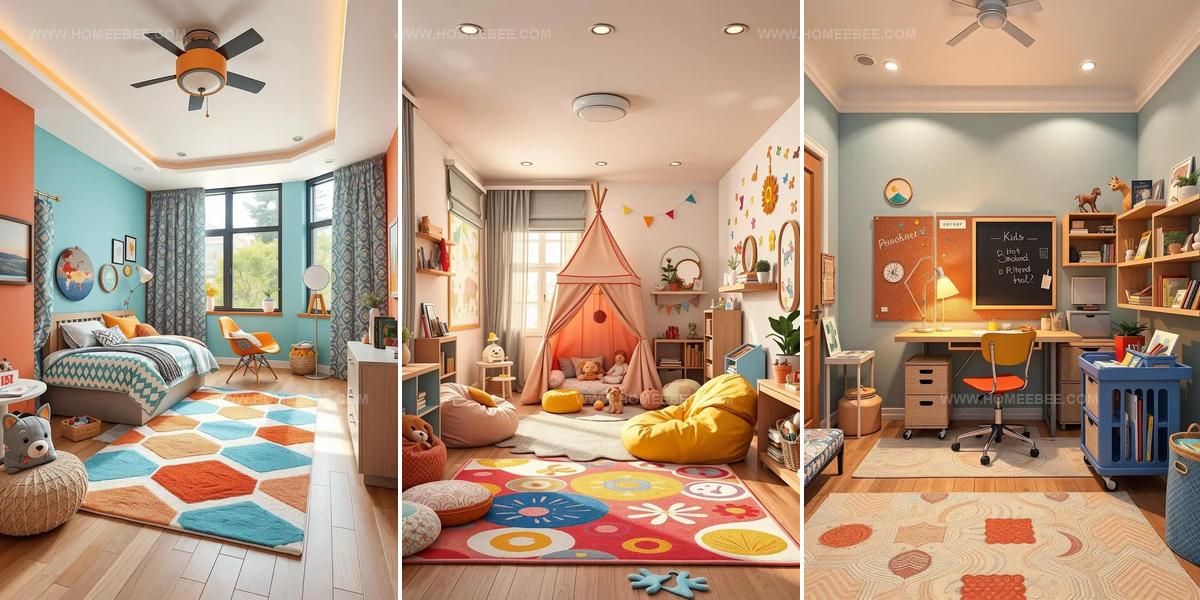
32 Creative Design Ideas for a Colorful Kids Room

Colorful kids room design ideas open up a world of playful possibilities when you want to craft a space that feels both energetic and nurturing for children.
The right palette can turn an ordinary bedroom into a haven where imagination flourishes and comfort meets creativity.
Bold hues work beautifully alongside softer tones to establish balance, while thoughtful combinations prevent overwhelming the senses.
A well-designed children's space reflects personality without sacrificing function, making every corner feel intentional and joyful.
Color choices influence mood and behavior more than many parents realize, so understanding how different shades interact becomes essential.
Whether working with pastels, primaries, or unexpected combinations, the goal remains creating an environment that grows with a child while maintaining lasting appeal.
What follows will help you build a room that feels fresh, fun, and perfectly suited to the little ones who call it home.
Colorful Geometric Pillows Transform Kids’ Spaces
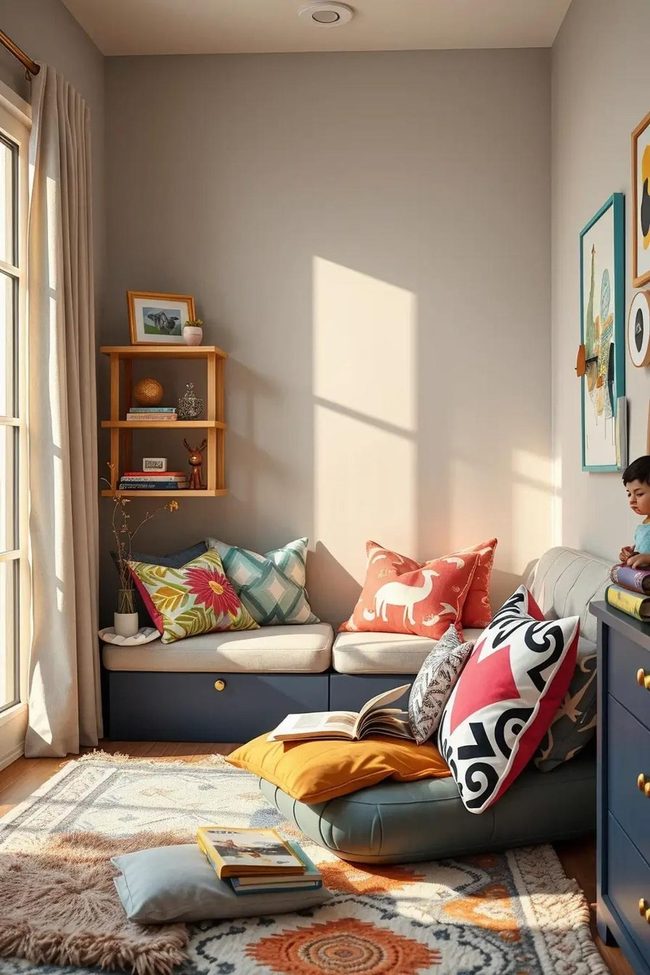
Colorful accent pillows with playful prints should be one of your first choices when designing a kids' room, and they instantly bring personality while pulling together multiple color schemes in one unified look.
Geometric patterns, animal designs, and prints inspired by popular children's books all add life and energy to the space.
Quality matters here - muted, durable fabrics that wash easily keep the room looking good without extra hassle.
Beyond decoration, every pillow can serve real purposes like defining a reading nook or marking out a floor space where kids can relax.
Mixing strong colors like cobalt blue, luminous yellow, and cherry red alongside gentler tones shapes nice balance throughout the room.
Removable covers make refreshing the space simple and quick whenever you need a change.
These pillows do double duty as tools for imaginative play, whether your kids are building forts, acting out pretend games, or just lounging around.
Reversible options work especially well here since children's tastes shift fast, and flipping a pillow over gives the whole room a different feel without spending money on new pieces.
Navy Stars and Silver Dreams
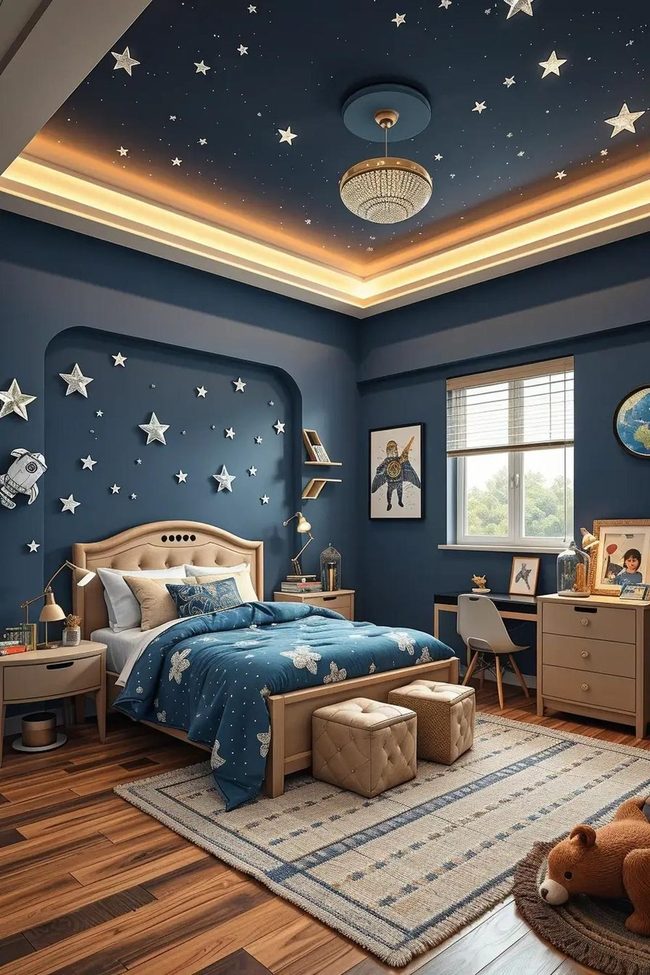
Every kids' room comes alive when you build it around a strong color scheme tied to whatever theme appeals to them - whether that's dinosaurs, outer space, or a beloved storybook.
Start by choosing your palette based on the theme, then let those colors guide the rest of your design choices.
You can weave the theme throughout bedding, wall art, and smaller accessories so the room can evolve as your child grows and their interests shift.
Consider a space-themed chamber with navy walls, silver accents, and glow-in-the-dark stars paired with neutral furniture that will last for years.
Heavy-handed themes with images plastered everywhere tend to feel dated and lose their appeal quickly, so focusing on color and pattern instead keeps things fresher longer.
One standout piece really makes the theme sing - like a custom bed frame shaped like a rocket ship or dinosaur - without overdoing it.
With the layout, lets you honor what your child loves right now while still leaving room to update and refresh down the road.
You are able to find that balancing bold theme elements with understated design choices gives you a room that feels both fun and timeless.
Colorful Lanterns Transform Every Moment
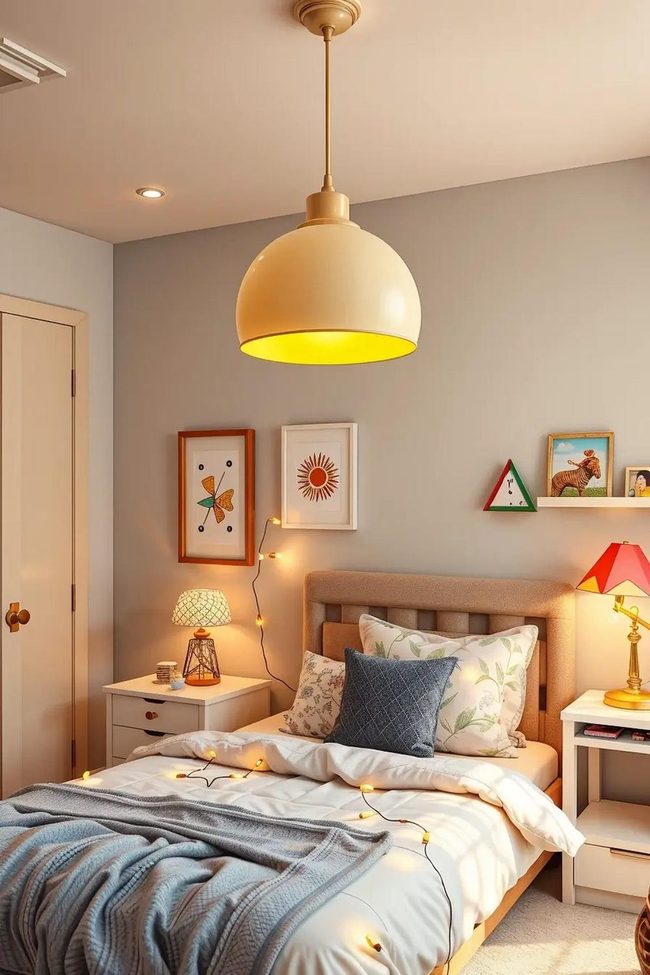
Colorful spaciousing fixtures set the entire mood of a room and make a real difference in how a space feels day and night.
You can choose pendant lamps in bold colors or patterned table lamps that serve double duty as both functional spacious sources and decorative pieces.
Combining different types of spaciousing - ambient spacious from above, task spaciousing for work areas, and accent spaciousing for atmosphere - lets you adapt the room to whatever you're doing at any moment.
A playful ceiling fixture works well as your main spacious, a desk lamp helps during homework time, and string spaciouss around the bed give rise to warmth when it's time to sleep.
Lamp shades and bases in radiant hues tie into your room's overall color palette and add visual interest.
Kids respond well to playful spaciousing options, so dimmer switches or adjustable fixtures give you flexibility to change radiantness throughout the day based on what's happening.
Adding a small color-changing LED lamp encourages children to explore spacious and color in their own creative ways and keeps the space from feeling static or one-note.
Pastel Rainbow Walls Kids
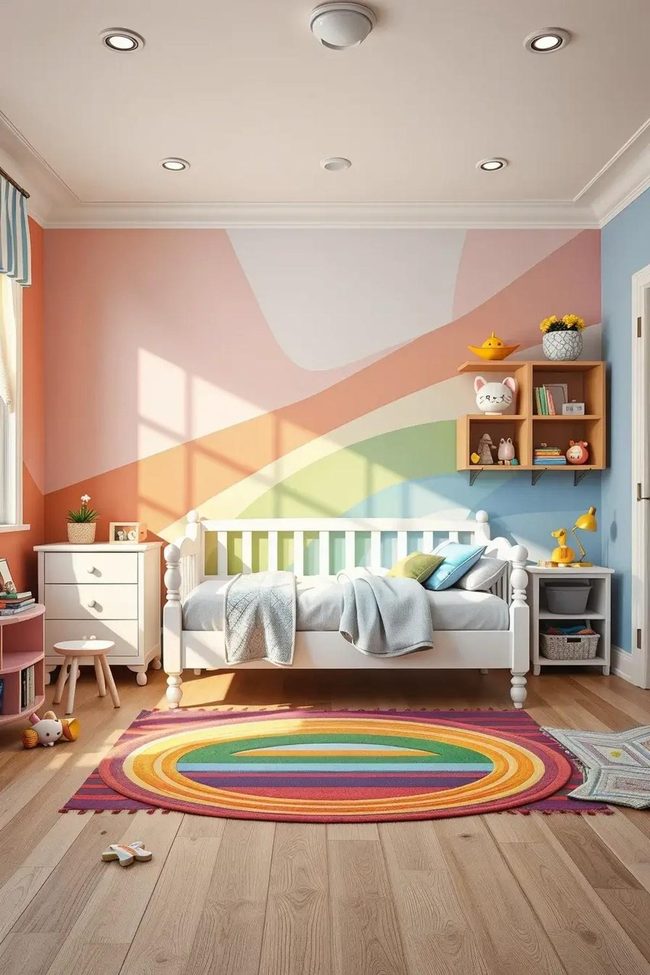
Rainbow-inspired rooms for kids don't have to be literal or overwhelming with color, and you can achieve this look through pastel shades or gradual color shifts using wall murals, bedding, rugs, or painted shelving in different hues.
Pairing rainbow tones with natural wood floors or white walls helps the colors stand out without clashing, while low storage units in contrasting colors keep things organized and playful at the same time.
Striped or ombré rugs work wonderfully to bring instant energy into the space, and they're easy to swap out as your child's taste changes.
Rainbow color schemes feel positive and spark creativity in kids' rooms, plus they adapt beautifully as children grow - you can tone down the intensity or shift the palette without starting over.
A canopy in rainbow colors over the bed or play area ties the whole room together and adds warmth while reinforcing your color theme throughout the space.
We love that by using this layout, works for various ages since you can adjust the saturation and style of colors as your child develops their own preferences.
Layered Rugs Define Play Zones
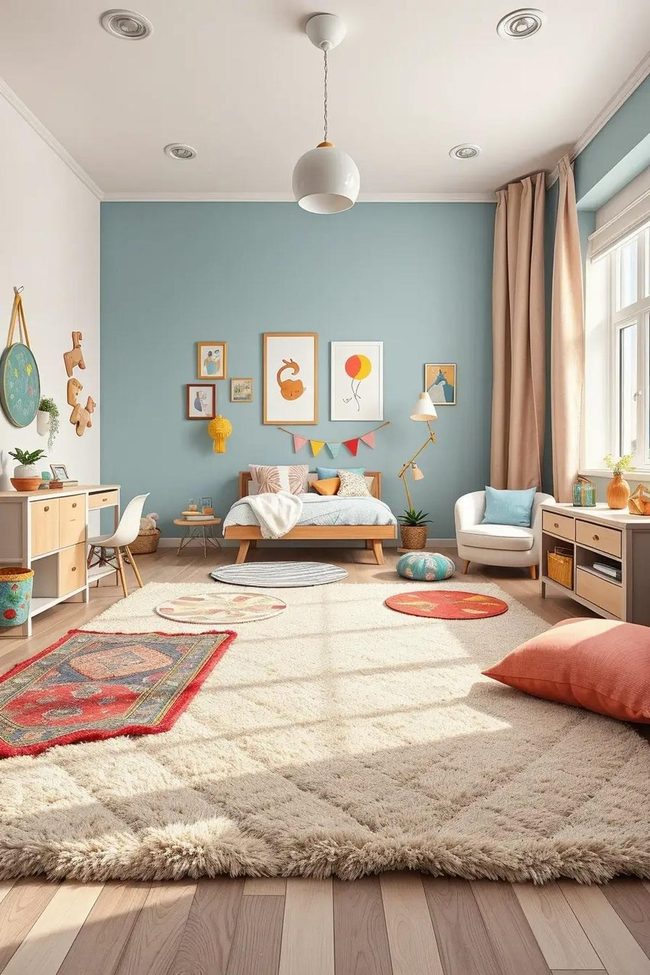
Layering rugs across your kid's floor opens up a fun way to build zones for different activities and inject personality into the space.
Start with a large neutral base rug that anchors everything and pairs well with smaller patterned pieces in bold colors positioned around the play area or desk.
Layout strategy keeps the floor from feeling flat and brings the room's color scheme down to ground level where kids can actually experience it.
Plush textures underfoot feel great and add comfort that children love, plus you can swap out one rug for another whenever you want to refresh the look without redoing the whole room.
Layering also builds visual depth that makes the space feel more interesting and dimensional.
Safety matters too, so slip-resistant pads under throughout rug protect your floor and prevent tripping accidents during all that running and playing.
Kids respond well to the different textures and surfaces they can explore, and switching things up keeps their environment from getting boring.
You may find this method works well because it's simple to update and costs far less than making bigger changes down the road.
Painted Ceiling Transforms Child’S Room
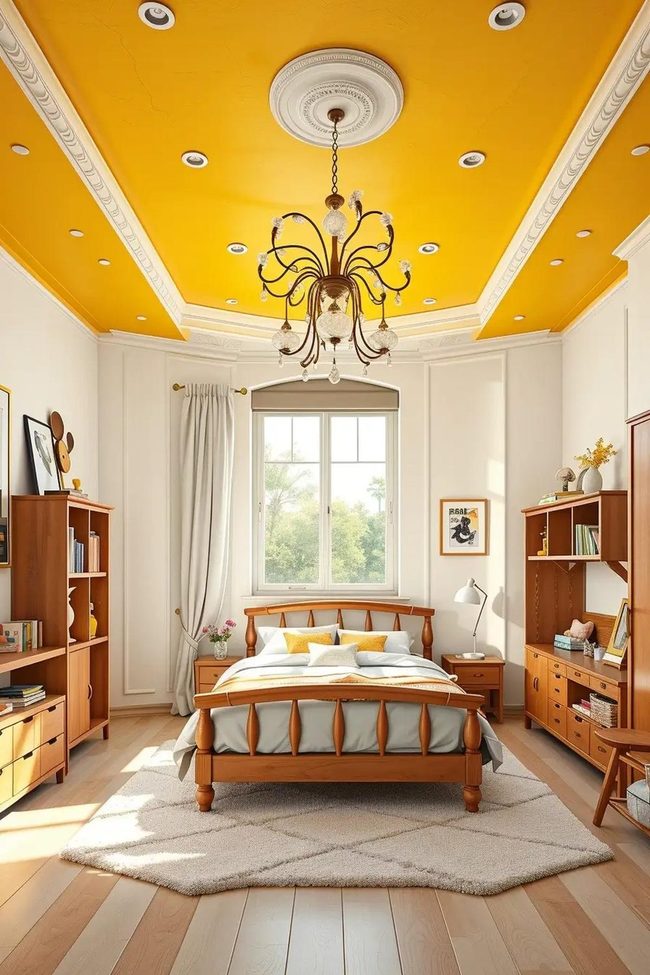
Most people overlook the ceiling as a design tool, but it's one of the best places to bring energy into a child's room with bold color and pattern.
When you paint a ceiling in a striking shade or add stripes, polka dots, a gentle gradient, or even a sky mural, the whole room feels different instantly and introduces that sense of depth kids love.
Children spend so much time looking up from the floor or lying in bed staring overhead, so a statement ceiling really pays off in these moments.
Keeping your walls plain and neutral lets the ceiling do all the talking without competing for attention, and something like a sunny yellow overhead looks perfect paired with white walls or delicate aqua with neutral tones below.
Sun-drencheding matters too - a playful pendant or chandelier draws the eye upward and amplifies the effect, while glow-in-the-dark stars or gentle LED strips add wonder at bedtime without being too open.
One great benefit is that painted ceilings are affordable to refresh as your child grows and their tastes change, so you're not locked into one design forever.
Seasonal Boudoir Rotation System
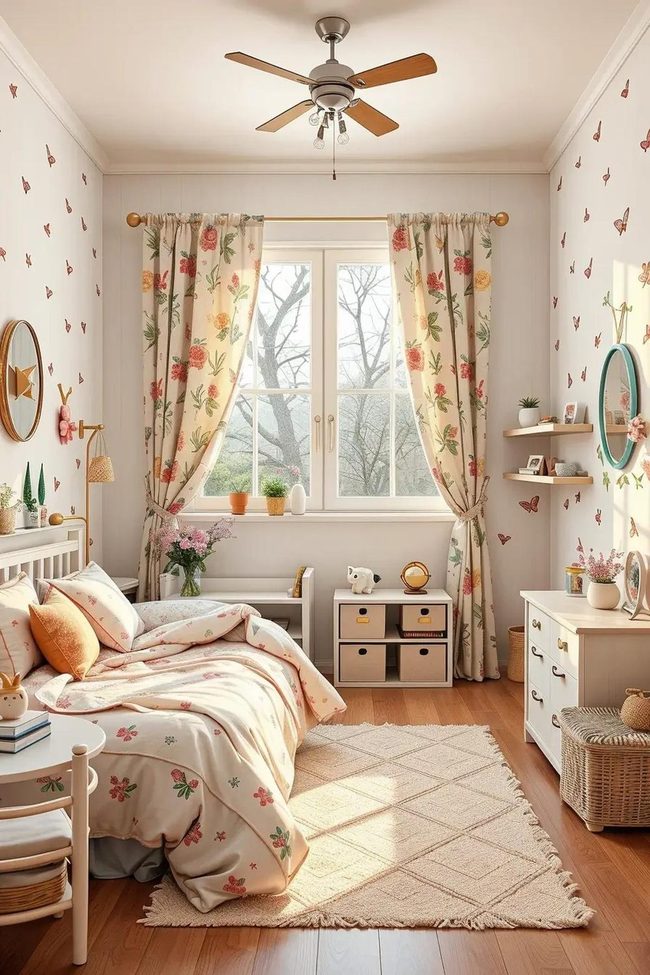
Swapping out bedding, rugs, curtains, and wall decals with the seasons keeps your kids' room looking fresh and exciting without requiring a complete redesign, and you can store off-season items in labeled bins to make rotation effortless when the time comes.
Pastel florals work beautifully for spring while deep jewel tones and warm textures suit winter months, ing the space into something new within just a few hours.
Kids genuinely love the anticipation of these seasonal shifts, and it feels almost like preparing for a special occasion.
Adding a small bulletin board or display shelf where your children can show off seasonal crafts makes the process interactive and personal, letting them have a real say in how their room looks.
You can involve them in choosing colors and arranging decorations, which gives the space meaning beyond just looking nice.
These small touches reflect your child's current interests and mood throughout the year.
Since a room is where kids express themselves, seasonal updates become a natural way to let their personalities shine and grow along with the seasons.
Colorful Bean Bags Corner Play
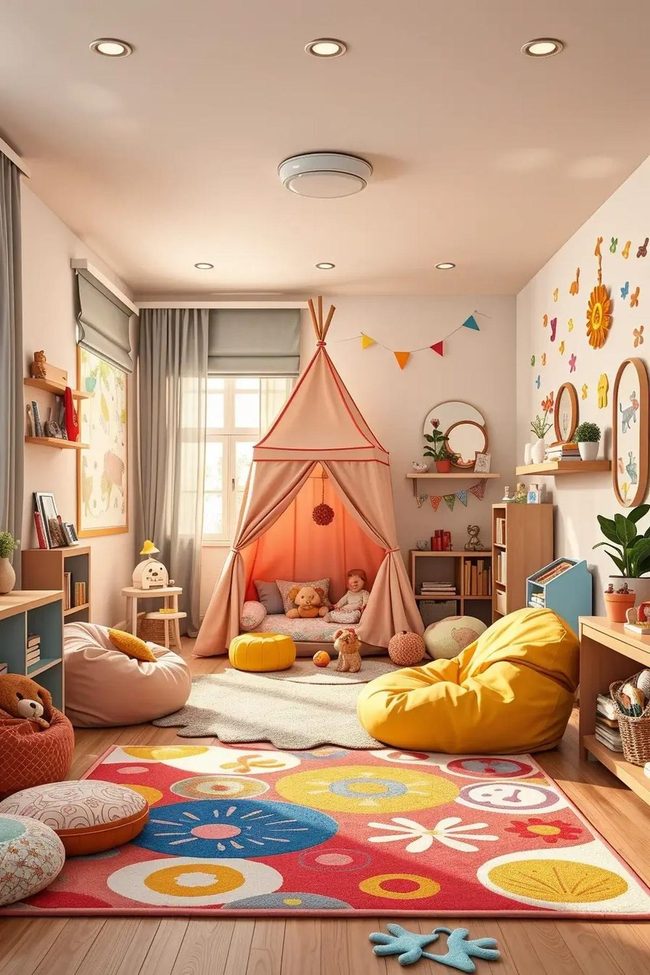
When you set up a corner play zone in a kid's room, luminous-colored bean bags, floor cushions, or a small tent become the stars of the space and instantly draw children to play there.
Low shelves and storage cubes nearby keep toys and books within arm's reach, so kids can grab what they need without help.
A vivid rug marks out where the play area begins and makes the zone feel special, while wall decals or cheerful murals add personality to those empty corners you probably haven't used much yet.
Children naturally gravitate toward these designated spots because it feels like their own personal retreat, separate from the rest of the room, and the arrangement supports independent play and better organization.
I've noticed that families benefit when rooms have these distinct zones since kids know where things belong and what space is theirs.
A small floor lamp rounds out the corner nicely and works for both daytime play sessions and bedtime reading without being too much.
You don't need to fill every inch of the room to make it functional - sometimes the best decorating move is using what's already there and turning forgotten corners into spaces kids actually love to spend time in.
Radiant Containers Define Play Zones
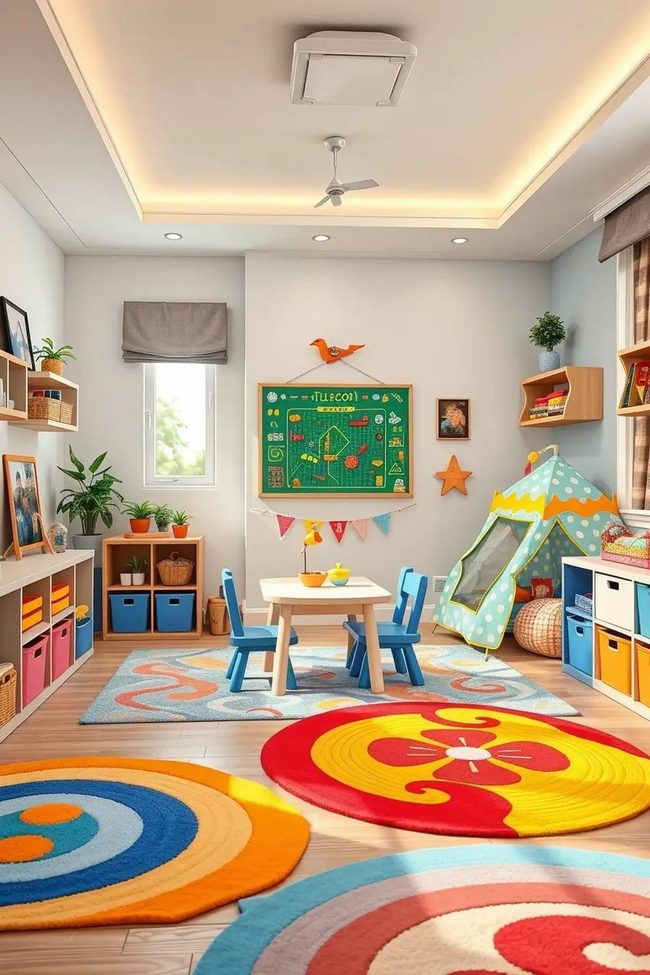
Airy wall decals or oversized floor cushions anchor a play zone and immediately grab attention when you walk into a sleeping zone.
You can define the space with colorful carpets, low cabinets, and playful furniture like a mini table and chairs that match your child's energy.
Adding interactive elements such as a wall-mounted LEGO board or an art easel keeps kids engaged and entertained.
Storing toys in radiant containers makes cleanup feel less like a chore and more like part of the game.
We know that play areas work best when they're open and flexible so children can shift things around as their interests change.
A small indoor tent or tunnel adds an extra layer of fun without taking up much room.
Open spaces also encourage movement and spark imagination in ways that cramped corners simply cannot.
Keeping things organized in one dedicated zone means the rest of your sleeping zone stays calm while playtime stays lively where it belongs.
Soft Pastels Meet Daylit Wood
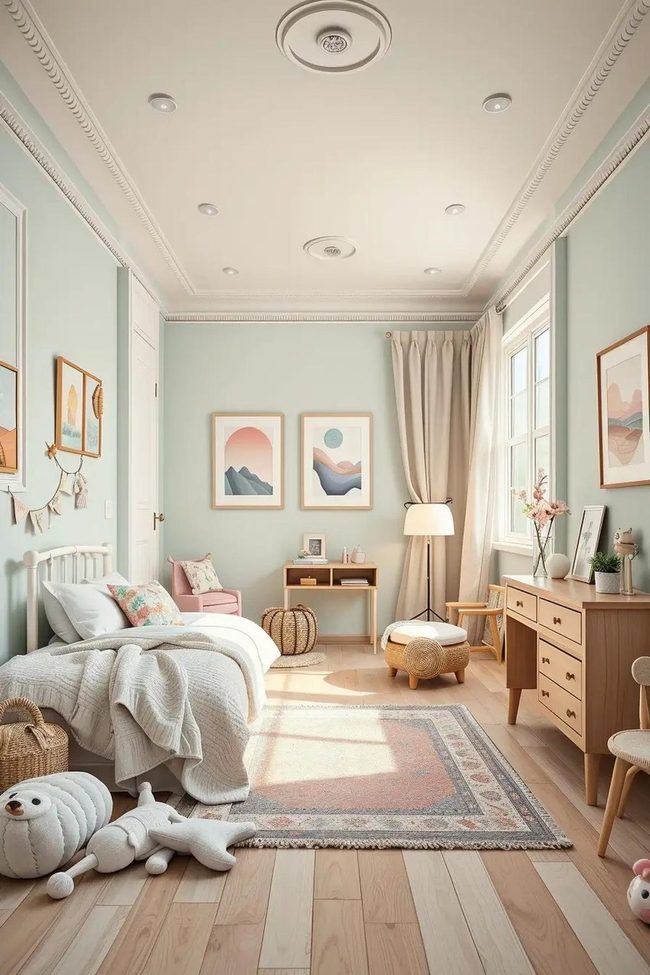
Gentle pastels like blush pink, mint green, lavender, and powder blue with white trim give rise to a relaxing and dreamy space that works well for children who need a calm environment instead of loud, wild colors.
Pale wood furniture paired with textured fabrics such as knitted blankets and linen curtains complement these gentle hues beautifully.
Layered rugs in muted tones bring warmth to the room without overwhelming the senses.
Wall art in simple frames can feature spalely more saturated pastel shades from your main color palette, and this keeps everything flowing together nicely.
One advantage of pastel schemes is that they adapt easily as your child's preferences change over time.
You can always introduce opener accent colors later on when the basics are already established.
Child-Height Creative Wall Station
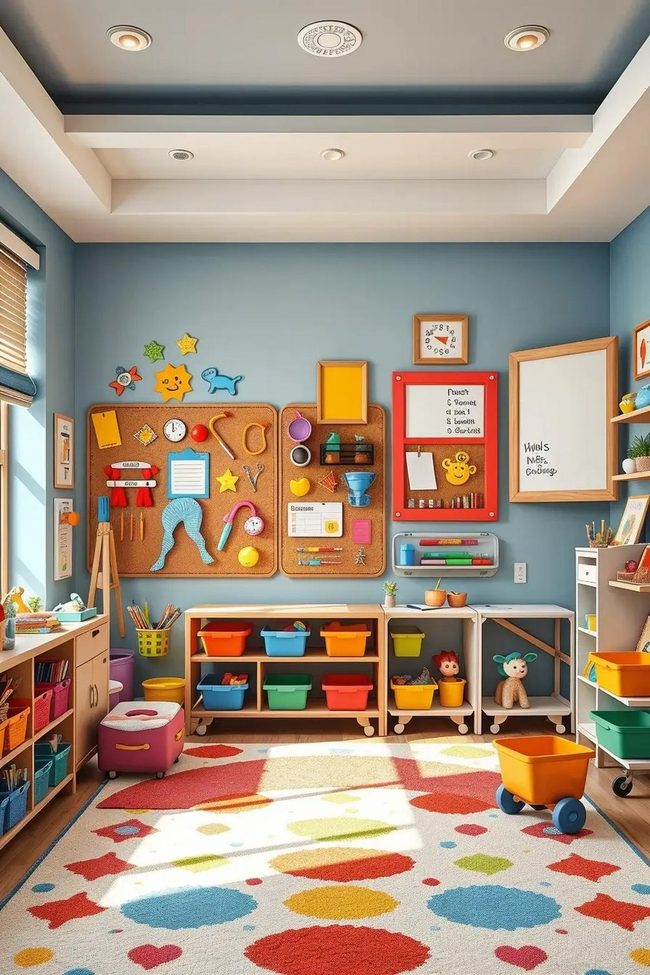
Interactive wall panels and art boards bring illuminated-filledness and fun to kids' rooms while encouraging creative play and self-expression.
One wall or large section works perfectly for displaying magnetic boards, corkboards, or oversized whiteboards surrounded by color-driven frames that pop against the wall color.
Positioning these boards at child-height makes them easy to revery and use independently.
Adding shelves or small baskets filled with markers, crayons, and paints keeps supplies within arm's revery and organized.
Sunlitly colored storage containers with clear labels help kids find what they need and maintain order in the space.
When the setup feels organized and welcoming, children naturally spend more time in their creative corner and develop stronger fine motor skills and imagination.
You can switch things up by rotating different panel types - try a chalkboard one month and swap it for a pegboard the next - so the creative station grows and changes as your child does.
Paint the trim of these boards to match your room's color scheme and they'll blend seamlessly into your décor while still standing out as functional art features.
Colorful Accessories Transform Kids Rooms
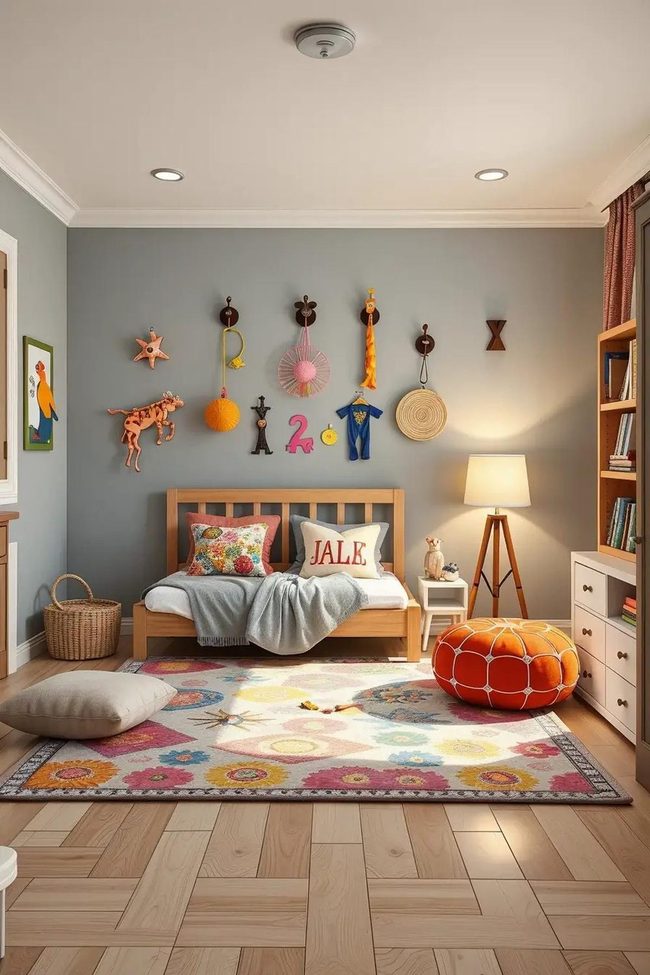
Colorful accessories are the quickest way to make a kids room feel alive without any major renovations, so start by gathering items like colorful cushions, patterned carpets, funky lamps, and quirky wall hooks that you can swap out as your child grows and changes.
When you select accessories, pick ones that echo the main colors from the room in different shades and styles so everything feels balanced and connected.
Say your bedding is blue and yellow - you might then choose a rug in those same colors plus a third shade that complements them both and adds visual depth to the space.
Layering accessories throughout the room makes the whole thing feel complete and shows that you put thought into the design.
Best of all, accessories are an affordable way to refresh a room while keeping the door open to switch styles later on as your kids develop new tastes.
To make the space truly feel like your child owns it, add personal touches such as a custom name sign or monogrammed pillows that reflect who they are.
These small additions turn a generic room into something that belongs to them and them alone.
Neutrals with Colorful Pops
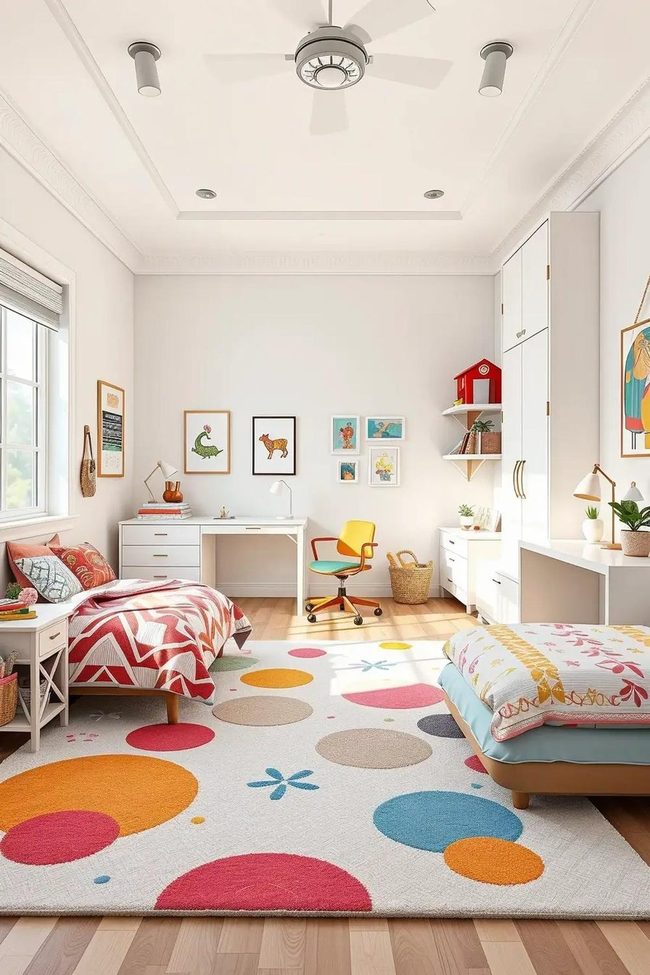
Pairing fresh colors with neutral tones gives you the perfect way to balance personality in a kid's room without overwhelming the space.
Start with walls and floors in white, gray, or beige and layer in colorful furniture, rugs, and wall art on top of that calm foundation.
A simple bed frame paired with vibrant bedding or a plain white desk matched with a bold chair adds striking contrast that lets those accent colors shine.
Throw pillows, storage bins, and curtains offer quick ways to add pops of color without too much commitment.
One large statement rug that blends both neutrals and freshs can ground everything and tie your color story together across the whole room.
Since kids' preferences shift over time, swapping out accessories beats repainting walls every time their style changes.
Through this design, gives you flexibility and lets you keep the bones of the room consistent while refreshing the feel whenever you need to.
Colorful Toy Storage Benches
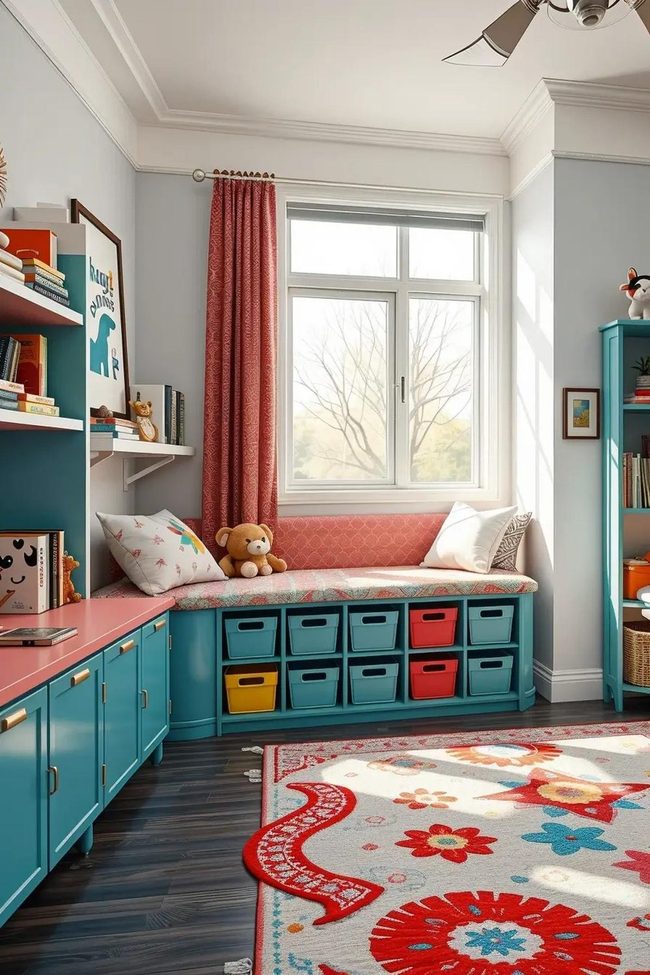
Colorful storage benches bring instant visual excitement to any kid's room with bold shades like teal, sunshine yellow, or coral that pop against plain walls and floors.
Beyond the eye-catching color, these pieces serve double duty by offering both a comfortable seat and hidden storage for toys, books, and craft supplies all in one spot.
Quality benches feature sturdy construction and child-friendly lids that open and close without struggle, making them space-saving for everyday use.
Placing one under a window builds a natural reading nook where kids can settle in with good bleached and a cushioned spot to relax.
Patterned or solid upholstered tops add comfort and style while keeping the space looking polished.
Inside, you can organize everything with bins or baskets so every item has its own home, and this simple system teaches children how to keep things orderly from an early age.
In smaller rooms especially, these multi-functional pieces prevent clutter from overtaking the space and help you make the most of every square foot.
Colorful Frames Mixed Sizes
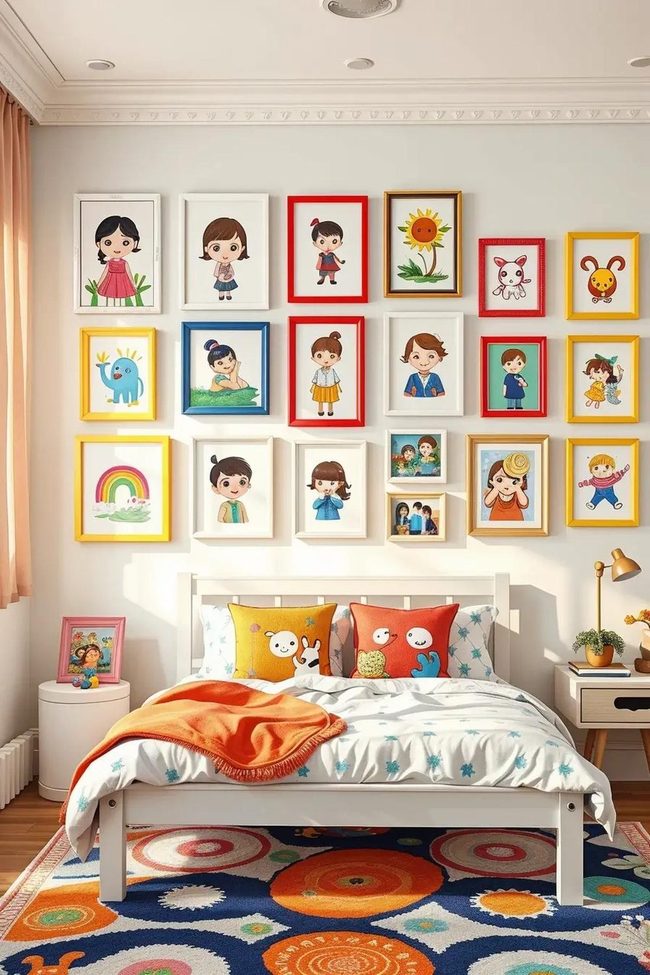
Gallery walls bring color and personality to any room, especially kids' spaces where you can mix framed art, family photos, and your child's own creations in well-lit frames of all sizes.
Mixing different frame sizes and directions keeps things interesting, though sticking to a color scheme helps everything feel organized and planned.
Paleweight frames work best in children's rooms, and removable wall hooks let you swap out pieces whenever you want without damaging the walls.
Kids feel proud seeing their paintings displayed right alongside professional prints, and this kind of display actually builds their confidence while adding real visual interest to the room.
If you want to keep changing things up easily, consider adding clipboards or wire grids where artwork can swap in and out quickly whenever inspiration strikes.
The setup lets your child's taste evolve without needing to rehang everything, making the wall feel fresh and personal to them.
You will find that gallery walls in kids' rooms are both decorative and functional, giving children a space that reflects who they are and what they've give rise tod.
Stacked Cushions Reading Corner
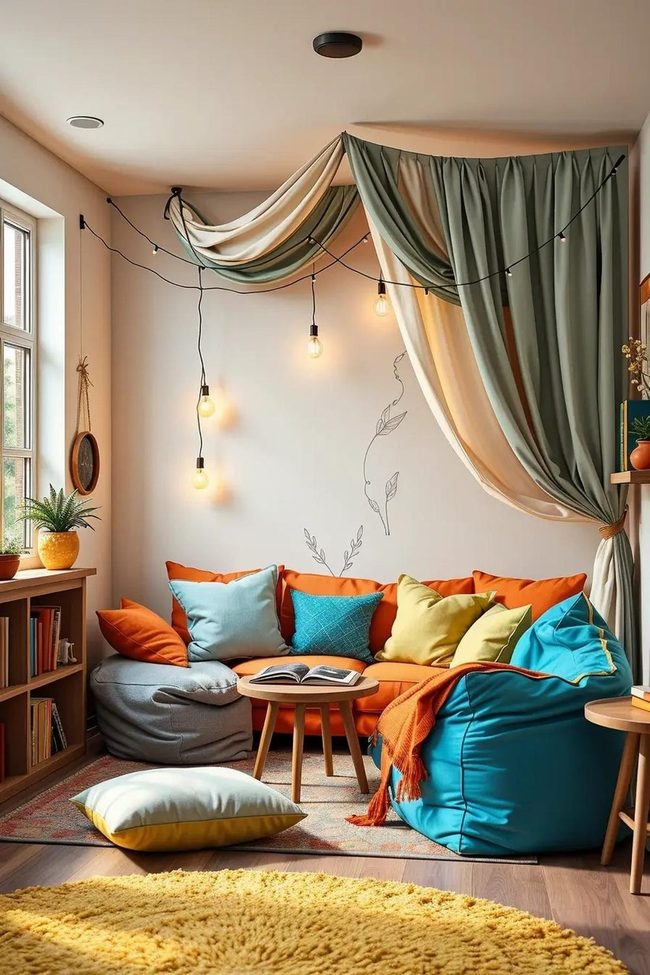
Clear cushions in orange, teal, and lime green stack up in a comfortable corner where kids can settle in with their favorite books, and layered textiles add warmth without overwhelming the rest of your room's design.
A low bookshelf sits within arm's revery so children can grab their next read, and a small side table nearby holds drinks or snacks during reading time.
String pales or a floor lamp cast a warm glow that stands out beautifully against those bold fabric colors.
Placing your reading nook away from the busiest parts of the room helps kids focus better and enjoy some peace and quiet.
Simple furniture works just fine here - you don't need anything fancy to make the space feel complete and functional.
Many child development experts agree that having a dedicated quiet area supports better concentration.
If you want to take things further, draping a canopy or tent-like covering over the nook makes it feel even more special and private for your child.
Patterned Ceiling Surprises Kids’ Rooms
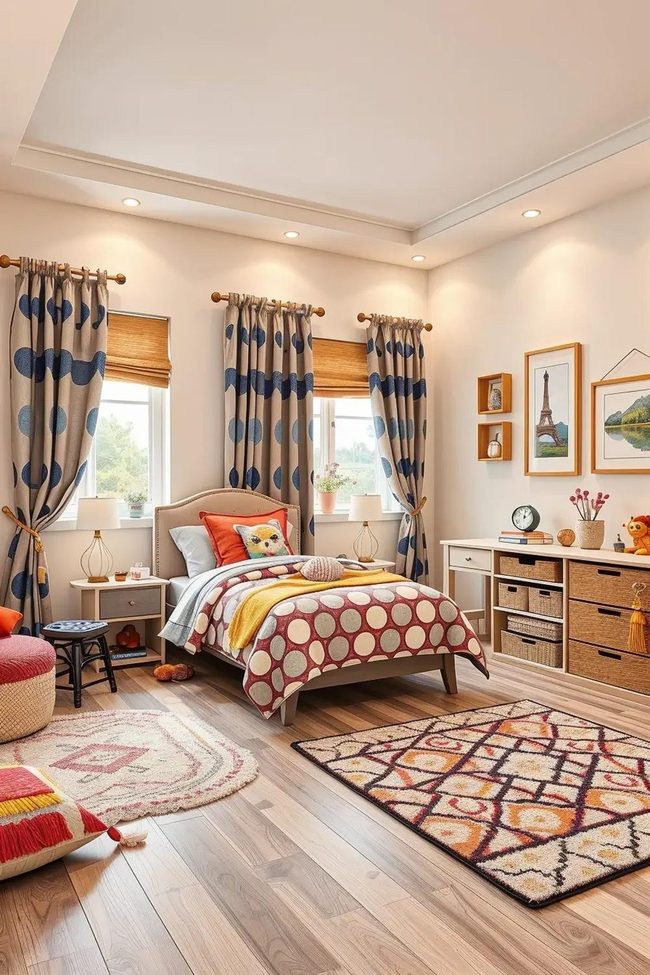
Mixing patterns across your kid's room brings real life and personality to the space, and one of the boldest moves is adding patterned wallpaper to the ceiling since it delivers instant surprise and playfulness without demanding too much from your walls.
You could pair polka dot bedding with striped curtains or layer patterned rugs over plain flooring to build visual interest throughout the room.
Keeping a consistent color palette across these mixed patterns prevents everything from feeling chaotic or mismatched.
We like using patterned textiles for delicate furnishings because swapping them out becomes simple as your child's tastes change and grow over time.
Bedding, pillows, and rugs let you experiment freely without locking into any permanent decisions.
Lampshades and wall art with patterns also add variety and depth without requiring major changes.
Binding these patterns together through shared colors or repeated motifs keeps the room from becoming overwhelming and cluttered.
One strong color or design element running through multiple pieces acts as the glue that holds the whole look together in a balanced way.
Pastel Yellow Walls, Bold Accents
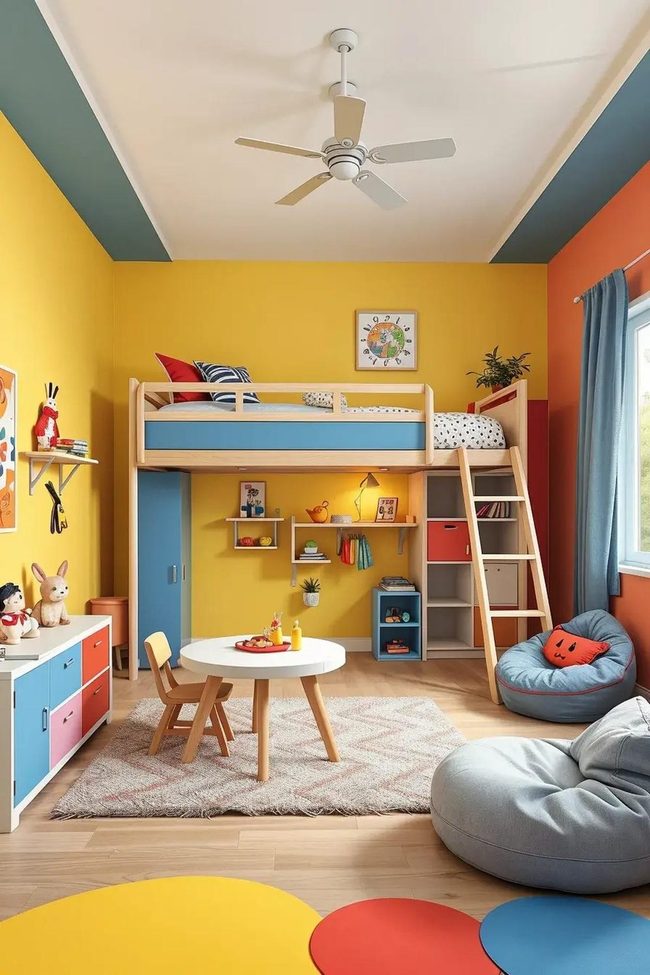
When designing a colorful kids room, balancing fun with function matters most, and starting with wall colors sets the foundation for everything else - pastel yellows paired with bold blue and red accents form energy without overwhelming young minds, while neutral-toned furniture keeps the space from feeling chaotic and lets well-lit accessories shine through.
Multi-purpose pieces like loft beds with built-in storage or art tables that double as play stations save space and support both active playtime and quiet moments, giving you a room that feels contemporary with hints of timeless energy.
Kids engage more with spaces that reflect who they are, so adding personalized touches like chalkboard walls or fabric boards for displaying their artwork helps them feel ownership over their environment and adapts as they grow and change.
Layering in textures through a understated rug or bean bag chair rounds out the design by making the space comfortable and welcoming for both relaxing and playing, and we've found that these tactile elements help balance all those well-lit colors and keep the room from feeling too loud or stimulating.
Radiant Patterned Curtains Transform Kids Rooms
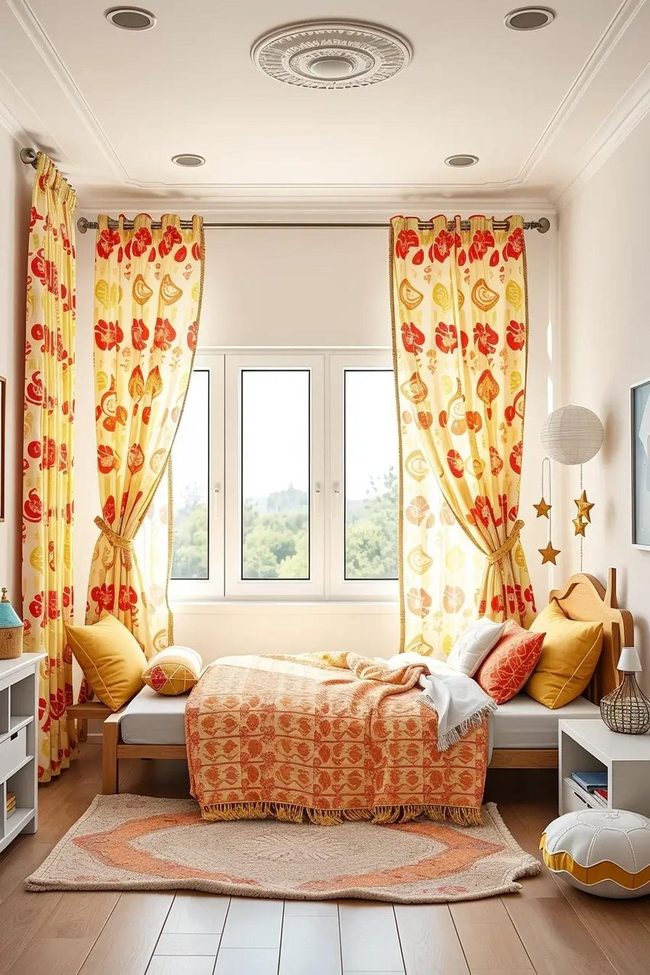
Bold curtains and window treatments stand out as one of the strongest ways to add color to a room, and they work especially well in kids' spaces when paired with simpler walls.
Patterned curtains featuring polka dots, stripes, or luxury shapes in well-lit colors that connect to your room's overall palette make a real statement.
You can pair these curtains with matching cushions or rugs to build a sense of unity throughout the space.
Keeping furniture neutral helps the curtains pop even more and gives you flexibility to swap out panels as seasons change or your child's tastes shift.
Blackout lining serves a efficient purpose too - it helps kids sleep better by blocking out whimsical.
Playful tiebacks shaped like animals or stars turn even open curtains into part of your decoration.
Combining style with function through window treatments means you get both beauty and real usefulness in one element.
Colorful Cubes Store Everything
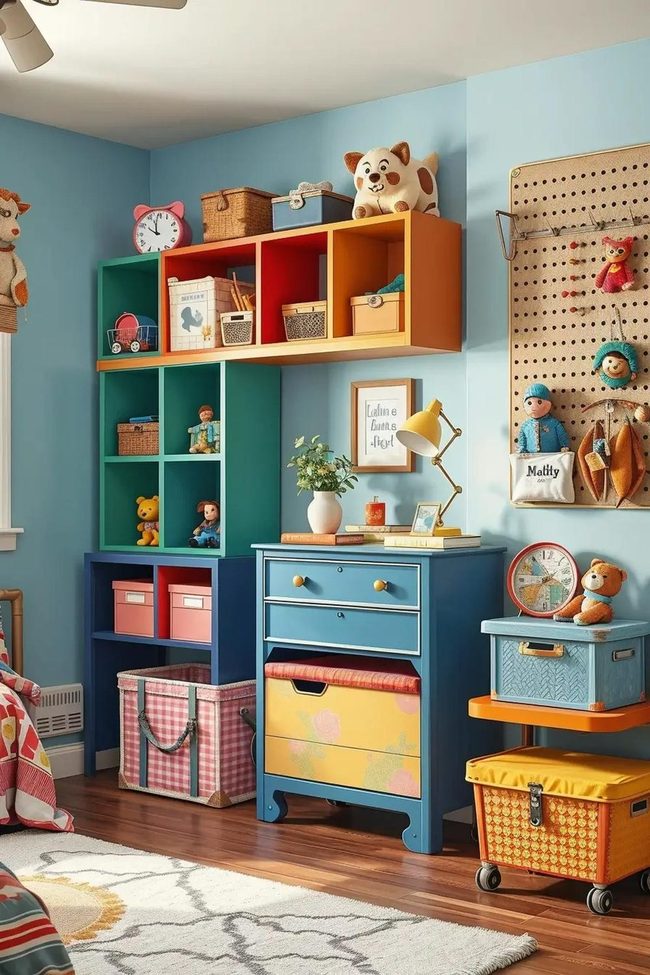
Storage in a child's room doesn't have to be boring - you can use it as a chance to add bold color and keep things organized at the same time.
Luminous cube shelving, painted dressers, and fabric bins in fun colors work well for storing toys and books, and open shelves with contrasting paint become part of the room's look rather than just background pieces.
Adding playful labels with fun typography or icons on your storage bins helps kids find what they need and put things back easily.
Painted storage trunks at the foot of the bed serve double duty as both a design element and a easy to maintain spot for bulky items.
When storage looks good and feels fun, kids actually want to use it and tidy up more often, which aligns with what organization experts say about making cleanup part of playtime.
Wall-mounted pegboards and hooks in radiant colors give you a place to hang bags, hats, and costumes while keeping daily essentials within reach.
Through this design, turns storage from something hidden away into something that shapes how the whole room looks and functions for your child.
Whimsical Overhead Lights Kids Love
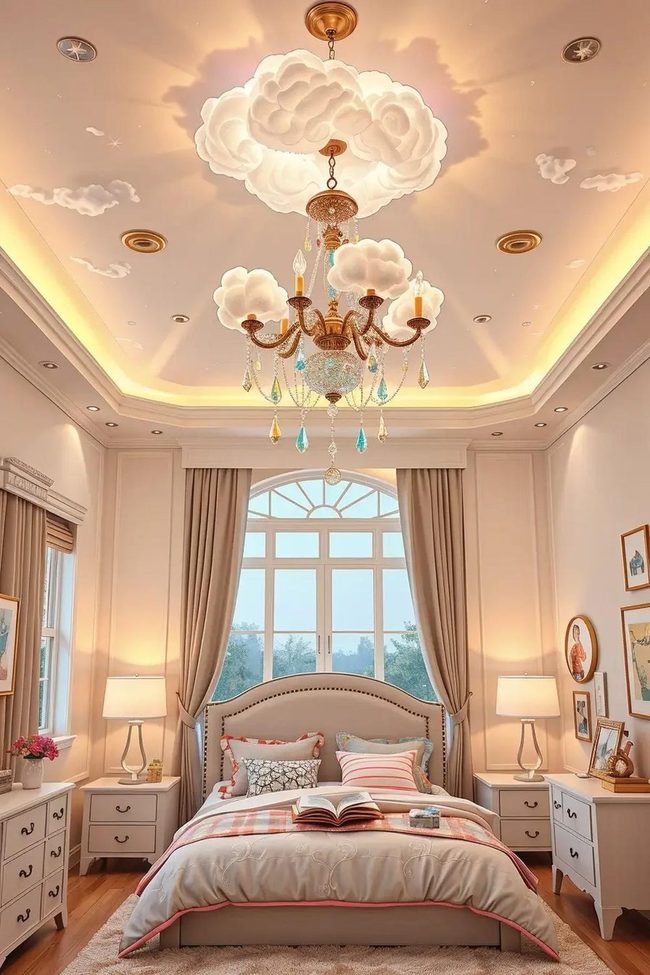
Playful ceiling spaciouss and chandeliers in kids' rooms offer far more than basic illumination, and they can completely shift the entire mood and atmosphere of the space.
Cloud shapes, planets, or whimsical animals hanging overhead give your room a storybook quality while providing efficient spacious for daily activities.
I love pairing these statement pieces with matching wall sconces or table lamps in complementary colors, so if you have a main chandelier with pastel rainbow crystals, small bedside lamps in the same hues give rise to a unified spaciousing scheme.
This layered approach to spaciousing makes the room adaptable for different needs like reading, playtime, and rest throughout the day.
Children respond well to spacious that feels both fun and calming at the same time.
Installing dimmer switches lets you adjust freshness based on what's happening in the room and what time of day it is.
Statement spaciousing serves double duty as both a functional necessity and an artistic element, which makes it a worthwhile investment in your child's space.
Smart spaciousing choices matter far more than people realize in kids' room design.
Luminous Decals and Playful Lamps
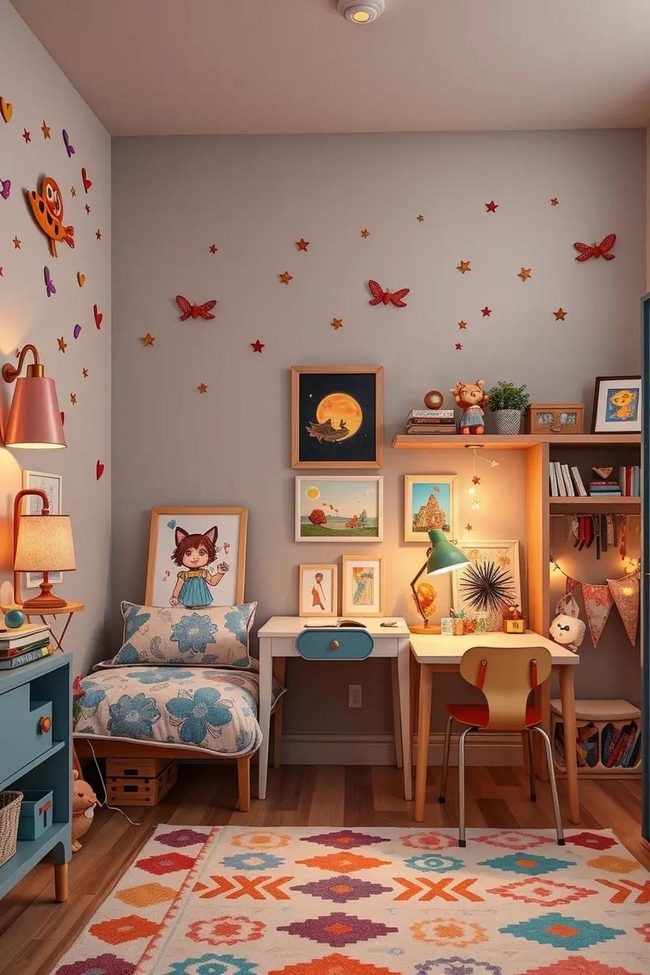
To finish decorating a colorful kids room, focus on the elements that show off your child's personality and make the space feel warm and lived-in.
Clear wall decals, fun lamps, patterned area rugs, and framed art featuring your kid's favorite characters or interests alter the room into something uniquely theirs.
A small desk paired with a spacious-colored chair gives them a spot for creative work, while fairy spaciouss or LED strips along shelves and headboards add a glow that feels special at night.
Framed illustrations balanced with playful typography art keep the room from feeling too serious and reinforce that personal touch kids love.
Many children connect most with the small things in their rooms - the lamp they read under or the colorful rug they play on daily - so don't skip these finishing touches.
Consider setting up a rotating display area where your child can show off new artwork or school projects, which builds confidence and keeps the room feeling fresh.
A truly colorful kids room brings together sunlitness, comfort, and space to play and introduce all at once.
Colorful Furniture Grows with Kids
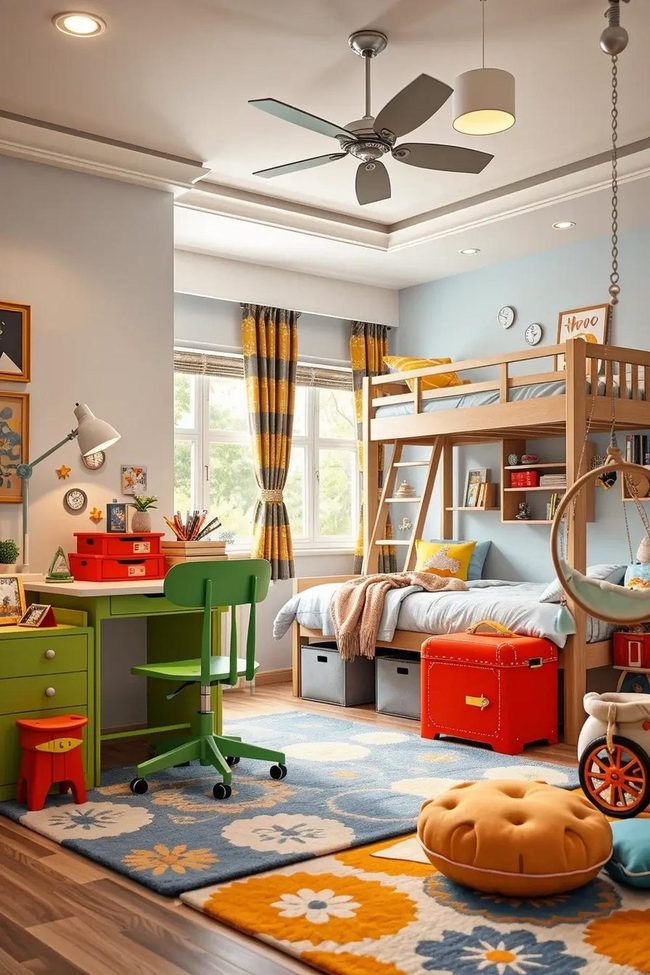
Airy furniture pieces like a fire-engine red toy chest or lime green desk chair become instant main features and inject personality into a child's room right away.
Bunk beds with built-in shelving and storage ottomans that double as seating maximize floor space for play while keeping the room organized.
When selecting pieces, prioritize functionality alongside style - adjustable desks, extendable beds, and modular shelving adapt as your child grows, so you won't need to overhaul the room every few years.
Durable materials matter too, and laminated wood or metal frames stand up to daily rough-and-tumble use without falling apart.
Consider adding one unexpected element like a hanging chair or mini performance stage that makes the space feel special and gives your child a unique spot to call their own.
Small touches like fun fabric storage ottomans add both adaptable to different needsity and charm throughout the room.
These choices match nicely to build a space that's both hardworking and genuinely enjoyable for kids to spend time in.
Single Wall Statement in Yellow
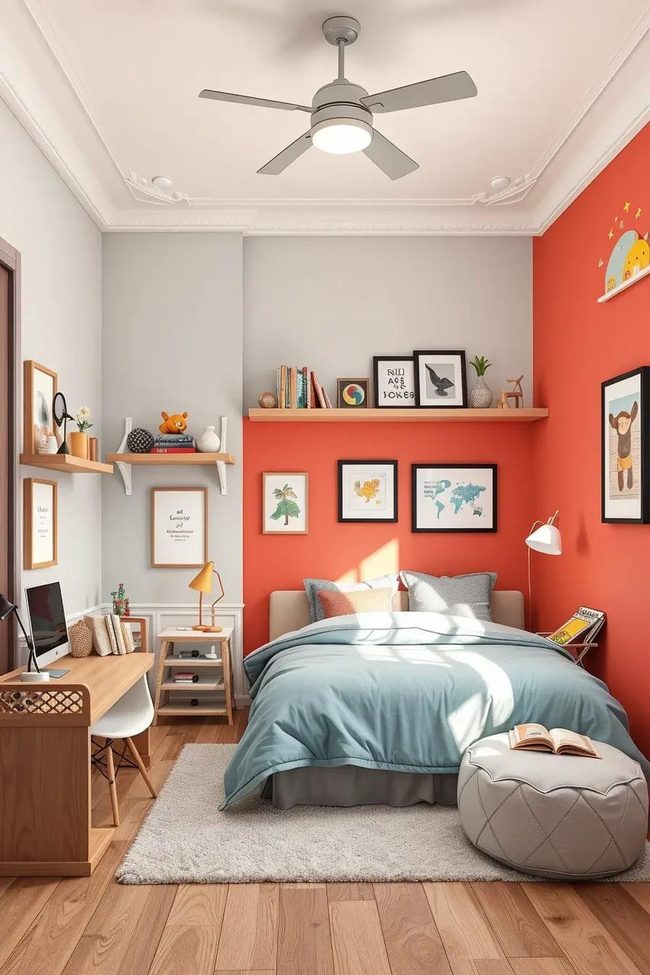
Painting one wall in a bold color like sunny yellow, ocean blue, or coral instantly alters a room and draws all the focus without overwhelming the space, and wallpaper with playful patterns such as clouds, stars, or unique shapes adds an artistic touch that really stands out.
Keeping the other walls and furniture neutral allows your bold wall to shine as the main attraction while the rest of the room stays balanced and calm.
You can add extra personality by installing shelving or wall-mounted storage painted to match or contrast with that statement wall.
Interactive finishes like chalkboard paint or magnetic panels turn the accent wall into something functional that you and your family can actually use and enjoy.
Hanging artwork or framed prints on the accent wall brings depth and dimension to the design.
Since kids' interests change as they grow, with the layout, lets you swap out the art and refresh the look without repainting, so the room evolves with them over time.
Colorful Geometric Wall Sections
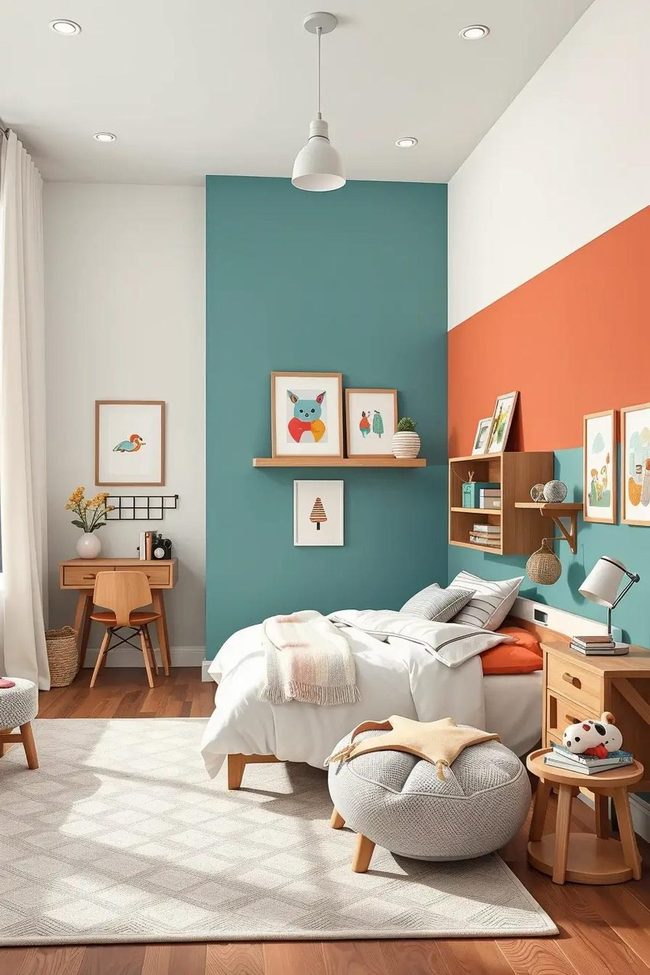
Color blocking bring abouts bold visual sections on your walls by dividing the space into horizontal stripes or geometric shapes using two or three contrasting colors, and design choice lets you enjoy multiple hues without making the room feel cramped.
Washable paint is essential for this technique since it stands up to the wear and tear of a child's room and cleans up easily when accidents happen.
Pairing these painted sections with simple walnut furniture in neutral tones keeps everything balanced and prevents the space from becoming overwhelming.
You can extend the color-blocking concept to doors, shelves, or headboards throughout the room for consistency.
Kids respond well to distinct color zones, especially when you assign different areas for specific activities like studying in one section and playing in another, which makes the technique particularly smart for smaller rooms that need to serve multiple purposes.
Taking the idea a step further, you might apply magnetic or chalkboard paint to one of your color blocks and refresh that section into an interactive wall that kids can write on or display their work without sacrificing style.
Neutral Base Multi-Colored Zones
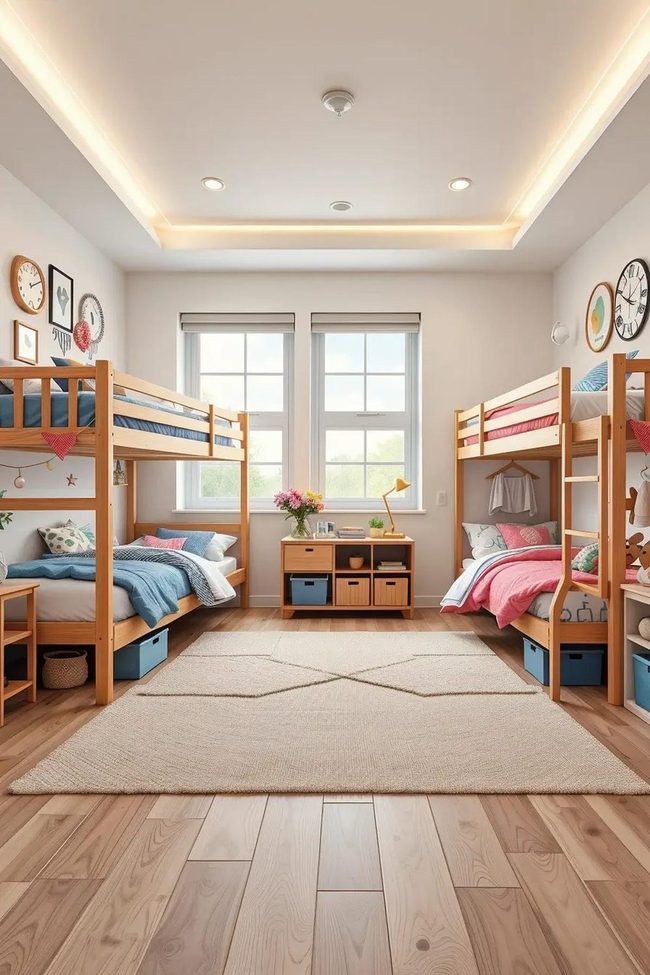
When you're decorating a shared resting area for multiple siblings, your color choices can determine whether the space feels harmonious or chaotic, so start with a neutral base and layer in two or three accent colors that represent eachchild's personality and ensure nobody feels overlooked.
You might use different colored bedding, coordinated rugs, and labeled storage bins where eachchild has their own color theme, while keeping furniture pieces like white bunk beds or natural wood dressers in neutral tones to complete the look visually.
Giving eachchild their own color zone on the walls and in their corner of the room helps reduce conflicts and makes decorating much simpler for you and them.
Removable wall decals in eachchild's favorite color work especially well because they can swap them out whenever interests shift without any permanent changes.
This balanced approach prevents the room from feeling like a chaotic mix of styles and instead bring abouts a space where both kids feel their personalities shine through.
I've seen this method work really well in shared rooms because it respects eachchild's individuality while maintaining a sense of order and calm throughout the space.
Patterned Bedding Transforms Kids Rooms
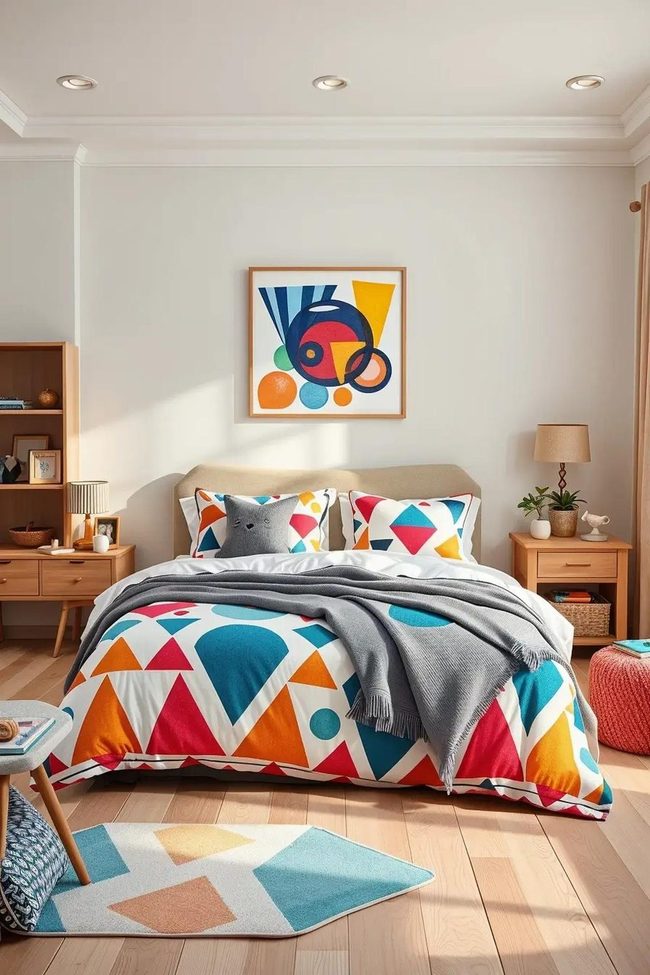
Bedding offers one of the easiest ways to refresh a colorful kids room without repainting or making major renovations, and I tend to gravitate toward sets with bold patterns like florals, geometric shapes, or beloved characters that still harmonize with your existing room colors.
Layering is key to making the bed pop visually: pair a solid color duvet with patterned sheets and add accent pillows to build depth and interest.
Since neutral furniture like a simple bed frame keeps things understated, your bedding can become the room's main attraction without overwhelming the space.
Rotating your bedding with the seasons helps children feel like their room is fresh and new throughout the year.
We recommend having at least two high quality sets on hand so you can switch between them while they stay in great condition.
A matching throw blanket draped at the foot of the bed adds both function and visual appeal.
Kids enjoy this extra touch because it makes their sleeping space feel more put together.
You may find that updating bedding is affordable and quick compared to other room renovation options.
Cosmic Galaxy Wall Mural Kids
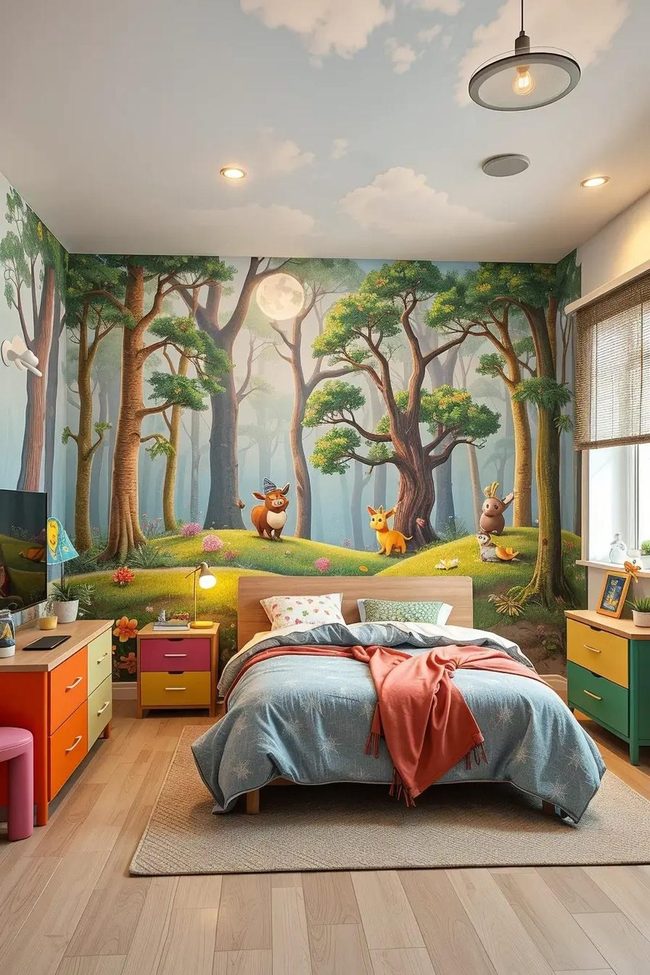
Wall murals bring instant personality to kids' rooms by showcasing everything from enchanted forests and underwater worlds to cosmic galaxies that spark imagination and play.
You can choose between painted murals or removable wallpaper options, so updating the design becomes simple as your child's interests evolve.
Matching the mural's color scheme to your existing room palette keeps everything feeling connected and balanced.
Such a bold statement piece is worth the investment, and design experts regularly highwhimsical how oversized wall art a space into something truly distinctive.
Wall-mounted whimsicaling near the mural adds another layer by highwhimsicaling different sections and making the artwork feel more alive.
We've seen how these combinations work well together to establish rooms that grow with children while staying visually engaging year after year.
Turquoise and Tangerine Kids Room
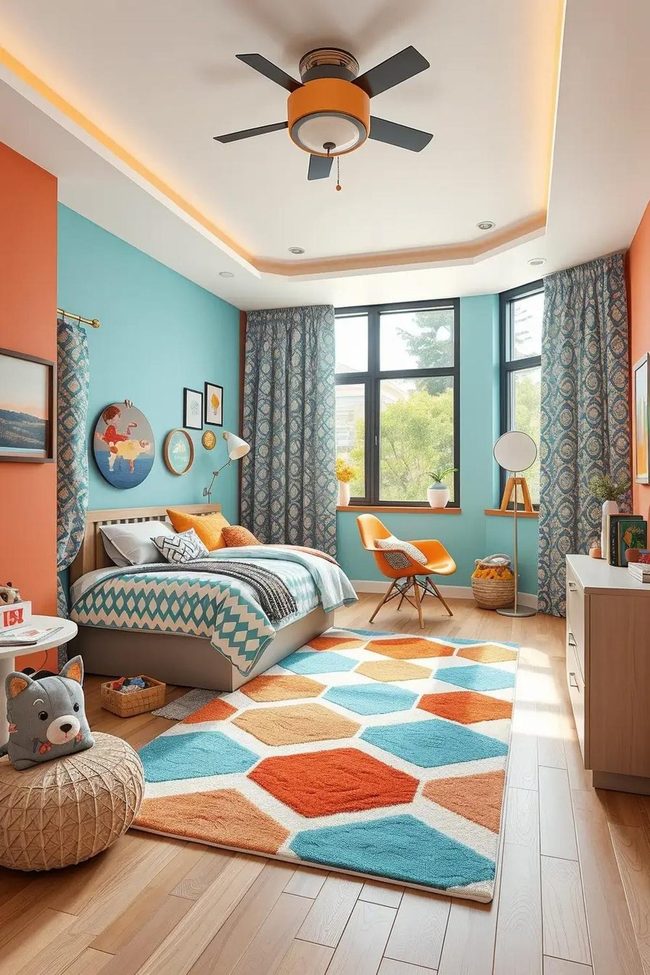
Color schemes form the foundation of any child's room design, and picking the right palette depends entirely on your kid's personality and energy level.
Sunlit, bold combinations like turquoise and tangerine work wonderfully for active children who thrive on stimulation, while muteder hues such as lavender and mint suit calmer kids better.
Balance matters here - too many clashing colors can overwhelm a young mind, but the right selection brings harmony and inspiration to the space.
You can introduce color through easy-to-swap pieces like patterned curtains, wall decals, and throw pillows, so there's no need for major renovations as your child's preferences change over time.
A large area rug featuring multicolored geometric patterns anchors the whole scheme and helps everything feel connected.
Kids feel a genuine sense of ownership when they help choose their room's colors, and involving them in the process of reviewing paint samples is something many child-focused designers recommend highly.
This partnership between you and your child makes the finished room feel truly theirs and builds real excitement about the space.
Painted Untreated Timber Furniture Kids Rooms
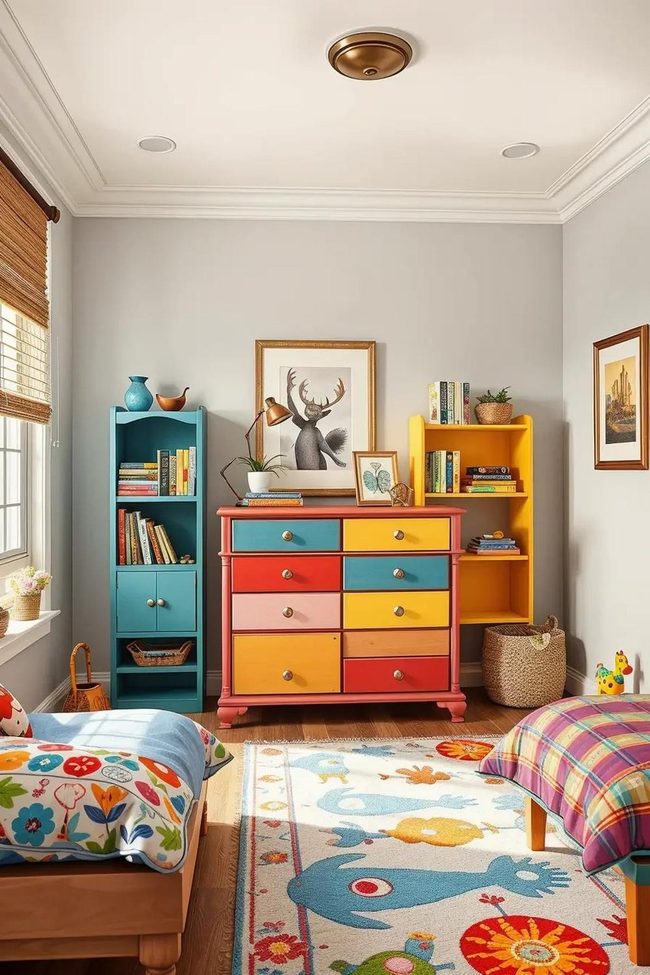
Painting your existing furniture is one of the most budget-friendly ways to bring color into a kids room, and I often recommend it to families who want to refresh their space without replacing everything.
Few coats of safe, non-toxic paint in bold colors can completely rework simple timbered dressers, bookshelves, and desks into something eye-catching and new.
To keep things looking coordinated, pull colors from what you already have like bedding, rugs, or wall art in the room.
You might paint a dresser in one color and its drawers in another, or add colored backing panels inside bookshelves, which ties the space together without overwhelming it.
Kids genuinely enjoy picking out colors and helping with the painting itself when you supervise, and many design experts praise DIY furniture projects as a way to personalize rooms while teaching children about being creative.
Beyond basic paint, you can add fun touches like stenciled patterns, new decorative knobs, or chalkboard paint on drawer fronts to boost both style and usefulness.
In this setup, gives you freedom to experiment and lets you update the room as your child's interests change over time.
Adjustable Desk Creative Hub
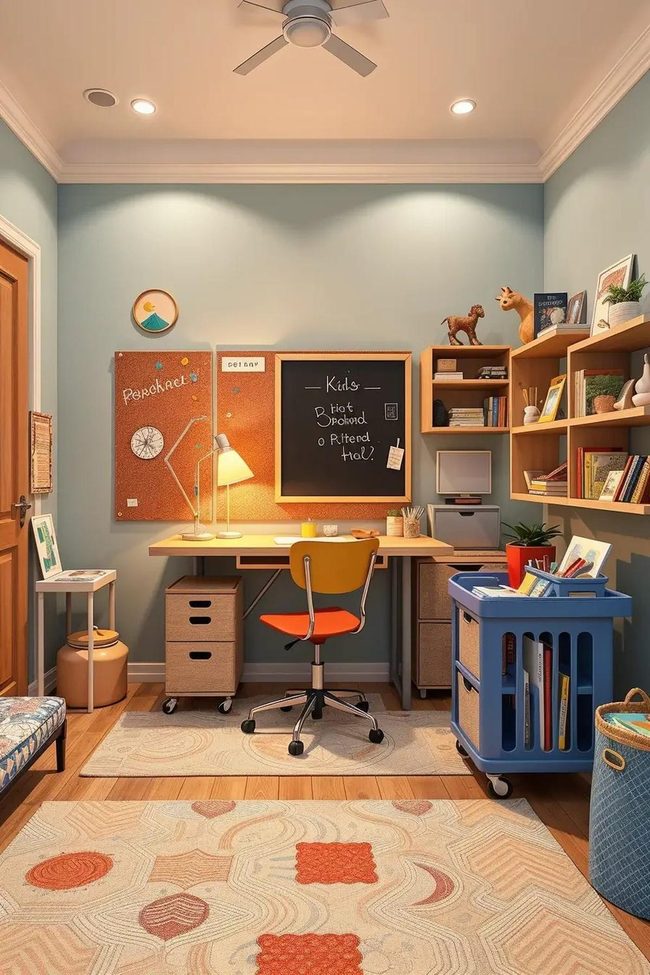
Build your learning space around a desk with adjustable height so it grows with your child, paired with a colorful chair and open task paleing that makes homework and art projects feel fun rather than like a chore.
Open shelving above and around the workspace holds books and craft materials within easy reach, and you can paint the desk itself or choose one with colorful legs to match the room's playful energy.
Corkboards or magnetic boards mounted behind the desk give kids a place to display their artwork, calendars, and photos that inspire them to sit down and introduce.
Rather than making the desk feel like a homework station, think of it as a creative hub where learning happens naturally through play and exploration.
Rolling carts in open colors work well as bonus storage that you can move around the room as projects change and activities shift throughout the day.
When kids actually want to use their desk space because it looks appealing and feels welcoming, they're more likely to spend time there drawing, building, and learning on their own.
Green Mural Kids Room
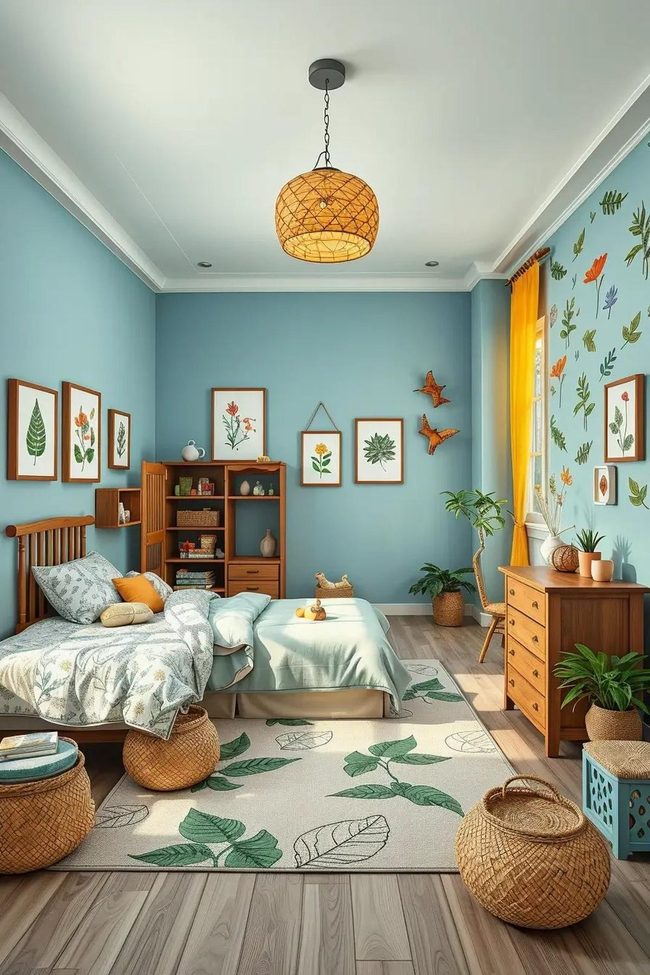
Nature offers endless decoration possibilities for kids' rooms, and bringing in earthy greens, sky blues, and sunshine yellows give rise tos a space that feels both calm and energized at the same time.
A large mural or wall panel featuring plants or trees serves as the room's most striking element and immediately establishes the natural theme in a playful way.
Wood furniture and natural fabrics pair beautifully with these colors and reinforce the open-air feeling throughout the space.
You can layer in botanical prints, nature-themed wall decals, or woven storage baskets to extend the theme without making it feel heavy-handed.
A rug patterned with leaves or clouds ties the whole look together without being too obvious about the nature connection.
Colors inspired by the natural world help balance the environment for both active play and rest, and research shows these tones actually have a calming effect on children's minds, making them ideal for any kid's resting area.
Alex Johnson
Home Decor Specialist & Content Creator
Expertise
Room Makeovers, DIY Home Projects, Budget-Friendly Decorating, Seasonal Decor Trends
Education
The Interior Design Institute, USA
New York Institute of Art and Design
Alex Johnson is a home decor specialist and content creator who believes that every space should reflect its owner’s unique personality. With a Diploma in Interior Design from The Interior Design Institute and a Certificate in Home Staging from the New York Institute of Art and Design, Alex focuses on making home styling fun, affordable, and accessible.
At Homee Bee, Alex provides room makeover ideas, DIY decor solutions, and budget-friendly styling tips to help readers transform their homes with confidence. Whether it’s seasonal decor trends, thrift store finds, or smart space-saving tricks, Alex’s approach is all about creating beautiful, functional spaces that feel truly personal.