
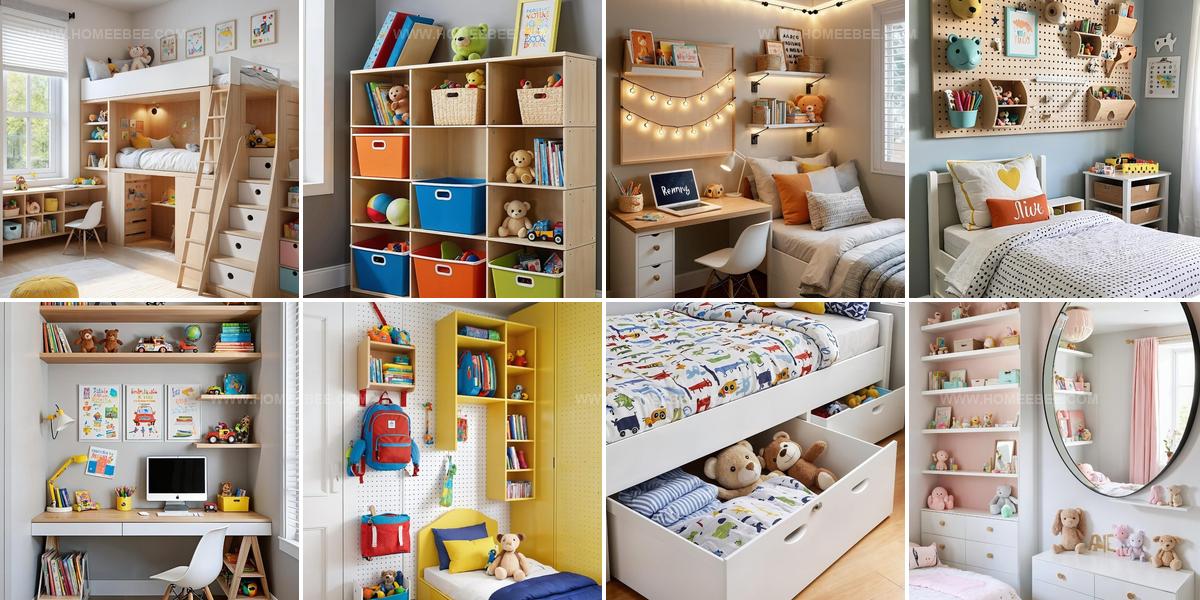
12 Creative Spaces Your Kids Will Actually Want to Sleep In

Designing a space where children can sleep, play, and grow involves balancing fun with function in ways that feel both exciting and practical.
When you think about how much time kids spend in their rooms, it becomes clear why getting the design right matters so much for their comfort and development.
A well-planned bedroom can spark imagination, encourage independence, and provide a peaceful retreat that adapts as children move through different stages of childhood.
The challenge lies in choosing colors, furniture, and layouts that work now while remaining flexible enough to evolve with changing needs and interests.
Smart design choices help maximize space in smaller rooms while creating organized zones that make daily routines easier for everyone.
The best rooms reflect a child's personality without overwhelming the senses or creating chaos that makes relaxation difficult.
Making thoughtful decisions about every element will help you build a room that feels just right for years to come.
Reflective Surfaces Expand Small Rooms
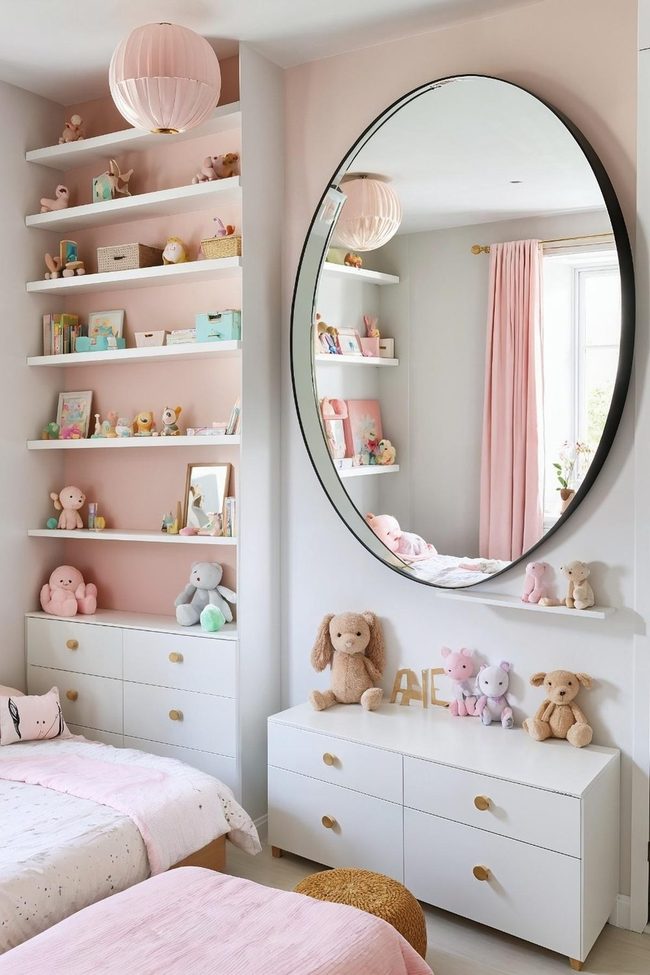
Mirrors work wonders for making cramped spaces feel surprisingly open and airy by bouncing light throughout the room and reflecting what's around them.
A full-length mirror positioned on a door or leaning along the wall instantly opens up the space in a way few other decorations can match.
If you're decorating a child's room, shatter-proof mirrors designed specifically for kids offer the same expansive effect while keeping safety in mind.
Beyond standalone mirrors, you can incorporate reflective surfaces through mirrored furniture pieces like wardrobe doors or decorative mirror art hung on your walls.
These shiny surfaces scatter light in different directions and help push back the walls visually.
How much brighter and less cramped the room feels once mirrors are in place.
Layout strategy works because light bounces off the reflective surfaces and spreads across the entire space.
Adding mirrors is one of the most straightforward ways to transform how a small room actually feels to you and anyone else inside it.
Colorful Wall Decals Transform Kids Spaces
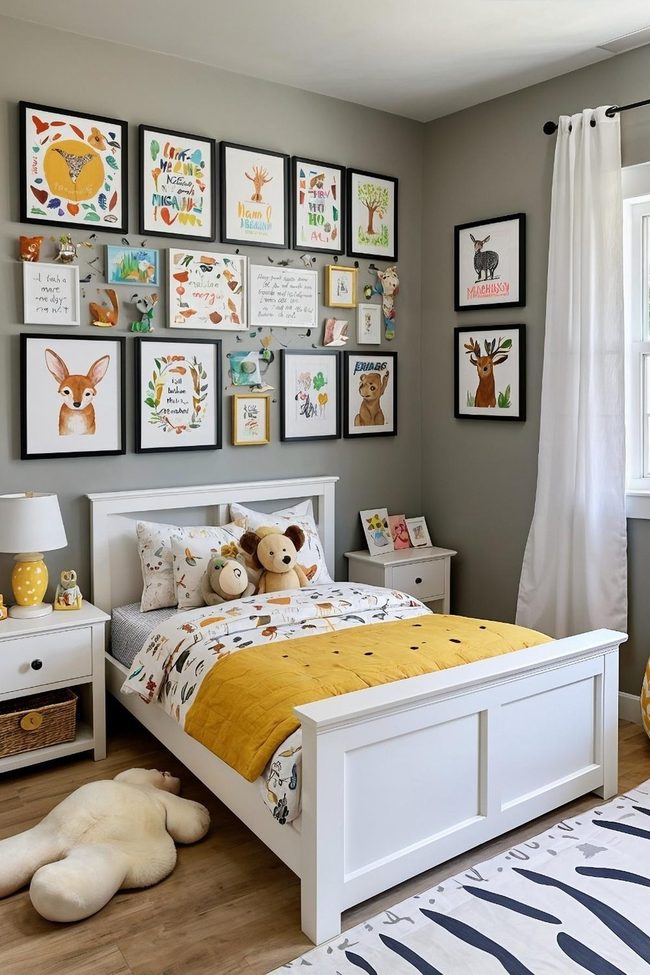
Removable wall decals and colorful murals bring instant personality to your child's room and serve as eye-catching without consuming valuable floor space.
You can swap out decals whenever your child's interests change, so the room grows and evolves with them over time.
Beyond store-bought options, consider setting up a gallery wall where your child's own artwork, school achievements, and favorite photos take center stage.
Frames, clipboards, and pinboards work well for this kind of display and let you rotate pieces in and out easily.
In the setup, gives your child ownership of their space and celebrates what matters to them.
Personal touches like these make the room feel like their own little world rather than just a generic bedroom.
Vertical Storage Solutions For Tight Spaces
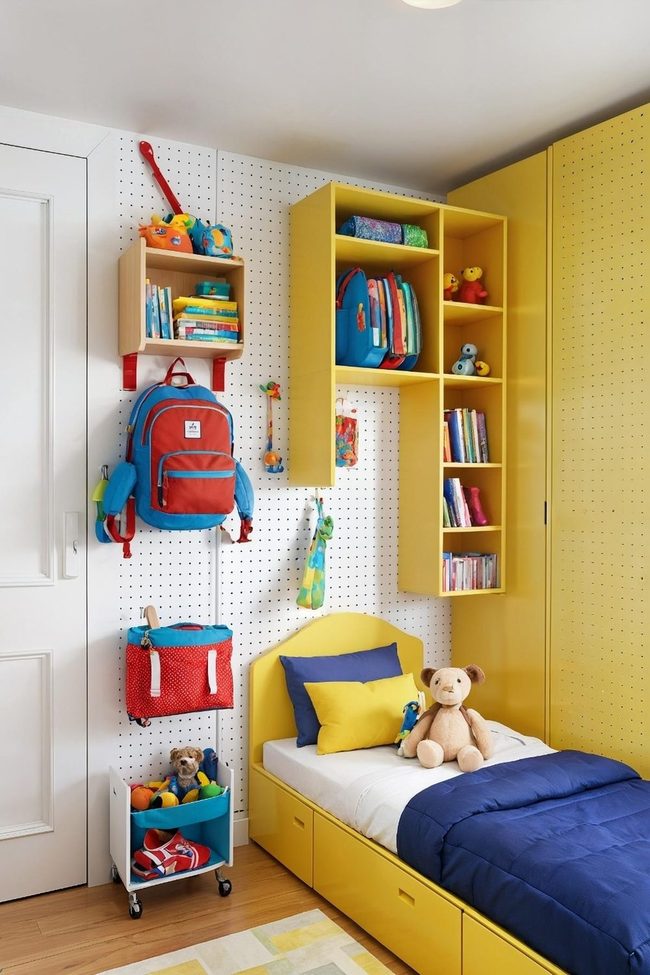
When you're working with limited square footage, looking up instead of out makes a real difference in how spacious your room feels.
Wall hooks and pegboards deserve your attention first because they transform bare walls into organized display spots where hats, bags, and small accessories hang within arm's reach, and through this design, keeps your floor completely open for movement.
Next, tall dressers and wardrobes offer substantial storage without eating into your layout like wider pieces would, and you can maximize their usefulness by adding shoe racks or built-in organizers inside.
High wall shelves work wonderfully over desks or beds to hold books and keepsakes you don't need every day, giving you storage that doesn't steal any floor space.
Starting with these vertical solutions means this creates a sense that be aware of your room instantly feels bigger and less cluttered.
We often overlook how much of an impact going upward can have compared to spreading furniture across the ground.
I've seen small rooms completely shift when people prioritize height over width in their storage choices.
Your compact space will function better and look more open once you embrace what your walls can offer.
Loft Beds Maximize Small Spaces
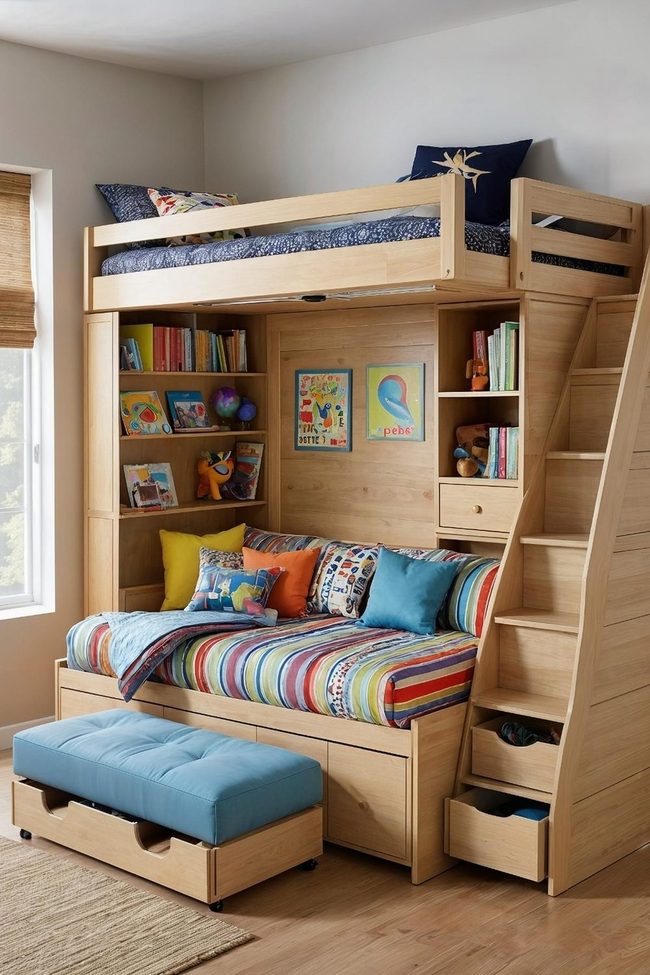
Loft beds stand out as one of the smartest solutions for small kids' bedrooms since they use vertical space so well and look really impressive in the room.
You get a sleeping area up top and can use all the space underneath for a study desk, storage shelves, or even a laid-back reading spot.
Furniture that folds away when you're not using it, like wall-mounted desks or pull-down beds, works wonderfully to open up your space during the day and is especially helpful when siblings share a room.
Storage benches and ottomans give you multiple ways to use one piece, they provide seating, hold toys and blankets, and can sit right by the bed as a side table.
When you pick furniture that does more than one job, your child's room becomes much more flexible and functional.
Small rooms benefit hugely from these dual-purpose pieces because they eliminate the need to choose between having a place to sleep and having room to play or study.
Mixing these different types of furniture lets you design a bedroom that works hard for your family's needs without feeling cramped or cluttered.
Soft Neutrals With Colorful Accents
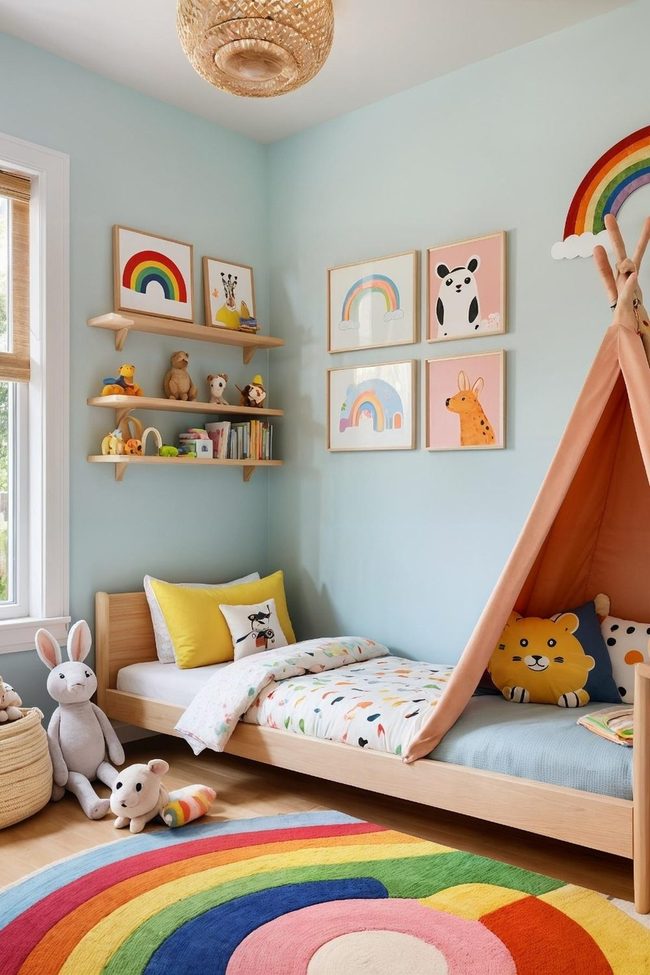
Light and playful color choices can completely change how your small bedroom feels, making it seem either cramped or wonderfully open.
Painting your walls in light neutral shades like white, pale gray, or pastels is one of the smartest moves you can make because these colors bounce light around and push the walls back visually.
Bold accent colors work best when you use them sparingly through bedding, throw pillows, or a rug, and these pops of color keep the room from feeling dull while staying balanced.
A colorful rug under your bed or full of color cushions on your chair can give the room energy and personality.
Since light walls form your neutral base, even modest amounts of bold color make a real statement.
You’ll pick up on it’s easy to find that this balance between calm backgrounds and cheerful accents creates a bedroom that feels both restful and lively.
Painted Earthy Wood Headboards Custom Spaces
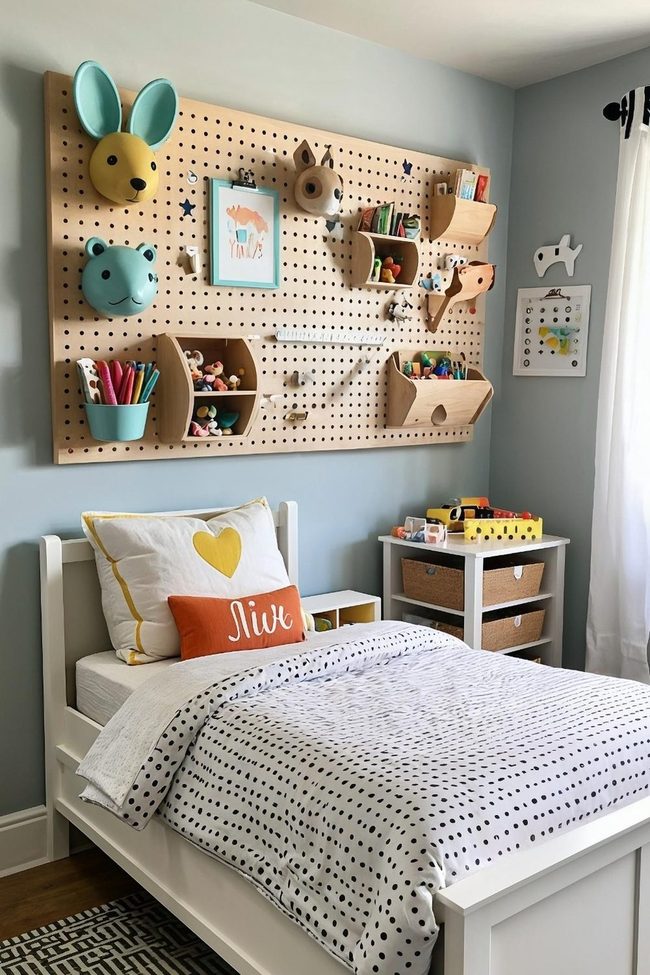
Creating a custom headboard from painted wood or fabric gives you a chance to showcase your child's favorite colors and patterns while making the space truly theirs, and you can expand on this personalization by adding wall art through stencils, decals, or paint to bring even more character to the room.
Building well-suited storage solutions like a wall-mounted pegboard or a book nook from simple crates and shelves lets you combine function with creativity, so your child gets organized storage that also reflects their personality.
These DIY projects work well as bonding activities too, and working on them together can make the room feel special in ways that store-bought items simply can't match.
Painted wood headboards offer a bold statement that draws attention immediately, while fabric versions provide texture and warmth.
Wall art displays give you flexibility to change designs as your child's interests grow, and pegboards let you arrange items in whatever way works best for your space.
Building these pieces yourself means you can customize every measurement and detail to fit exactly what you need.
Your child will feel proud knowing they had a hand in creating their own space, and that sense of ownership makes the room feel even more personal and meaningful to them.
Loft Bed Maximizes Small Bedroom Space
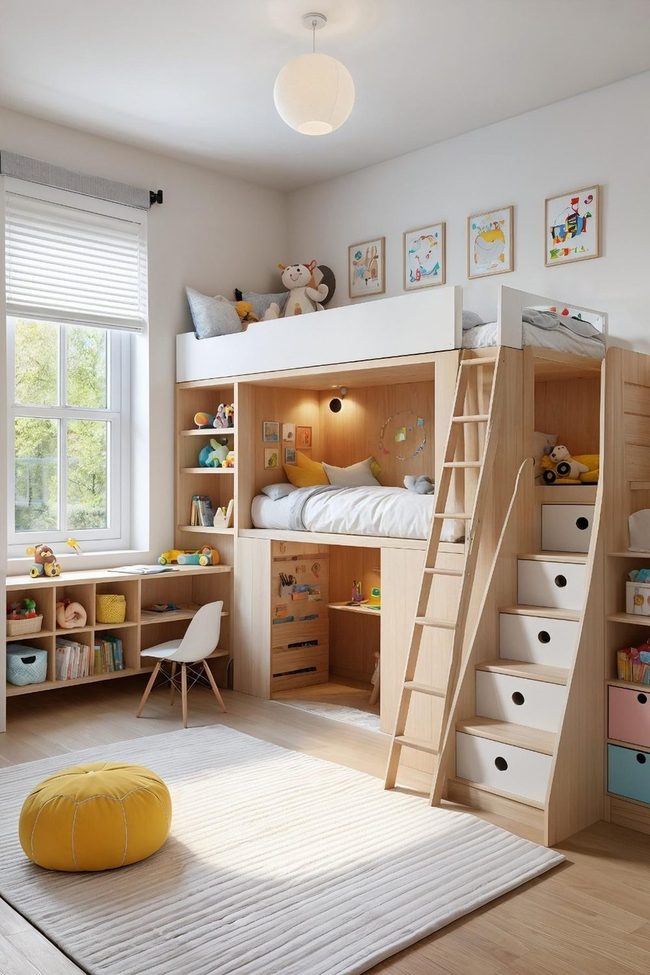
In a small bedroom, it’s easy to want to maximize every inch by splitting the space into zones for sleeping, studying, and playing, and setup keeps things organized while giving throughout activity its own purpose.
For the sleeping area, loft beds or bunk beds are game-changers because they free up floor space and let you use the area underneath for a desk or play spot, or you could go with a single bed that has built-in storage drawers to keep things neat and tidy.
Your study zone doesn't need much room either, a wall-mounted desk or folding desk that tucks away when you're done works great, and pairing it with floating shelves on the wall lets you store books and supplies without taking up valuable floor space.
In the play corner, floor cushions, a rug, or a small teepee tent give rise to a fun spot for kids without overwhelming the room.
Storage bins and baskets that are easy for children to rthroughout help them put toys away themselves, which makes cleanup simple.
Keeping the play area simple and adaptable means you can adjust it as your child grows and their interests change.
Wall-Mounted Desk And Shelves Solution
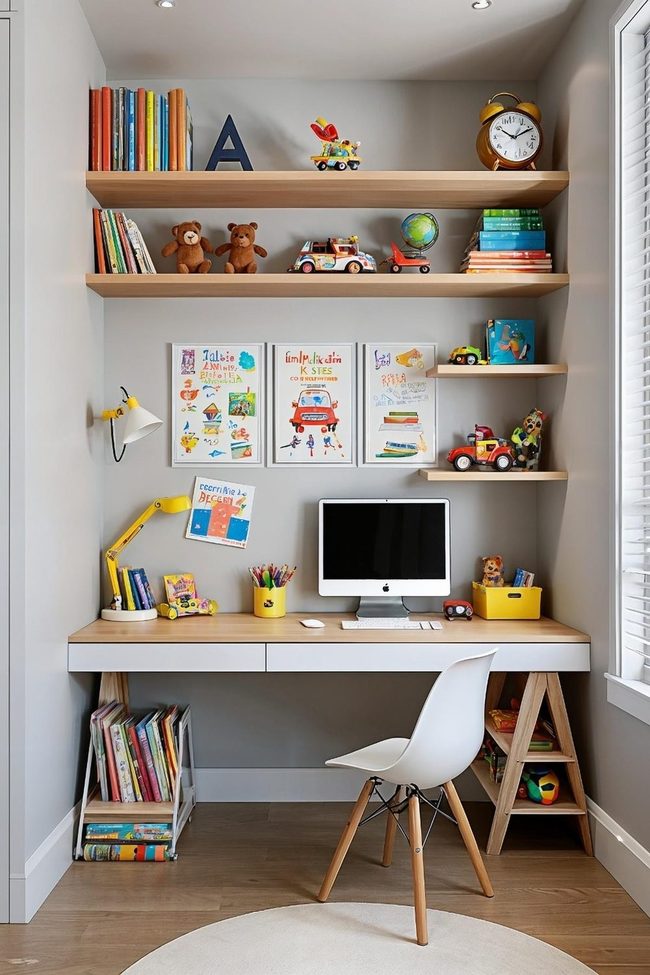
Wall-mounted desks and shelves make small bedrooms feel noticeably larger by keeping the floor open and clear.
You can mount a desk at just the right height for your child's studying and pair it with built-in shelves to hold books and supplies without taking up ground space.
Floating shelves on the walls work hard for you by displaying books, toys, and decorative pieces while preventing clutter from spreading across the floor.
When you arrange these shelves, balance them with a mix of open displays and storage boxes so the room doesn't look too bare or too packed.
Movement becomes easier when nothing sits on the floor, and you gain extra room underneath the desk for additional storage if you need it.
The design gives you both function and space, which matters a lot when you're working with a smaller room and want it to feel open and breathable.
Bunk Beds With Built-In Organization
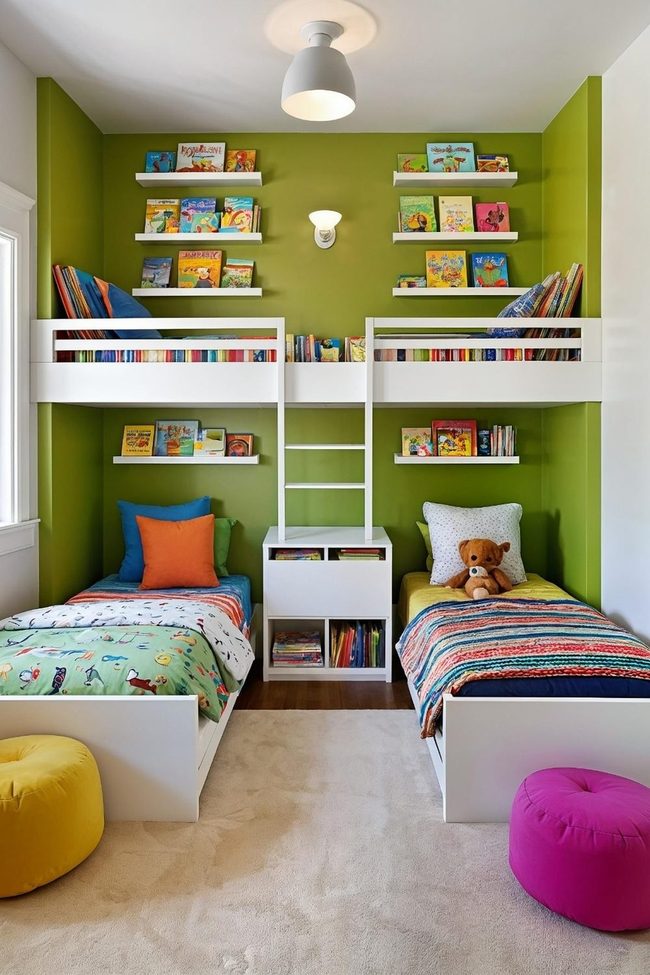
When two kids share one small bedroom, smart planning makes all the difference in how well the space functions.
Bunk beds are a game-changer because they stack sleeping areas vertically and open up the floor for play and movement.
Many bunk bed models include built-in shelves or desks attached to the frame, so you gain extra surface area without taking up more room.
Child needs their own designated storage spots to prevent things from piling up everywhere.
Labeled bins, drawers, and shelves work best because both kids can quickly find what they need and put items back in the right place.
When everything has a home, the room feels less chaotic and both children know exactly where to look for their things.
Clear organization systems also tthroughout kids responsibility while keeping the shared space functional for sleeping, studying, and playing.
Golden Layered Lighting Small Bedrooms
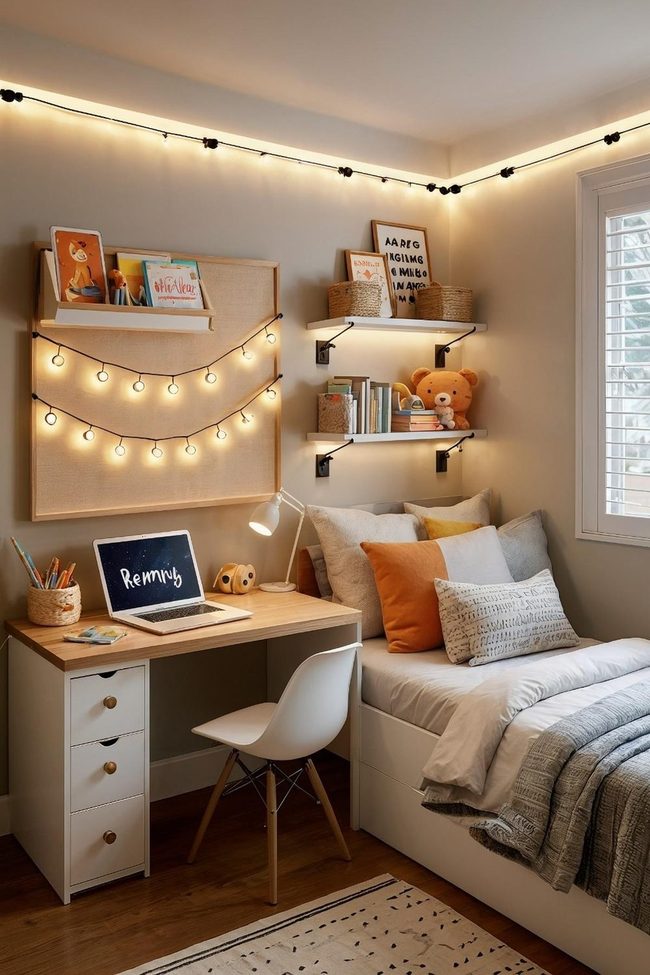
String lights, nightlights, and glowing lamps bring personality to small bedrooms while giving off a warm glow that makes the space feel comfortable and lived-in.
Beyond the decorative pieces, you may want overhead lighting like a ceiling fixture or pendant that handles general illumination throughout the room, and installing a dimmer switch lets you adjust ness depending on what you're doing or what time of day it is.
For areas where you need to focus, like a desk or reading nook, task lighting matters just as much, so a desk lamp or wall-mounted sconce directed at your work surface keeps homework and reading comfortable and easy on your eyes.
Adjustable lamps work best here since you can point them exactly where you need the light most.
Layering different types of lighting together means you're not stuck with just one option or one dim option, and instead you can match the lighting to whatever activity is happening in that moment.
Good lighting in a small bedroom does more than just help you see; it also shapes how the space feels and whether different zones actually function well for their purpose.
Stackable Cubes Grow With Child
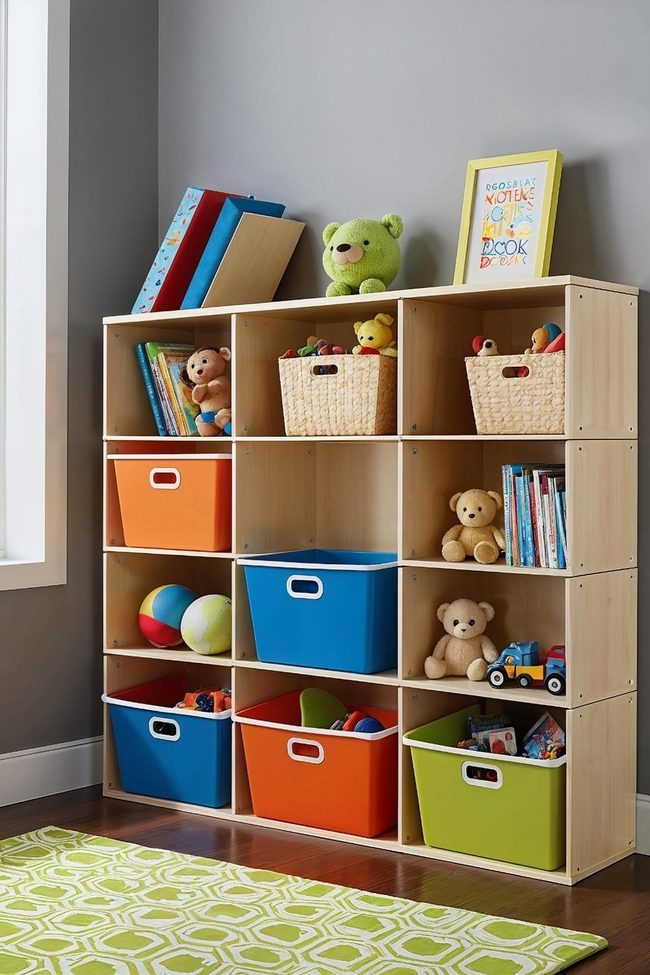
Stackable cubes and shelving systems offer flexibility that grows right along with your child, and you can rearrange or add pieces as their needs shift over time.
Cubbies work wonderfully for storing toys, books, and craft supplies, while baskets or bins inside them help keep everything organized and easy to find.
When you're shopping for storage units, look for kid-friendly heights so your child can reach and access their belongings without needing help.
Modular wardrobes with adjustable shelves, hanging rods, and drawers adapt to whatever stage your child is in and can be reconfigured whenever you want.
A toddler's room might need mostly toy storage, but as they grow older, those same shelves can hold shoes, clothes, or school supplies instead.
This flexibility saves money and means less waste, which makes both your wallet and the planet happy.
Building your storage around pieces that adjust and expand is one of the smartest moves you can make in a kid's room.
Under-Bed Organizing Maximizes Small Spaces
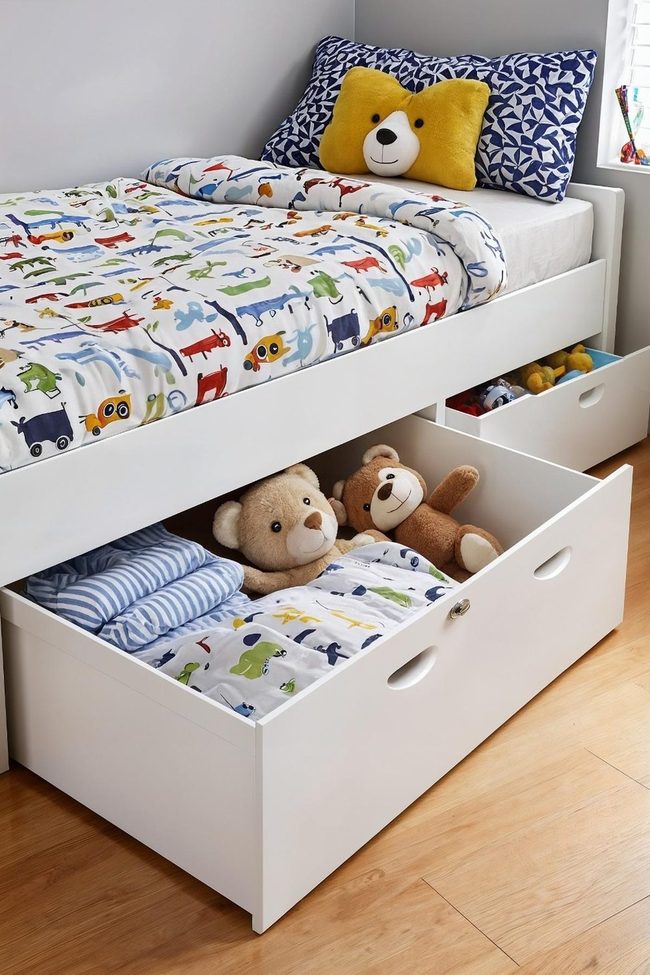
Most bedrooms have wasted space hiding right beneath the bed, and you can put it to work by tucking away items that would otherwise clutter your room.
Beds with built-in drawers or rolling boxes work wonderfully for stashing off-season clothes, extra blankets, or toys without taking up valuable floor space.
Calm storage baskets and fabric boxes fit snugly under the bed and hold toys or craft supplies nicely, keeping everything accessible when you need it.
Once playtime ends, these bins go back into their spot and maintain that neat appearance throughout the day.
Rolling storage solutions are especially handy because you get both function and ease of access rolled into one simple solution.
Small bedrooms benefit the most from setup since every bit of square footage matters, and using the space under the bed means you're not adding extra furniture elsewhere.
This hidden storage keeps your room looking open and organized while giving you plenty of room to stow away what you don't use every day.
Emma Davis
Founder & Chief Home Enthusiast
Expertise
Interior Design and Space Planning, Home Organization and Storage Solutions, DIY Home Improvement Projects, Sustainable and Eco-Friendly Design, Seasonal and Holiday Decor
Education
Texas State University
Texas A&M International University
Emma Davis is the founder and chief home enthusiast at Homee Bee, a platform dedicated to helping homeowners and renters create stylish, functional, and inviting spaces. With a Bachelor of Science in Interior Design from Texas State University and certification as a Residential Interior Designer from Texas A&M International University, Emma blends design expertise with practical solutions to make home decor accessible to everyone.
Through Homee Bee, Emma shares her passion for space planning, home organization, and DIY projects, offering readers expert advice, creative inspiration, and easy-to-follow guides. Her work emphasizes eco-friendly design, budget-friendly decorating, and seasonal styling, ensuring every home feels warm, personal, and well-balanced.