
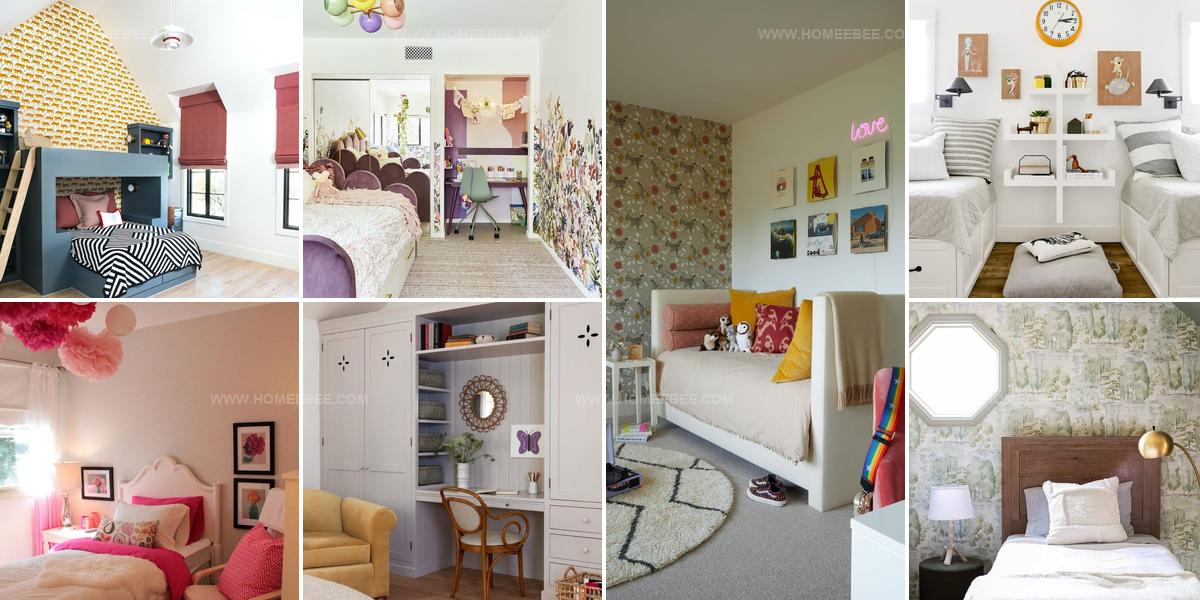
20 Fun Toddler Room Ideas for Growing Kids

A toddler room can be one of the most delightful spaces to design in any home, blending function with a sense of wonder that supports growth and play.
When you consider how much time little ones spend in these special environments, the importance of thoughtful planning becomes clear.
The challenge lies in balancing safety, stimulation, and comfort while allowing room for personality to shine through.
Colors, textures, and furniture all contribute to an atmosphere that feels both nurturing and exciting for curious minds.
Finding that sweet spot between practical storage solutions and imaginative elements helps the space work harder for everyone involved.
Every family has different needs, but the goal remains consistent: building an environment where toddlers can thrive, rest, and feel truly at home.
With a bit of creativity and intention, you can shape a room that grows alongside the changing needs of early childhood and becomes a cherished backdrop for countless memories.
Neon Love Above Vinyl Records
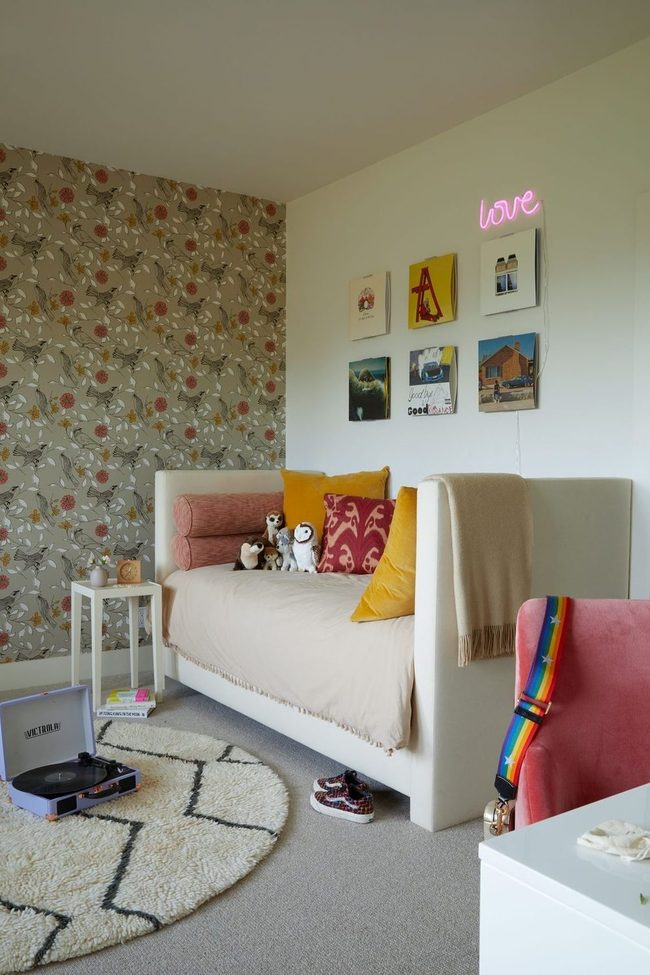
If you want to bring some exciting lighting into your child's bedroom, neon signs offer a fantastic option that goes beyond the ordinary.
A designer from Napa named Julie Hawkins hung a small neon sign above some vinyl records, including Beyonce's *Lemonade*, and the setup shows how well music and glowing text can pair together Kids who grow up surrounded by music like this will develop a real appreciation for good taste and culture.
You can place a neon piece above shelves holding your child's favorite albums or posters and let it serve as both decoration and a gentle light source.
Since neon glows with that distinctive warm or cool tone depending on the gas inside, it adds personality without feeling overdone.
When you pick a message that matters to you and your family, the sign becomes something meaningful rather than just a random accessory.
Neon works especially well in rooms where your child spends time listening to music or enjoying creative activities.
White Wood Bed Growing Years
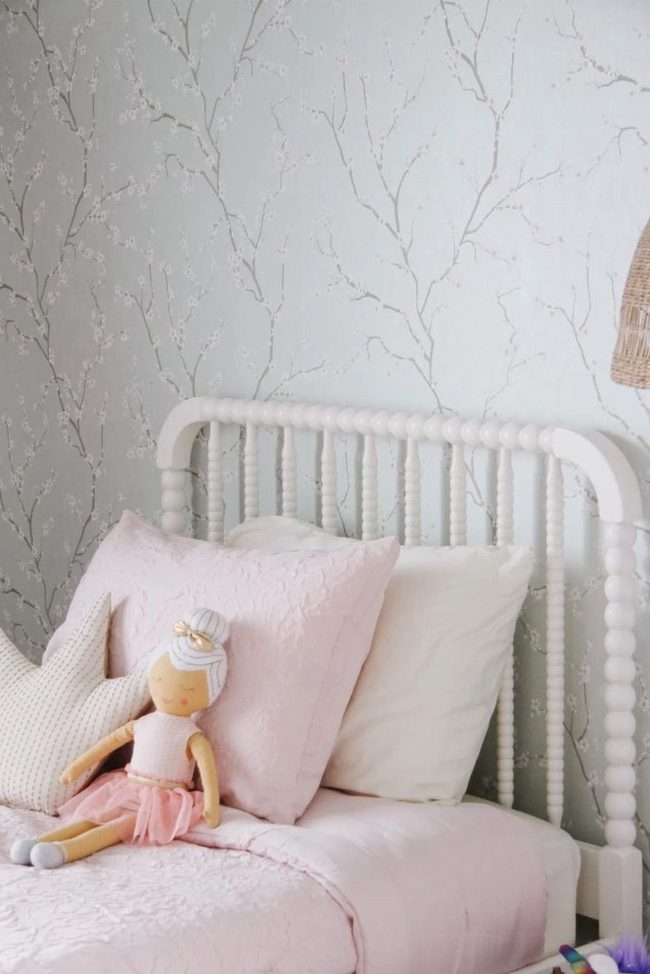
Once your little one starts walking and talking and exploring the world on their own, moving away from the crib feels like a natural next step.
A big kid bed offers so much more room for growth and comfort as they become more active and independent.
Rashimi from Rush Me Home chose a simple slatted bed for her daughter, and this type of frame works wonderfully because it holds up through years of use and play.
White wood frames are especially smart because they match almost any style you might want later on.
You won't need to replace the bed if your family decides to refresh the room's look down the road.
Picking a straightforward design means you can focus on fun bedding, wall colors, or other elements to make the space feel right for your growing child.
If you're looking for something that's both practical and timeless, this kind of approach gives you flexibility and peace of mind.
White Walls Colorful Accents Kids
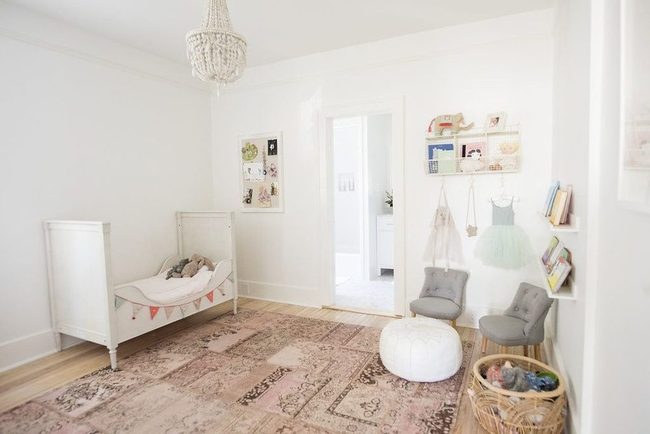
White walls offer a clean backdrop that works well for any room, and when you add small pops of color throughout the space, you can keep things simple while still making kids smile.
Colorful touches like costume hangers and a blush-toned area rug break up the plainness without overwhelming the room You can apply this same idea to any room by starting with neutral walls and then layering in a few bright accents.
Small bursts of color do more than you might expect, and they let you change things up easily as your child's interests shift.
Keeping the base simple means you have freedom to play with accessories and decor.
This method works because it gives you a foundation that lasts while the fun stuff can evolve.
You end up with a room that feels both peaceful and playful at the same time.
Minimalist Jungle Peel-And-Stick Wall
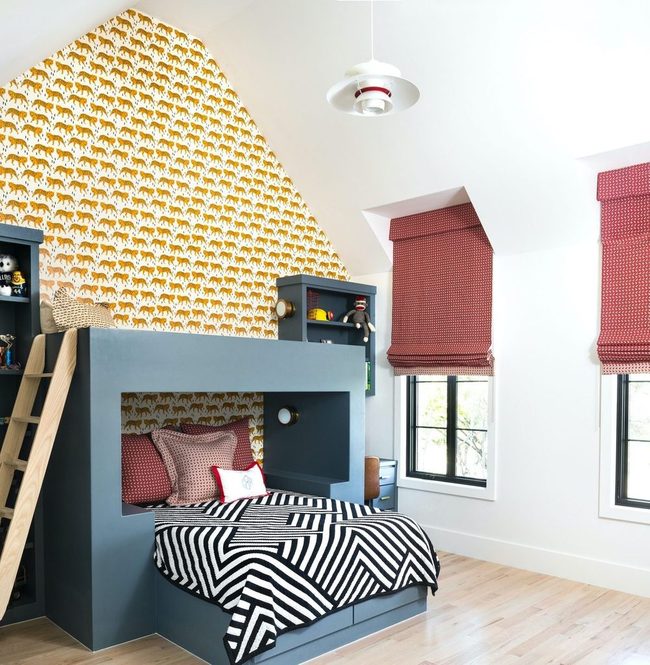
Wallpaper has become the go-to choice for making a bold statement on your accent wall, and it often steals the show compared to a simple coat of paint.
Architecture and design firm Maestri Studio demonstrates this beautifully by covering one wall with a pared-back jungle-themed pattern that brings nature indoors.
If you're ready to refresh your space but want flexibility, temporary peel-and-stick wallpaper offers an easy solution without the commitment of traditional installation.
You can swap out the design whenever your taste changes or you want a different mood Whether you go bold with jungle vibes or choose something more subtle, one patterned wall can completely shift how your room feels.
The best part is that you don't need professional help to apply peel-and-stick options yourself.
This approach gives you all the drama and personality of a designed space with the freedom to change things up whenever you want.
Suspended Bed Opens Floor Space
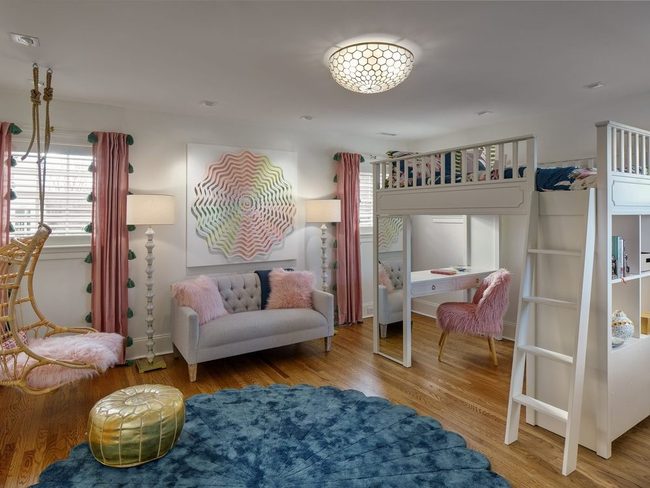
When it comes to maximizing space in a toddler's room, sometimes the smartest move is to look upward, just as designer Marguerite Rodgers demonstrated in this Philadelphia home.
She installed a suspended chair and lofted bed that hover above the floor, and tucked a compact office area directly underneath.
This vertical approach opens up surprising amounts of square footage on the ground level, which means your child has more room to play and move around freely.
Beyond the immediate benefits, this setup grows with your kid-as they reach school age, that space underneath becomes the perfect spot for homework sessions and studying.
You get double the function without needing to expand the room itself.
It's a practical solution that keeps things feeling open and uncluttered while still offering everything a developing child needs.
Graphic Mural Homework Nook
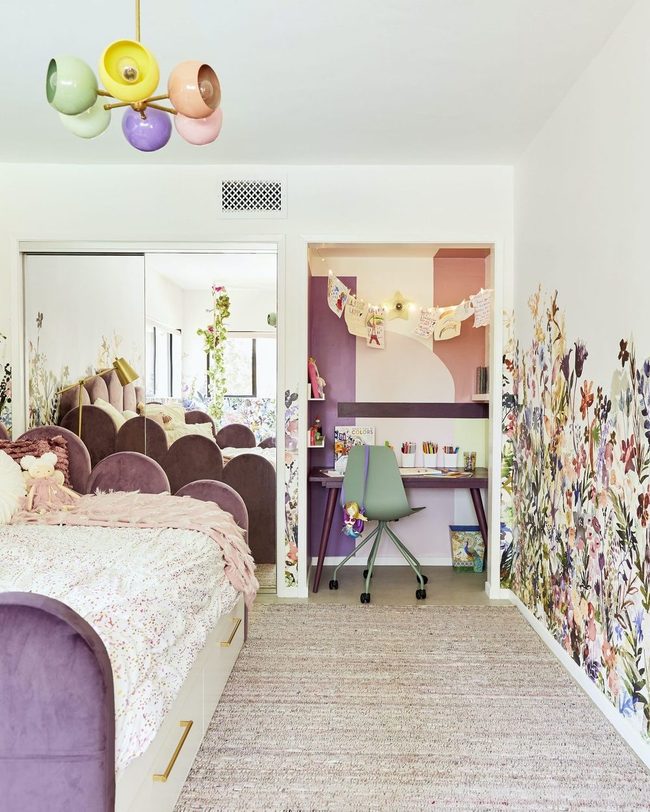
Bold graphic mural dominates this small alcove and immediately captures attention with its playful design that kids absolutely love.
Since toddlers often end up in the tiniest bedrooms, making smart use of every corner becomes essential, and this nook shows exactly how to do it.
You can transform an awkward alcove into a multi-purpose zone where your child does homework, tackles art projects, or loses themselves in imaginative play.
Henderson's approach proves that cramped spaces don't have to feel boring or purely functional.
Beyond the mural, the alcove serves as a dedicated spot just for your little one, giving them their own special area within the bedroom.
Adding personality through colorful artwork makes kids feel like the space belongs to them and keeps them engaged.
Even tight quarters can become your child's favorite spot when you balance practicality with fun design elements.
Black White Green Wainscoting Statement
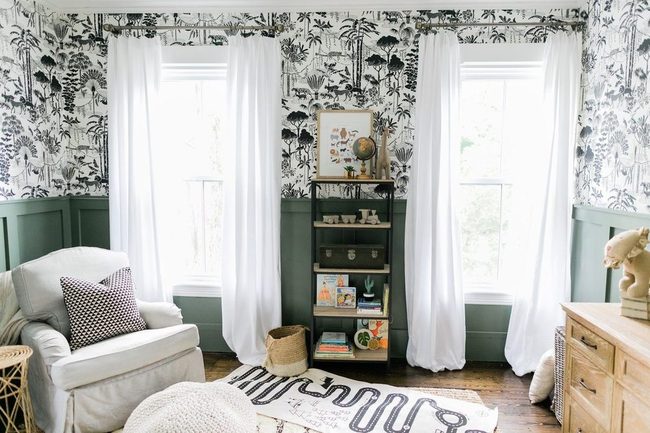
Black and white spaces might sound dull at first, but Jackie from Finding Lovely shows us otherwise with her charming room design.
She combines whimsical wallpaper, green wainscoting, and neutral accents to prove that high-contrast color schemes actually burst with personality and character.
You don't need to worry about a monochrome palette feeling cold or empty when you layer in patterns and texture.
The bold wallpaper serves as the main visual anchor, pulling attention with its playful print.
Green woodwork adds depth and breaks up the stark contrast between light and dark.
Neutral pieces throughout the space let those standout elements shine without overwhelming the eye.
Her approach shows us that going high-contrast doesn't mean sacrificing warmth or charm.
This style proves you can mix bold and simple elements for a room that feels both polished and full of life.
Woodland Walls Grow With Child
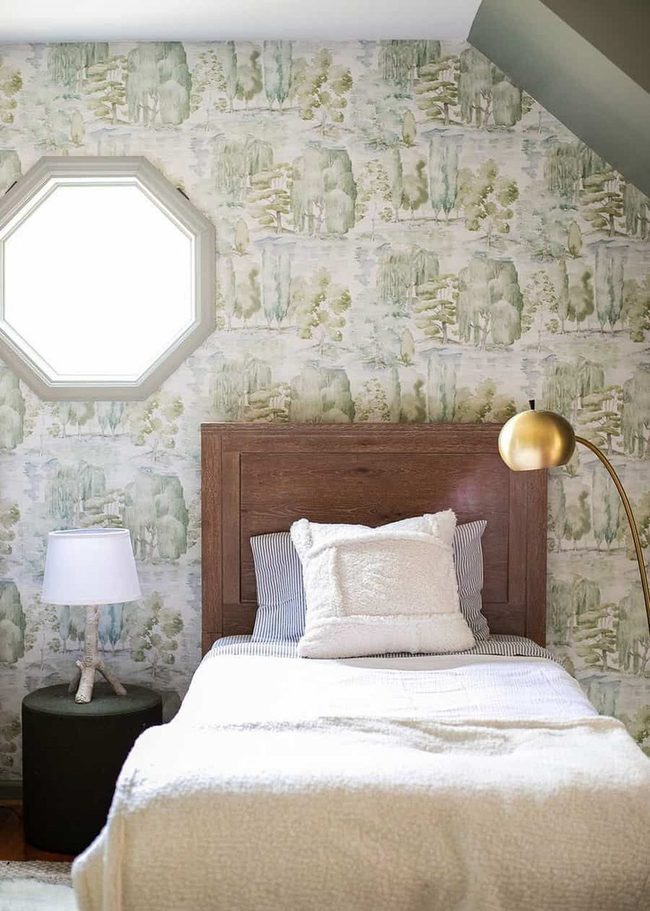
When decorating a child's bedroom, it's easy to get caught up in bold, all-in themes like circuses, castles, or space scenes, but these designs tend to feel dated within just a few years.
Instead of committing to something so heavy-handed, consider a gentler version of a theme that will age better as your child grows.
A forest-inspired room with a quiet woodland pattern on the walls and natural wood furnishings offers that outdoor connection you're looking for without overwhelming the space.
You can incorporate nature into the design through simpler choices and let the room breathe around them.
This balanced approach means your child gets the themed bedroom experience while you avoid the trap of needing a complete redesign in a few years.
The beauty of this method is that it stays fresh and works across different ages and interests.
By pulling back on theme intensity, you give yourself room to swap out smaller elements later without starting from scratch.
This strategy proves that sometimes less bold equals more timeless.
Wooden Bunk Beds Space Saver
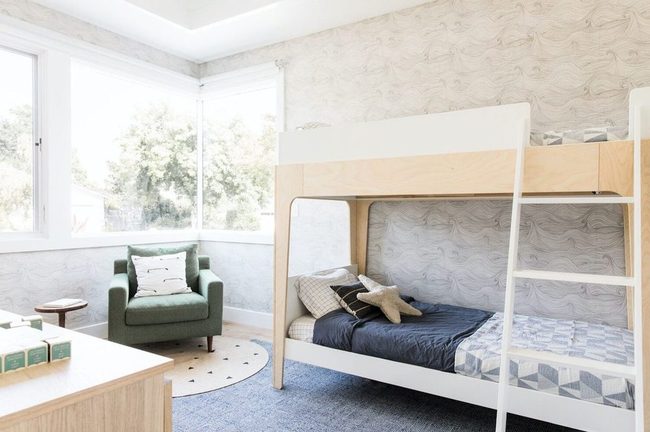
Bunk beds remain popular in toddler bedrooms for good reason, and this style choice offers both smart space-saving benefits and genuine fun for your child.
Designer Cathie Hong demonstrates how to update this classic furniture piece with a sleek silhouette and timeless wooden construction that avoids looking juvenile.
Your little one can use both levels for sleeping or keep the lower bunk open for visiting friends during sleepovers The wooden frame provides durability that grows with your child, and the clean lines keep the design feeling modern rather than cutesy.
You get practical functionality combined with a grown-up aesthetic, making bunk beds a smart investment for any kid's room.
Even though they're designed for children, well-chosen bunk beds bring sophistication to the space and prove that furniture for kids doesn't need to sacrifice style.
Pale Daybed Double Duty
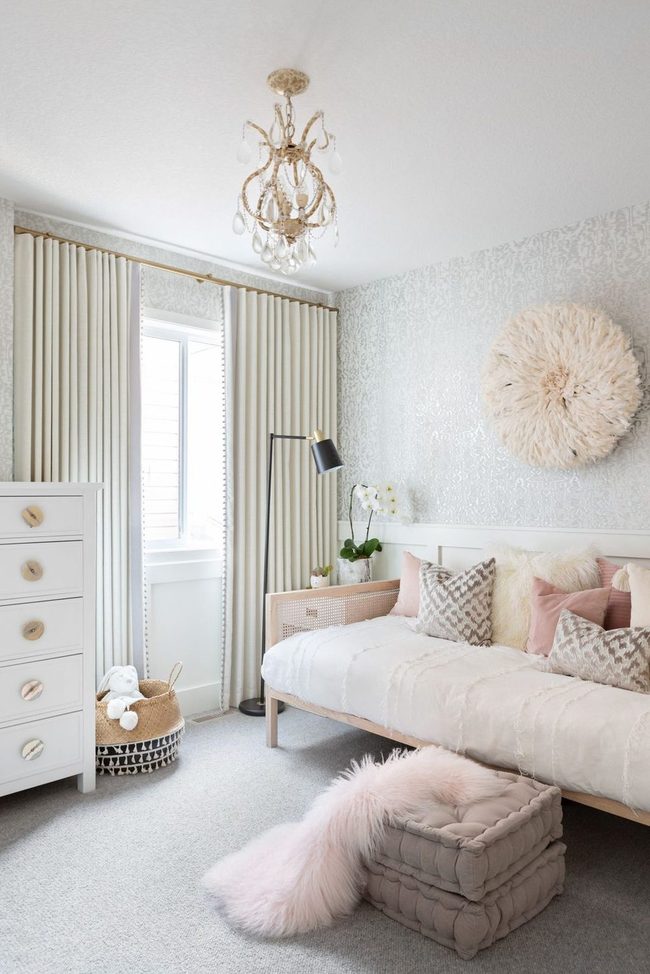
If your child hasn't made the jump to a full-size bed yet, a daybed offers a stylish middle ground that serves double duty.
Low to the ground and long enough to stretch out on, this furniture piece looks striking in a bedroom and gives you flexibility as your kid grows.
You can dress it up with soft bedding and cushions that match your room's color scheme, and it becomes an instant spot where friends like to hang out during playdates and sleepovers.
What makes a daybed practical is that your child will likely use it for years, whether as their main bed during early childhood or as extra seating when they're older The way Reena Sotropa styled hers with pale tones and layered textures shows how a daybed can look both calm and interesting without overwhelming the space.
Red And Blue On White Simplicity
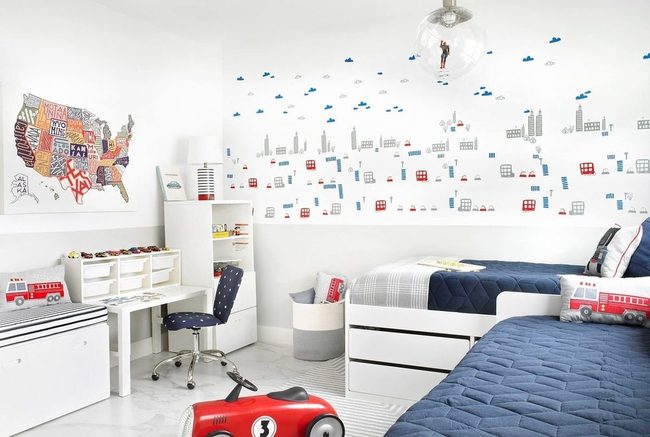
Moving away from soft pastels is a bold way to refresh your older child's bedroom, and primary colors like red and blue offer just the right energy for a room that should feel more grown-up.
Designer Maite Granda proved this works beautifully by using a white backdrop and then adding pops of red and blue throughout the space, keeping the palette balanced so it never feels overdone or holiday-themed.
You can apply this approach through navy bedding, wall decals in red or blue, and fun functional pieces like a toy car in a complementary shade.
Since the room stays mostly white, even small bursts of color have real presence and keep the look fresh and modern.
Mixing these bold hues with plenty of neutral space means the room grows with your child and doesn't feel babyish anymore.
Wall decals give you flexibility to change things up later, while the bedding and accessories anchor the new color scheme.
Your child gets a space that feels both playful and slightly more mature, hitting that sweet spot between fun and form that every kid's room should have.
Bright Orange Clock Statement Piece
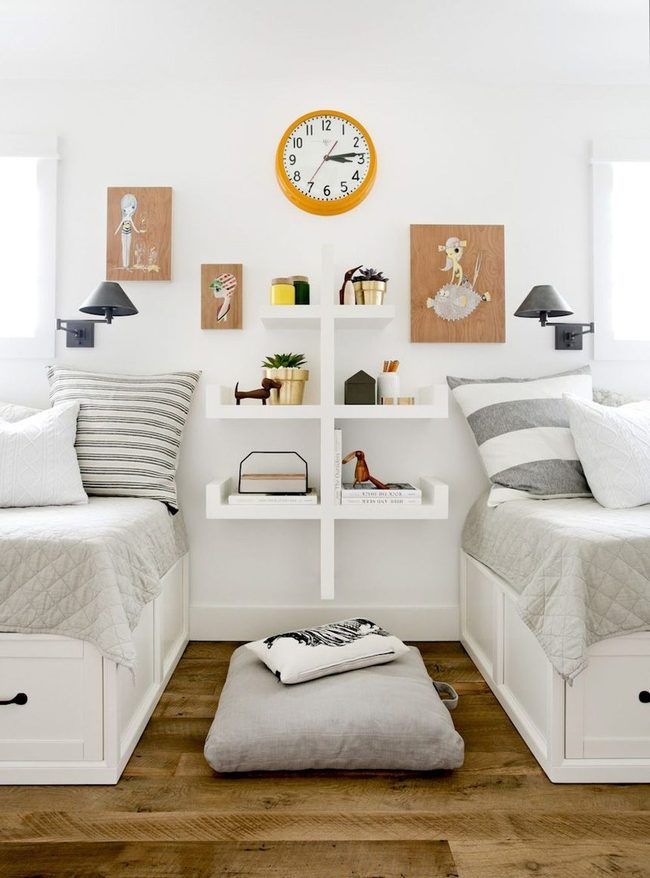
If you ask us, a bright orange clock is one of the easiest ways to liven up a neutral room, and Rikki Snyder's space proves this point perfectly.
One bold color choice can shift the entire mood of your space and bring energy where things felt flat before.
You don't need to repaint walls or swap out furniture to make a real difference.
Even something as simple as a single bright accent catches people's attention right away.
Kids and adults both respond well to that kind of bold statement piece.
It works because the rest of your home stays exactly as it is while this one element adds personality and warmth.
You get that fun, youthful feel without disrupting your established style or overwhelming the room.
Wall Guitar Displays Childhood Creativity
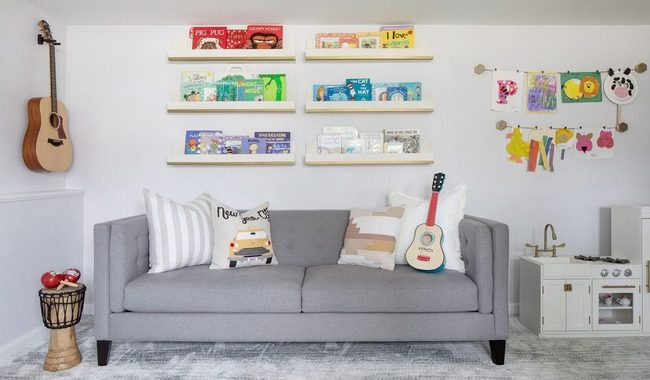
Hanging a guitar on your wall brings instant personality and visual interest to any blank space, and you can pair it with floating shelves and your kid's artwork to create a gallery that truly reflects who they are.
Displaying arts and crafts projects this way serves double duty because it celebrates your child's creativity while also giving you an easy way to rotate and refresh the display as they grow and their interests change.
Floating shelves add dimension to the wall and give you spots to showcase trophies, small sculptures, or books alongside the framed pieces Wall hangings beyond just photos open up endless possibilities for making a room feel personal and lived-in.
This method works especially well in bedrooms or playrooms where you want the space to feel like it belongs to your child and not just a generic guest room.
You'll find that mixing different types of wall decor makes the room feel more dynamic and interesting than a single matching set of frames ever could.
Chartreuse Chandelier Statement Piece
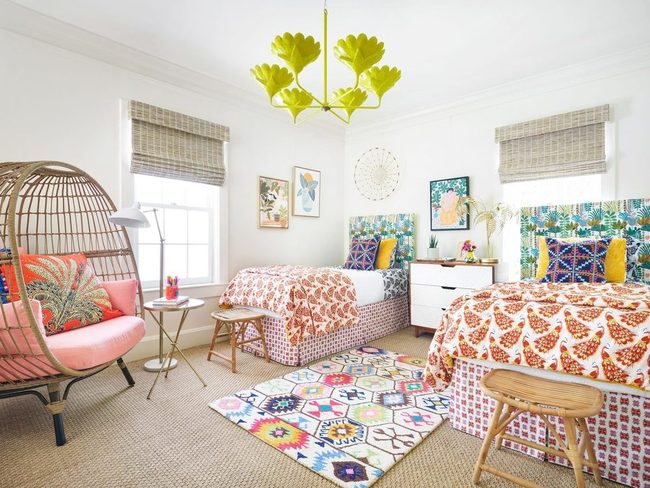
Statement chandelier above the bed can completely transform how a room feels, and lighting really does make the difference in any space, especially kids' rooms.
If you want to make a bold impression without major renovations, swapping in a colorful chandelier gives you instant personality and visual interest.
Designer Isabel Ladd paired a bright chartreuse chandelier with printed headboards, bedding, and an area rug to balance the boldness of the fixture.
If the idea feels too strong for your family's taste, you can easily dial back the energy by switching to solid-colored sheets and keeping the chandelier as the main accent.
This approach lets you test how you feel about the statement piece without committing to a whole new look.
You get flexibility because the chandelier stays put while everything else around it can shift based on what works best for your kids.
Matching Beds Twin Harmony
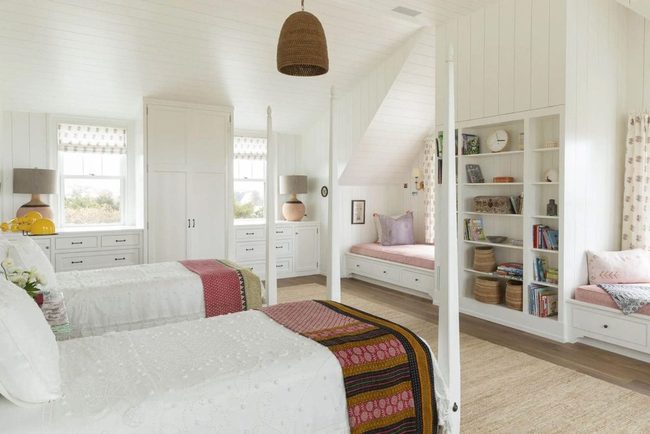
When you're sharing a room between two kids, symmetry is your best friend because it keeps things fair and balanced while making the space feel calm and organized.
Katie Martinez's design shows exactly how to do this right-both children get their own four-post bed, dedicated storage, and a window bench, so nobody feels shortchanged.
Mirror-image layouts like this one prevent sibling conflicts before they start and give the room a naturally soothing quality that helps little ones relax.
Because symmetrical arrangements are so orderly and predictable, they actually settle the mind just like listening to satisfying sounds does.
You can make the room both stylish and restful at the same time by sticking with this balanced approach.
Two matching beds anchor the space and establish that equal treatment right away.
Storage solutions placed on opposite sides keep belongings organized and reinforce that harmony throughout.
This kind of mirrored design works especially well in kids' rooms where fairness and peace matter most.
Wooden Desk Grows With Kids
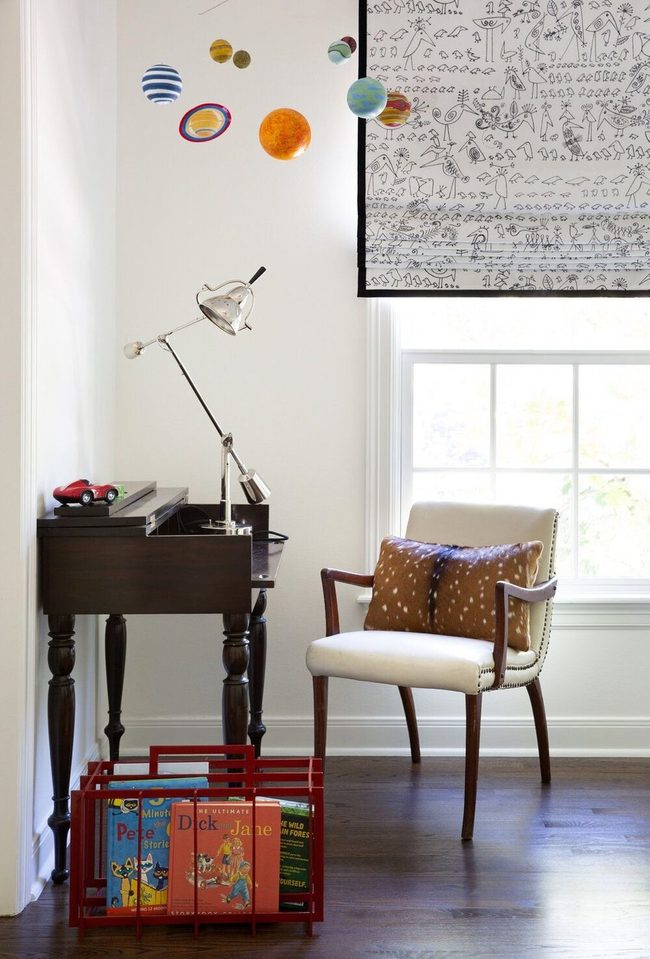
Grown-up furniture makes more sense than kid-sized pieces when you're designing a toddler's room, and it saves you money over time since your children will actually use these items as they get older instead of outgrowing them in a few years.
A wooden desk and armchair bring real sophistication to the space, and while these pieces look mature and polished, the toy car and basket of picture books keep the room grounded as a place for a young child.
You get the best of both worlds this way-furniture that grows with your kids and a space that still feels playful and age-appropriate.
Since adult furniture stands the test of time, you avoid the waste and expense of constantly replacing pieces as your children develop.
This approach means your investment actually pays off across multiple years and stages of childhood.
Pastel Built-In Storage Wall
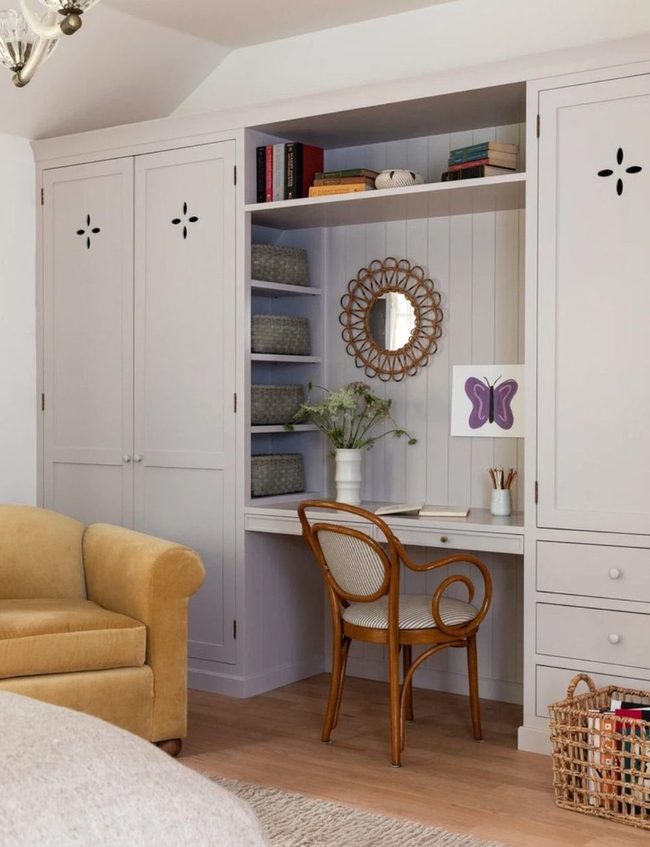
Built-in storage units offer a smart way to blend beauty with usefulness in any space, and they work especially well in a child's bedroom where you need both style and organization.
Katie Hodges, a California designer, showed us this approach when she worked on a little girl's room for blogger Emily Schuman, installing a pastel-colored built-in that serves as the room's standout feature You get ample storage space without sacrificing the room's overall look, and the soft colors let other decorative elements breathe.
Installing built-ins like these gives you flexibility to change other parts of the room as your child grows and their tastes shift.
Rather than filling the walls with separate furniture pieces, built-ins create clean lines and a more organized feel from floor to ceiling.
We recommend considering your child's age and what storage needs matter most when planning a built-in system.
Orange And Lime Green Nursery
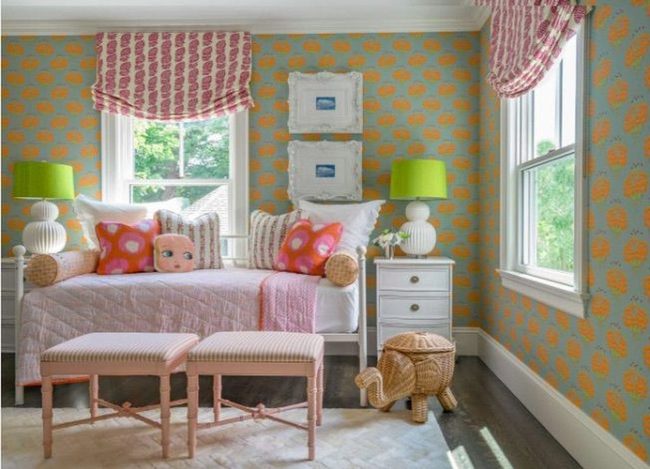
Splashes of orange and lime green across the walls and furniture give this toddler's room a bold personality that breaks away from the usual blue and pink choices.
Designer Liz Caan decided to fill the space with rainbow hues that feel fresh and energetic without becoming overwhelming.
You can see how the unexpected color combination keeps the room from looking like every other nursery on the block.
Bright walls paired with colorful accents on toys, bedding, and storage make the room pop with energy.
Kids respond well to these kinds of bold choices, and parents often find they enjoy spending time in such a lively space too.
If you want to try this approach in your own home, start by picking two or three colors that make you happy and layer them throughout the room in different ways.
The key is balancing the boldness so the space stays playful rather than chaotic.
Going beyond standard color palettes shows that decorating a child's room doesn't mean playing it safe.
Two Zone Bedroom Split
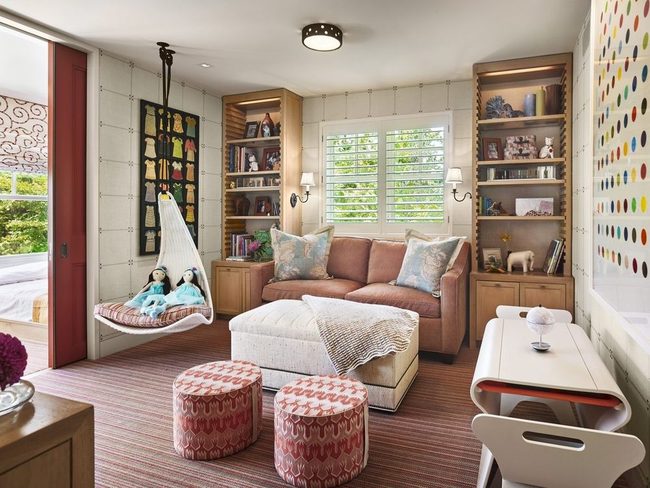
Breaking up a large bedroom into two smaller zones gives you way more flexibility than keeping it as one open room, and this example shows exactly how smart that can be.
Next to the sleeping area, a distinct play zone lets little ones understand that this spot is for activity and fun while the bed is reserved for rest Best part is that this setup doesn't have to be permanent-once your children grow up, you can easily flip that play area into a study nook or home office.
You gain extra square footage for different purposes by just using simple dividers or furniture placement.
Most families find they suddenly have room for homework, projects, or remote work that would never fit in a traditional single bedroom.
This kind of split design keeps things organized and gives everyone their own purpose zone.
Moving forward with your kids' room plan, consider how you might section off a corner for work or learning when the time comes.
Pink Pom-Poms Cloud Ceiling
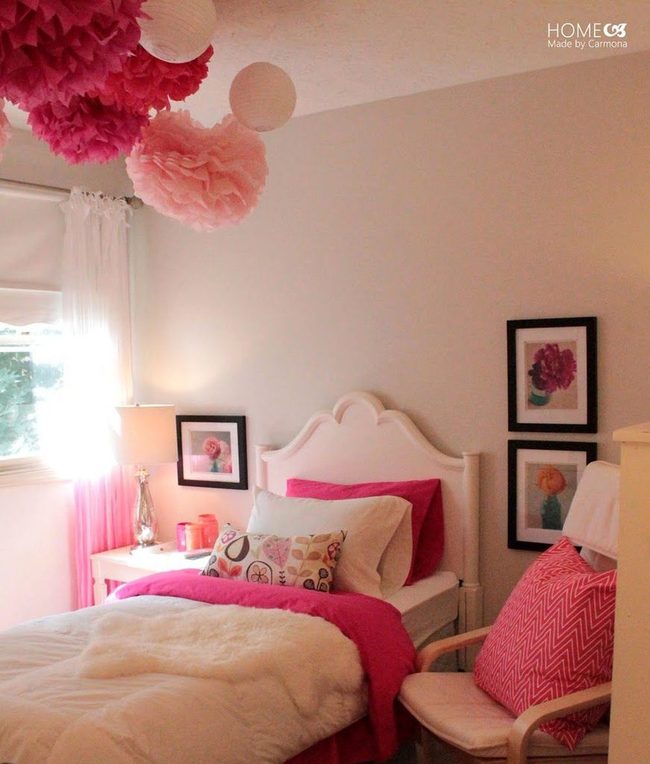
If you want to make your toddler's room feel truly special, focus on the small touches that make a big difference, just like Ursula Carmona did in her Home Made by Carmona space.
She covered the entire ceiling with pink pom-poms and party decorations, which immediately catches your attention the moment you walk in.
Pink pom-poms hanging overhead create that dreamy, cloud-like effect that kids absolutely love.
Party decorations mixed throughout add playfulness and fun to the space.
Your little one gets to wake up every morning surrounded by something cheerful and whimsical.
This approach shows how the tiniest elements scattered across the room can completely shift the whole feeling.
Alex Johnson
Home Decor Specialist & Content Creator
Expertise
Room Makeovers, DIY Home Projects, Budget-Friendly Decorating, Seasonal Decor Trends
Education
The Interior Design Institute, USA
New York Institute of Art and Design
Alex Johnson is a home decor specialist and content creator who believes that every space should reflect its owner’s unique personality. With a Diploma in Interior Design from The Interior Design Institute and a Certificate in Home Staging from the New York Institute of Art and Design, Alex focuses on making home styling fun, affordable, and accessible.
At Homee Bee, Alex provides room makeover ideas, DIY decor solutions, and budget-friendly styling tips to help readers transform their homes with confidence. Whether it’s seasonal decor trends, thrift store finds, or smart space-saving tricks, Alex’s approach is all about creating beautiful, functional spaces that feel truly personal.